



 132 / 148

cBtBdoreT •
tasters
·amura·
130
Texto /
Text
: Erin Brooks • Foto /
Photo
:
OWCIBES / weinhauss / WINEX / MONTROSE / TOASTER / WEBME
Secretos del
Secrets by the Rhine
RIN
E
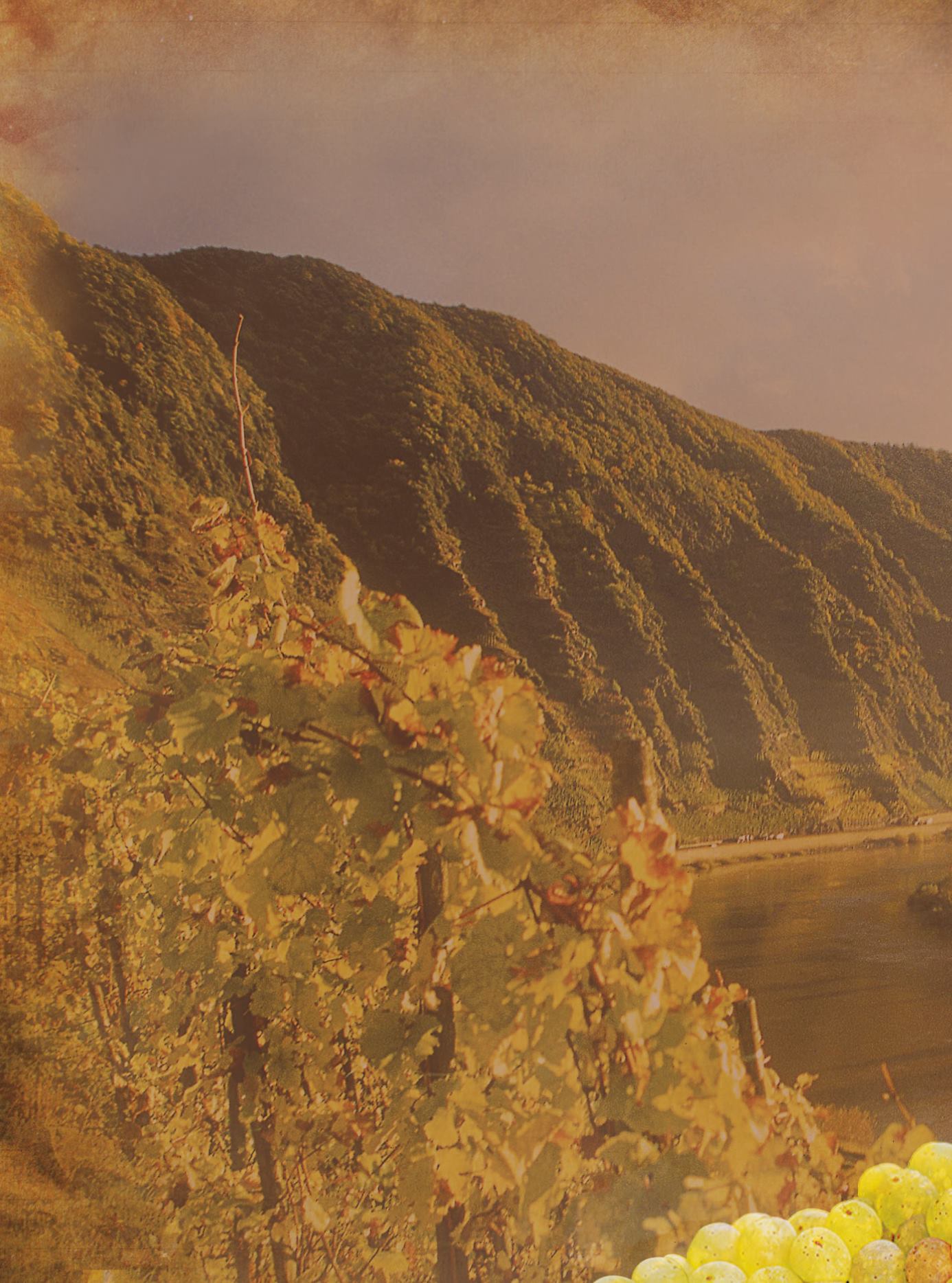
n los escarpados y profundos bancos
del Mosel, en los primaverales viñe-
dos de Rheingau o de Rheinhessen,
Alemania produce algunos de los me-
jores -y más subestimados- vinos
del mundo.
Esta tierra tiene una historia de vitivinicultura que
datadel 100a.C., cuando los romanos -quienes conquis-
taronesta región-, comenzaronaproducir vinos eneste
suelo. Fueron ellos quienes rápidamente reconocieron
el potencial de sitios como Piesporter Goldtröpfchen
(que significa “pequeñas gotas de oro”) y quienes cul-
tivaron las uvas en estas tierras. Investigadores han
encontrado lugares en donde se hacía la vid, cerca de
Piesport, que data del siglo 400 d.C., este sitio es uno
de los yacimientos antiguos más grandes en donde se
hacía la vid, y es el lugar más vasto encontrado al norte
de los Alpes. Durante la edad media, los monjes conti-
nuaron con la tradición de la creación de vinos y cultiva-
ron los viñedos que son famosos hoy en día. Propieda-
des históricas como el monasterio conventual Kloster
Eberbach en el Rheingau, tiene una pasado vitivinícola,
cuyos orígenes datan del 1200 d.C.
O
n the steep slate and shale banks
along the Mosel, the pristine, cas-
tle-crowned vineyards of the Rhe-
ingau or the rolling hills of Rhein-
hessen, Germany produces some of
the world’s best, yet underrated wines.
Germany has a history of winemaking that
dates back to 100 B.C. when ancient Romans,
who conquered the region, began producing
wines on local soil. It was the Romans, who
already recognized the potential of sites like
the Piesporter Goldtröpfchen (little droplets
of gold) and who cultivated grapes there. Re-
searchers found a wine press at the base of Pie-
sport that dates back to 400 A.D., which is the
largest Roman wine press ever found north of
the Alps. During the Middle Ages, monks up-
held the tradition of making wine and culti-
vated the vineyards that are famous to this
day. Historical properties like the Cistercian
Monastery Kloster Eberbach in the Rheingau
have a viticultural history dating back to about
1200 AD.