


 134 / 148

·amura·
132
cBtBdoreT •
tasters
Éste es un fabuloso vino de los viñedos de “jardines
especiados”. Mönchhof tiene parcelas en las regio-
nes de Ürziger Würzgarten, Erdener Treppchen y Er-
dener Prälat, todos los
grand crus
son encontrados
en las colinas del Río Mosel. La historia de Mönchhof
(que significa “casa del monje”) data de 1177; un
documento demuestra que varios monjes conven-
tales eran dueños de tierras en Ürzig durante este
momento. Ellos construyeron la estructura actual,
así como las cavas subterráneas en los tempranos
1500s y crearon Mönchhof hasta 1800s, cuando la
familia Eymael compró la propiedad. La familia conti-
nuó con la creación de este vino desde ese entonces.
Una visita a estos viñedos es casi tan espectacular
como el sabor de sus creaciones.
This is a fabulous wine from the “spice gardens”
vineyard. Mönchhof owns parcels in the Ürziger
Würzgarten, the Erdener Treppchen and the
Erdener Prälat vineyards, all grand crus on the
steep slopes above the Mosel River. The history
of Mönchhof (which means “Monk’s House”)
goes back to an 1177 document that shows Cis-
tercian monks owned land in Ürzig during that
time. They built the estate’s building and under-
ground cellars in the early 1500s and made wine
at Mönchhof until the early 1800s, when the
Eymael family purchased it. The family has con-
tinued to make wine here since. Looking down
from the top of this vineyard is dizzying and the
wines even more so.
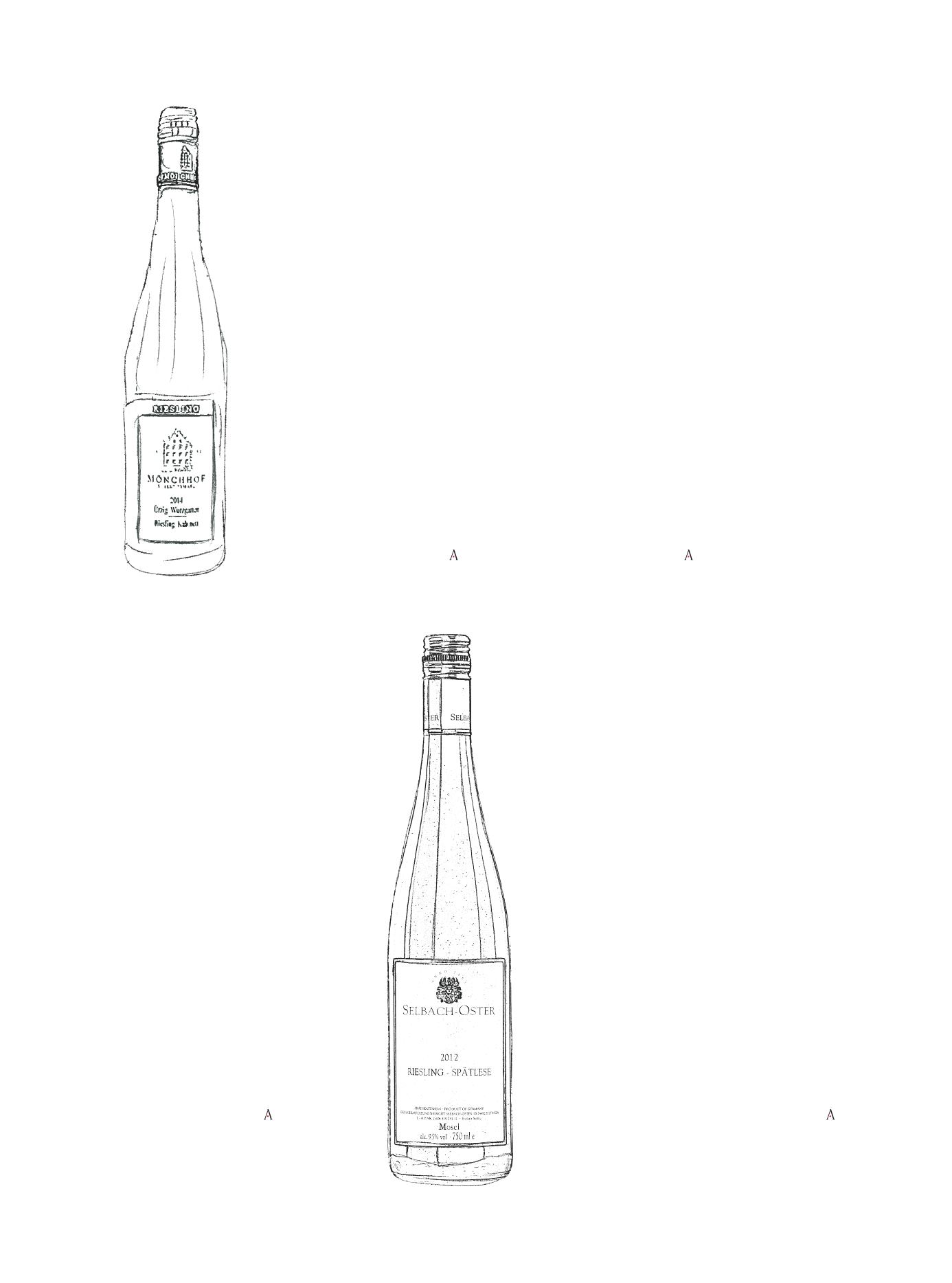
Mönchhof Ürziger Wurzgarten,
Mosel
Selbach-Oster
Graacher
Domprobst ,
Mosel
La pequeña región de Graach es encontrada entre dos al-
deas dedicadas a la vitivinicultura, Bernkastel y Wehlen,
pero este vino ha sido cultivado en estas tierras desde
tiempos de los romanos. Los vinos de Selbach-Oster son
considerados como algunos de losmejores de esta región
delMosel. Lapropiedadhasidounviñedodeesta localidad
desde los tardíos 1600s. Es un terrenobastantegrandede
acuerdo a los estándares deMosel, pero la filosofía de “sin
manos” perdura -lameta es hacer que sus vinos expresen
sus parajes únicos-. El viñedo está compuesto por pizarra
Devoniana y el trabajo en todos los viñedos está hecho a
mano en las profundasmontañas, con vinos fermentados
en uvas con levaduras naturales. Los vinos aquí produci-
dos tienen peculiaridades únicas, con aromas a nueces y
frutas, así como una acidez repentina.
The small village of Graach is located between
two more famous wine villages, Bernkastel and
Wehlen, but wine has been grown here since the
Roman times. The wines of Selbach-Oster are con-
sidered tobe some of the verybest in theMosel. The
estate has held vineyard land in this area since the
late 1600s. It is a large estate by Mosel standards,
but the philosophy remains “hands-off”—the goal
is to make wines that express their unique sites.
This vineyard is composed of Devonian slate and
all the vineyard work is done by hand on the steep
slopes, with the wines fermented with the grapes’
own natural yeasts. The wines produced from this
vineyard have a characteristic slate quality with
nut aromas and rich fruits with snappy acidity.