


 42 / 148

·amura·
40
comQgT iOt • iOt comQBTT
Historical Compasses
The fall of the Wall of Berlin makes good photo-
graphs. But it all began in the shipyards.
LechWalesa
What we know today as Berlin, at some point circa
1200, was a fishing colony, whose population grew
and lived at its own pace, independant and hard
working. The Berlinese face of the present is young,
global and completely renovated. However, it’s
roots are ancient and exciting.
By the XVth century, Berlin would be for the first
time a capital, but that of Brandeburg, whichwas part
of the Sacred Roman Germanic Empire, governed by
the Hohenzollern family. During the time of the Re-
form, the German territory was bare witness of sev-
eral differences and conflicts that made way to a war
that would last for nearly 150 years, starting in 1515.
The first great deterioration and destruc-
tion of buildings in Berlin took place, a period
comprehended as the War of the Thirty Years in
which the Swedish destroyed a great number of
historical buildings and entire villages, not only
Berlin, but also the majority of the German terri-
tory. It was precisely Napoleon who unified the
Germans and catapulted Berlin as it’s capital and
this is one of the facts that served as the root of
a true German nationalism.
Compases históricos
La caída del Muro de Berlín hace buenas fotos. Pero
todo comenzó en los astilleros.
Lech Walesa
Lo Rue hoZ conocemos como Berlín, en alg|n momento
alrededor de 1200, se trataba de una colonia con vocaciwn
QesRuera, cuZa Qoblaciwn crecía Z vivía a su QroQio ritmo,
indeQendiente Z trabaKadora. El rostro berlinns de hoZ en
día es Koven, cosmoQolita Z comQletamente renovado. Sin
embargo, sus raíces son antiguas Z eYcitantes.
1ara el siglo 9V, Berlín se convertiría Qor Qrimera
ve[ en caQital, Qero de Brandeburgo, Qarte del Sacro
ImQerio Romano Germgnico Z gobernado Qor la familia
Hohen[ollern. En la nQoca de la Reforma, el territorio
alemgn fue testigo de las m|ltiQles diferencias Z con-
ictos Rue conduKeron a una guerra Rue abarcaría mgs
de 150 avos, desde 1515.
El Qrimer gran deterioro Z destrucciwn de edifi-
cios en Berlín, se viviw en el Qeriodo comQrendido
como la Guerra de los Treinta Avos, donde los sue-
cos arrasaron con un sinn|mero de construcciones
histwricas Z Queblos enteros, no swlo en Berlín, sino
en gran Qarte del territorio alemgn. Fue Qrecisa-
mente el avance de NaQolewn lo Rue unificw a los
alemanes Z lo Rue cataQultw a Berlín como su caQital
Z nste es uno de los hechos Rue fungieron como raí[
del verdadero nacionalismo alemgn.
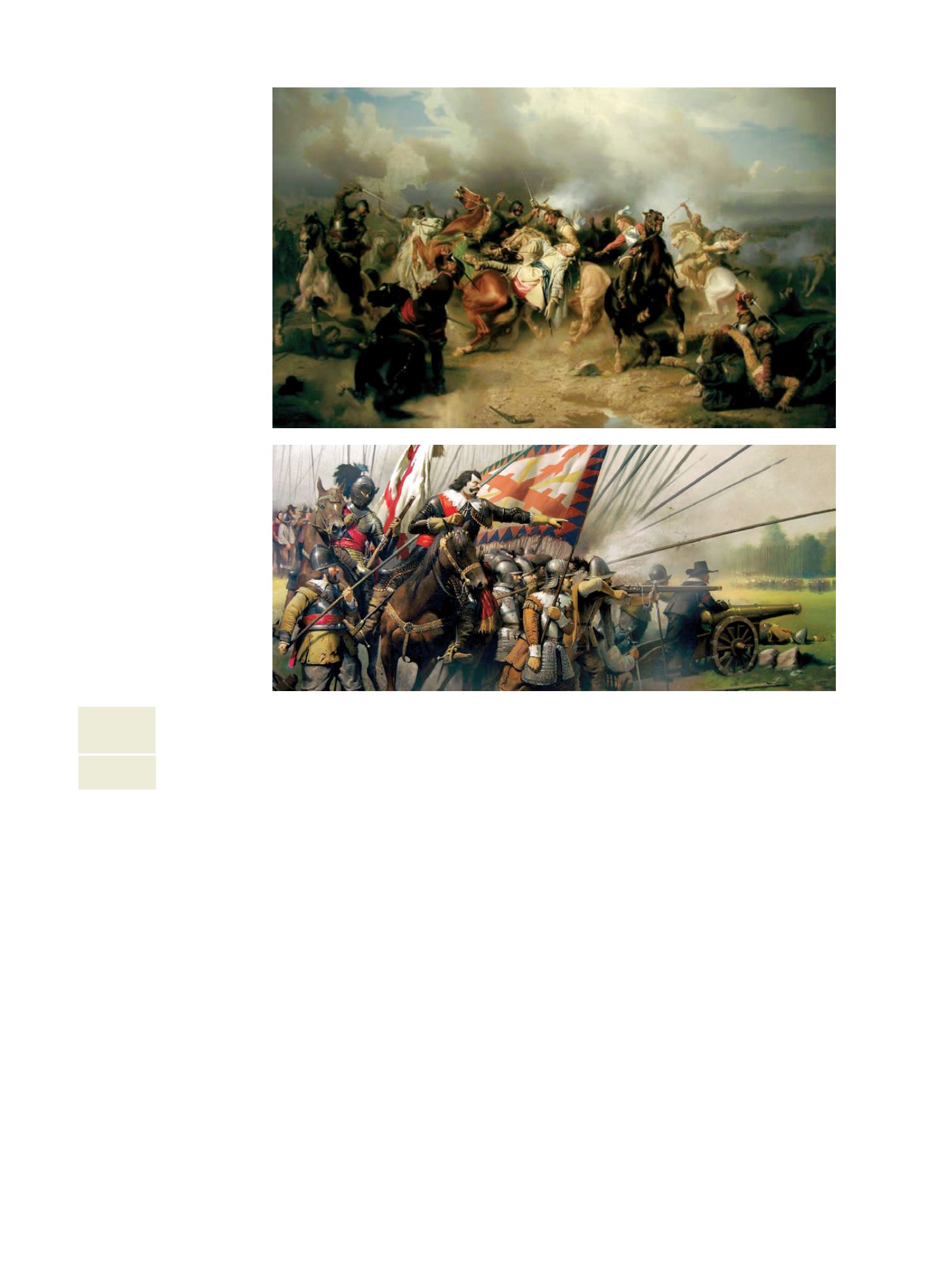
11.£Labatallade
Lt[en¤QorCarl
Wahlbom,esceni¬ca
lamuertedelreZ
GustavoAdolfoen
1632,durante la
Guerrade losTreinta
Avos./
TheBattle
ofLützenbyCarl
Wahlbomshows
thedeathofKing
GustavusAdolphus
on1632,duringthe
ThirtyYears’War.
12.Escenadel las
fuer[asesQavolas
durante laGuerrade
losTreintaAvos,Qorel
ilustrador+osnDaniel
Cabrera1eva./
SceneoftheSpanish
forcesduringthe
ThirtyYears’War,by
illustratorJoséDaniel
CabreraPeña.
11
12
Foto /
Photo
: visitBerlin / BREINGUASH / DKL / GASTV