


 48 / 148

·amura·
46
comQgT iOt • iOt comQBTT
En Alemania eYisten casi 40 sitios inscritos como
1atrimonio de la UNESC0, donde Berlín se corona con
Museumsinsel
£Isla de los Museos¤ , un conKunto Rue
resguarda algunos de los meKores Z mgs visitados mu-
seos de todo el mundo. Conformado Qor el Museo de
1nrgamo 1ergamonmuseum , Museo Antiguo Altes
Musum , Museo Nuevo de Berlín Neues Museum , An-
tigua Galería Nacional de Berlín Alte Nationalgalerie
Z el Museo Bode Bode Museum , ninguna visita a Ber-
lín Quede estar comQleta sin este recorrido.
En cuanto a
souvenirs
, Alemania estg reQleta de
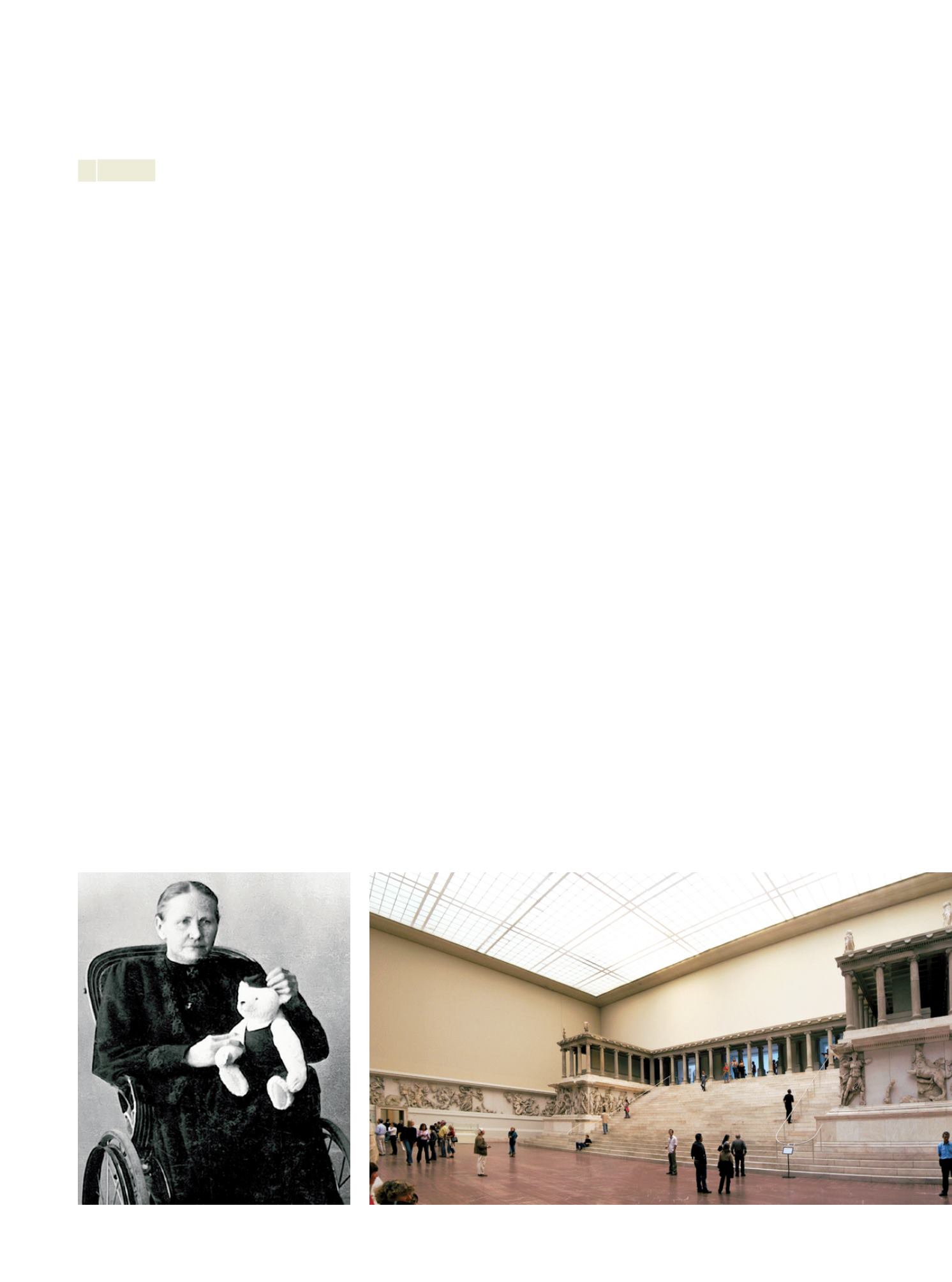
ellos. 1ocos saben Rue el osito de Qeluche es un símbolo
de Berlín Z de los alemanes en general, Za Rue en reali-
dad se trata de una creaciwn original de Margaret Steiff,
disevadora alemana de Kuguetes Rue creara una línea de
animales de Qeluche hacia 1880, incluido el oso de felQa
Rue mgs tarde QoQulari[ara el Qresidente estadouniden-
se Theodore Roosevelt de ahí el conceQto de oso TeddZ .
0tro
souvenir
Rue Qredomina es el
Ampelmänn-
chen
, es decir, el £hombrecillo del semgforo¤. Este Qer-
sonaKe es tan icwnico, Rue incluso tiene QroQia tienda
en la caQital germana: AmQelmann ShoQ. Creado en
los 60s Qor el Qsicwlogo Karl 1eglau, Qara los semgfo-
ros de Alemania 0riental, el QersonaKe del sombrerito
fue nYito Z desQuns de la uni¬caciwn se intentw retirar
de los semgforos, lo Rue ocasionw manifestaciones
Qara regresar los Rue se habían retirado, hecho Rue se
logrw en 2005. £Se dice Rue en la Alemania comunista,
el AmQelmann era el |nico obrero Rue iba contento a
trabaKar¤, re[a una eYQresiwn berlinesa.
Ademgs, en Berlín se fabrican reloKes cuc| de la
Selva Negra de forma artesanal los originales Qrovie-
nen de la regiwn de Schznach, Qero en Berlín tambinn
se encuentran con regularidad Z como sabemos, la re-
loKería alemana es eYcelente Z no son Qocos los arte-
sanos Rue la eKercen en toda Alemania.
In Germany there are nearly 40 sites inscribed
on the UNESCO World Heritage list, it is crowned
by the Berlin Museumsinsel (“Museum Island”), a
group that protects some of the best and most vis-
ited museums worldwide. Comprised of the Per-
gamon Museum (Pergamonmuseum), Old Museum
(Altes Musum) New Museum Berlin (Neues Muse-
um), Alte Nationalgalerie (Alte Nationalgalerie) and
the Bode Museum (Bode Museum), no visit to Berlin
can be complete without this tour.
As for souvenirs, Germany is full of them. Few
know that the teddy bear is a symbol of Berlin
and Germans in general, because in reality it is
an original creation of Margaret Steiff, German
designer of toys who created a line of stuffed
animals in 1880, including a teddy bear who later
was popularized by US President Theodore Roos-
evelt (hence the concept of Teddy bear).
Other souvenir that predominates is the Am-
pelmännchen, or the “traffic light man”. This char-
acter is so iconic, it even has its own store in the Ger-
man capital: Ampelmann Shop. Created in the 60s
by psychologist Karl Peglau for East German traffic
lights, the character of the hat was successful and
after the unification an attempted to remove the
traffic lights was made, causing demonstrations to
those who had retired, which was achieved in 2005.
“It is said that in communist Germany, the Am-
pelmann was the only worker who was happy to
work,” says a Berlin expression.
In addition, in Berlin cuckoo clocks from the
Black Forest are made by hand; originals come from
the region of Schonach, but also in Berlin can be eas-
ily found and as we know, the Germanwatchmaking
is excellent and there are many artisans who prac-
tice in this land.
25.MargaretSteiff,
creadoraalemanadel
QrimerositodefelQa.
/
MargaretSteiff,
Germancreatorofthe
firstteddybear.
26.Museode1nrgamo
enBerlín./
Pergamon
MuseuminBerlin.
25 26