


 136 / 150

El primer relato histórico del comercio marítimo a gran escala
también pertenece a esta civilización, atribuido al
Faraón Snefrú
(2650 a. C.) cuya memoria ha llegado a nuestros días conservada en
la “Piedra de Palermo”, donde se cita lo siguiente:
“trajo 40 barcos
llenos de troncos de cedro
” y se refiere a dos expediciones marítimas
enviadas por él a Biblos (hoy Líbano).
Existe una reproducción pictórica de un barco en el templo mor-
tuorio del
Faraón Sahure
(2550 a. C), quien fue otro de los grandes
precursores de la navegación al protagonizar el envío de una flota
con su ejército a costas asiáticas. A este faraón se le atribuye el pri-
mer viaje hacia el misterioso país del Punt.
The first historical account of large-scale maritime trade also dates
back to this civilization, attributed to
Pharaoh Sneferu
(2650 BC), whose
memoryhassurvivedtothisdaythroughthePalermoStone,wherethereis
an inscription that reads: “bringing of 40 ships filledwith cedar wood,” and
refers to twomaritime expeditionsheorganized toByblos (todayLebanon).
There is a pictorial reproduction of a ship in the Mortuary Temple of
PharaohSahure
(2550 BC), whowas another great precursor of navigation
when he shipped his army on a fleet to Asian shores. This pharaoh is cred-
itedwith thefirst voyage to themysterious Landof Punt.
personaje •
personage
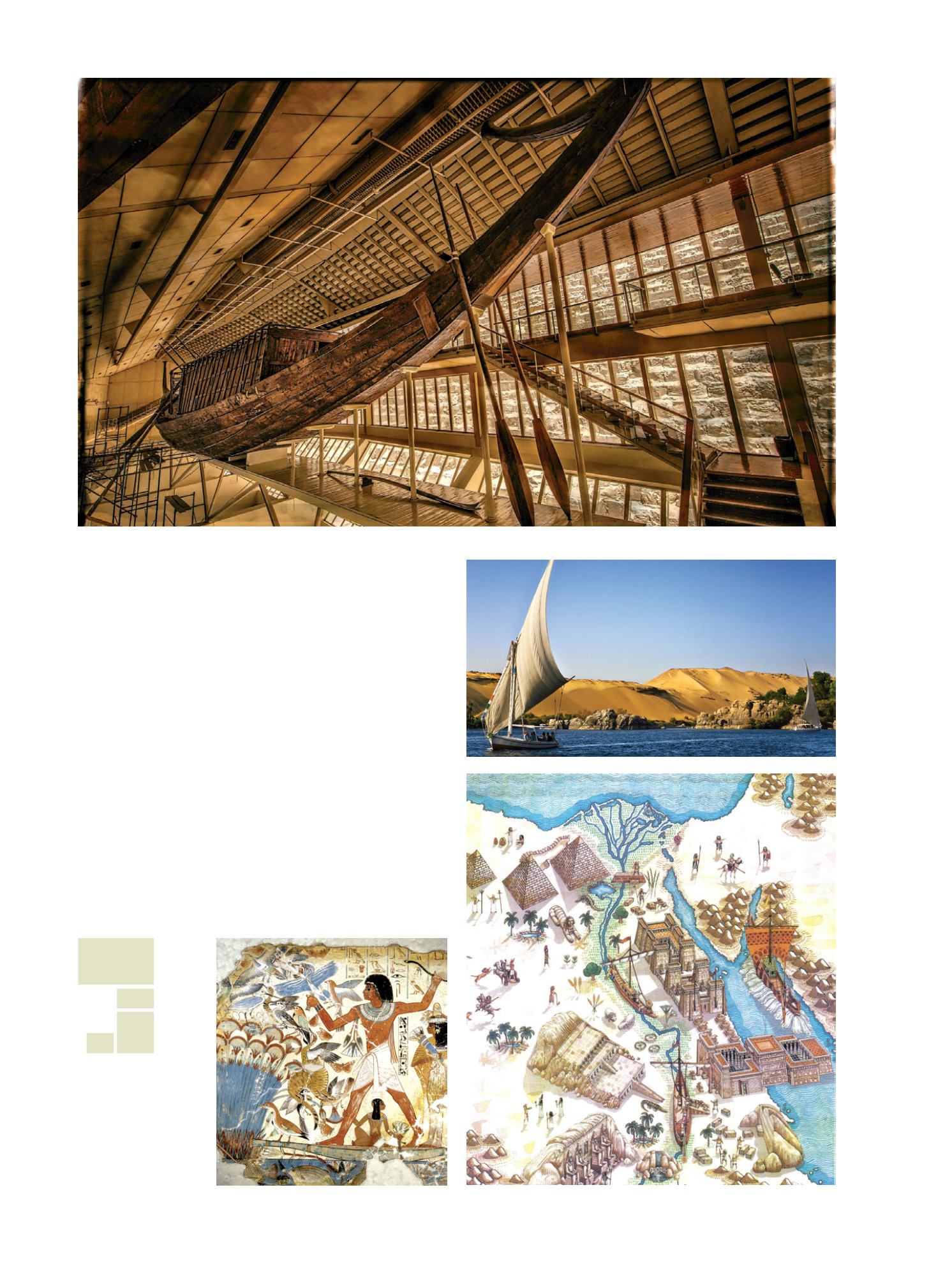
1.Museode labarcasolardeKeops
enGuiza,Egipto./
KheopsSolar
BoatMuseum,Giza.Egypt.
2.Lahistoriade losbarcoscomenzó
con losantiguosegipciosysus
navíosconvelas./
Thehistory
ofshipsbeganwiththeancient
Egyptiansandtheirsailingships.
3.Antiguomapade lanavegación
enelRíoNilo./
Ancientnavigation
mapof theNileriver.
4.Pinturade lospanelesde
Nebamunenexhibiciónenel
MuseoBritánico./
Paintingofthe
Nebamunpanelsondisplayatthe
BritishMuseum.
1
2
3
4
·amura·
132