


 139 / 150

En ellos se cuenta que durante el quinto año de su reinado, Hats-
hepsut envío 5 navíos –conocidos como
kebenit
– que se podían nave-
gar a vela y con remos, rumbo al Mar Rojo a través del canal de Wadi
Tumilat, después de descender por el río Nilo. El trayecto duró varios
meses hasta alcanzar las playas de Punt. La decoración en los muros
relata que los marinos fueron muy bien recibidos por el rey Perehu y su
peculiar esposa, plasmada como obesa y deforme, acompañados por
sus tres hijos. De regreso, sus navíos trajeron los tesoros resultantes
del trueque con los habitantes de Punt: árboles de mirra y ébano para
trasplantar, entre otros. Maderas preciosas, animales, pieles, cosmé-
ticos, perfumes, joyas, marfil, resina de mirra y el preciado incienso
que se cuenta como motivo principal de la expedición, ya que era la
primordial ofrenda al dios Amón, del cual Hatshepsut se proclamaba
como hija legítima. En una de las escenas de los relieves del templo, el
Dios Amón se refiere a Hatshepsut de este modo: “
Tú eres el rey, quien
ha tomado las Dos tierras, Hastshepsut – engendrada por Amón
”.
Tras su muerte, sus sucesores la quisieron condenar al olvi-
do sin éxito, ya que sus logros, su existencia, siguen intrigando a
los investigadores; quienes apenas en el año 2007 identificaron su
momia, desaparecida durante siglos. También los escritores se han
interesado en develar su misterio, entre los libros dedicados a ella
están:
Hatshepsut de reina a faraón de Egipto
de Teresa Bedman y
Francisco J. Martín Valentín;
Hatshepsut, la reina misteriosa
, escrito
por la gran egiptóloga Christiane Desroches o
La dama del Nilo
de
Pauline Gedge.
According to those records, during the fifth year of her reign,
Hatshepsut sent five ships—known as
kebenit
—which could be sailed
and paddled, to the Red Sea across the Wadi Tumilat canal, down the
river Nile. The journey lasted several months until finally reaching the
shores of Punt. Decoration on the walls are testament that the sailors
were very well received by King Perahu and his peculiar wife, depicted
as obese and deformed, accompanied by their three children. On their
way back, their ships brought the treasures they acquired through
an exchange with the inhabitants of Punt: myrrh and ebony trees to
transplant, among others, precious woods, animals, skins, cosmetics,
perfumes, jewelry, ivory, myrrh resin and the precious incense, which
is attributed as the main reason for the expedition, since it was the
primary offering to the god Amon, and Hatshepsut had proclaimed
herself as his legitimate daughter. In one of the scenes of the temple
reliefs, the God Amun refers to Hatshepsut in this way:
“You are a king,
who takes possession of the two lands, Hatshepsut—begotten by Amun.”
After her death, her successors tried to condemn her to oblivion
unsuccessfully; her achievements—her existence—continue to
intrigue researchers, who identified her mummy only in 2007, lost
for centuries. Writers have also been interested in unveiling this
mystery; among the books dedicated to her are:
Hatshepsut, From
Queen to Pharaoh of Egypt
by Teresa Bedman and Francisco J. Martín
Valentín;
Hatshepsut, The Mysterious Queen
, written by the great
Egyptologist Christiane Desroches-Noblecourt or
Child of the Morn-
ing
by Pauline Gedge.
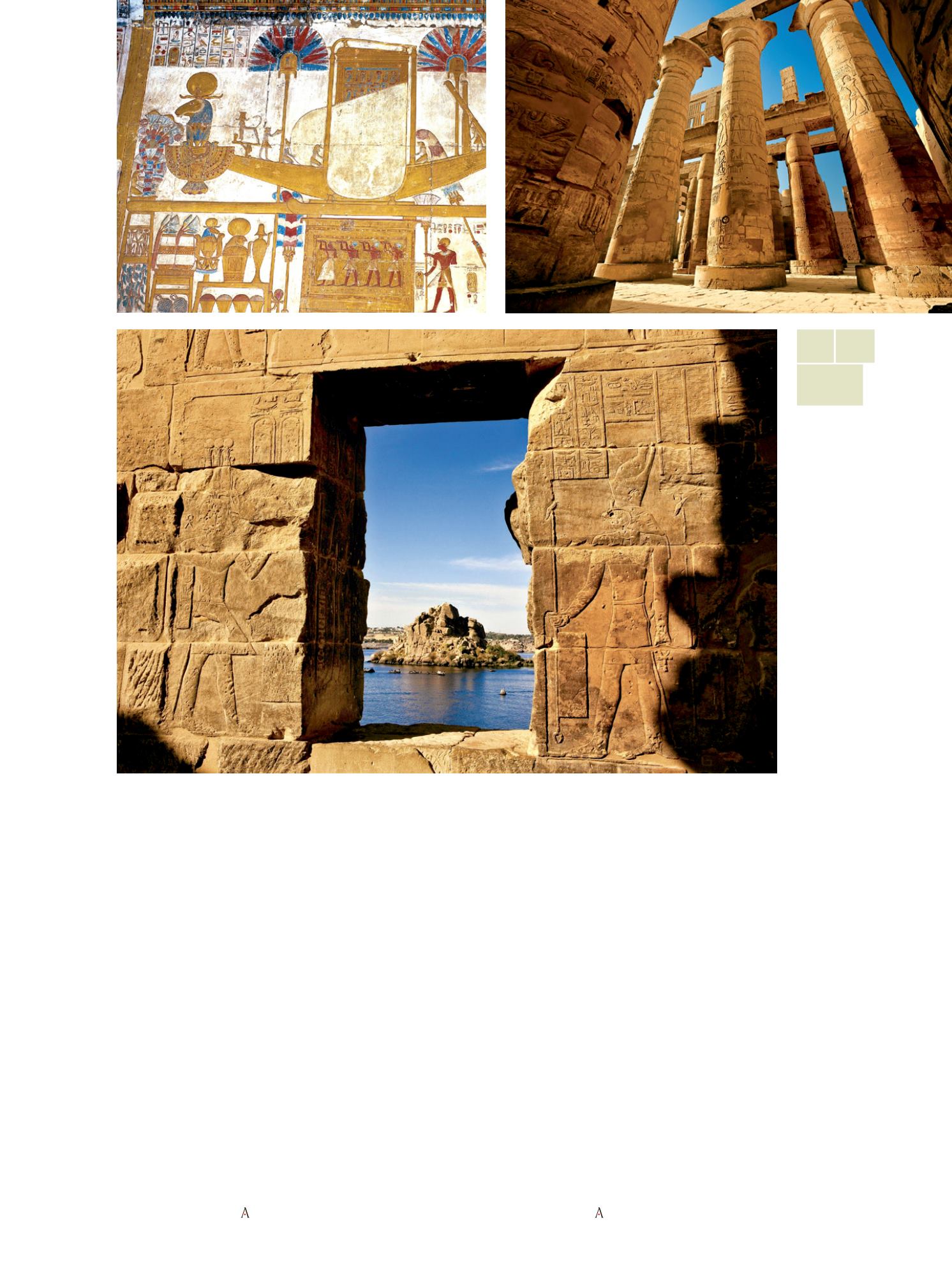
11. El templo de
Karnak, en Tebas,
dedicado al Dios
Amón-Ra. /
The
temple of Karnak, in
Thebes, dedicated to
the God Amun-Ra.
12. La barca
sagrada de Amón-
Ra (templo del
Faraón Seti I en
Abydos). /
The holy
boat of Amun-Ra
(Temple of Pharaoh
Seti I in Abydos)
13.Vista al río Nilo
desde el Templo de
Philae en Aswan,
Egipto. /
View of
the Nile River from
the Philae Temple in
Aswan, Egypt.
12
11
13
·amura·
135
personaje •
personage