



 137 / 150

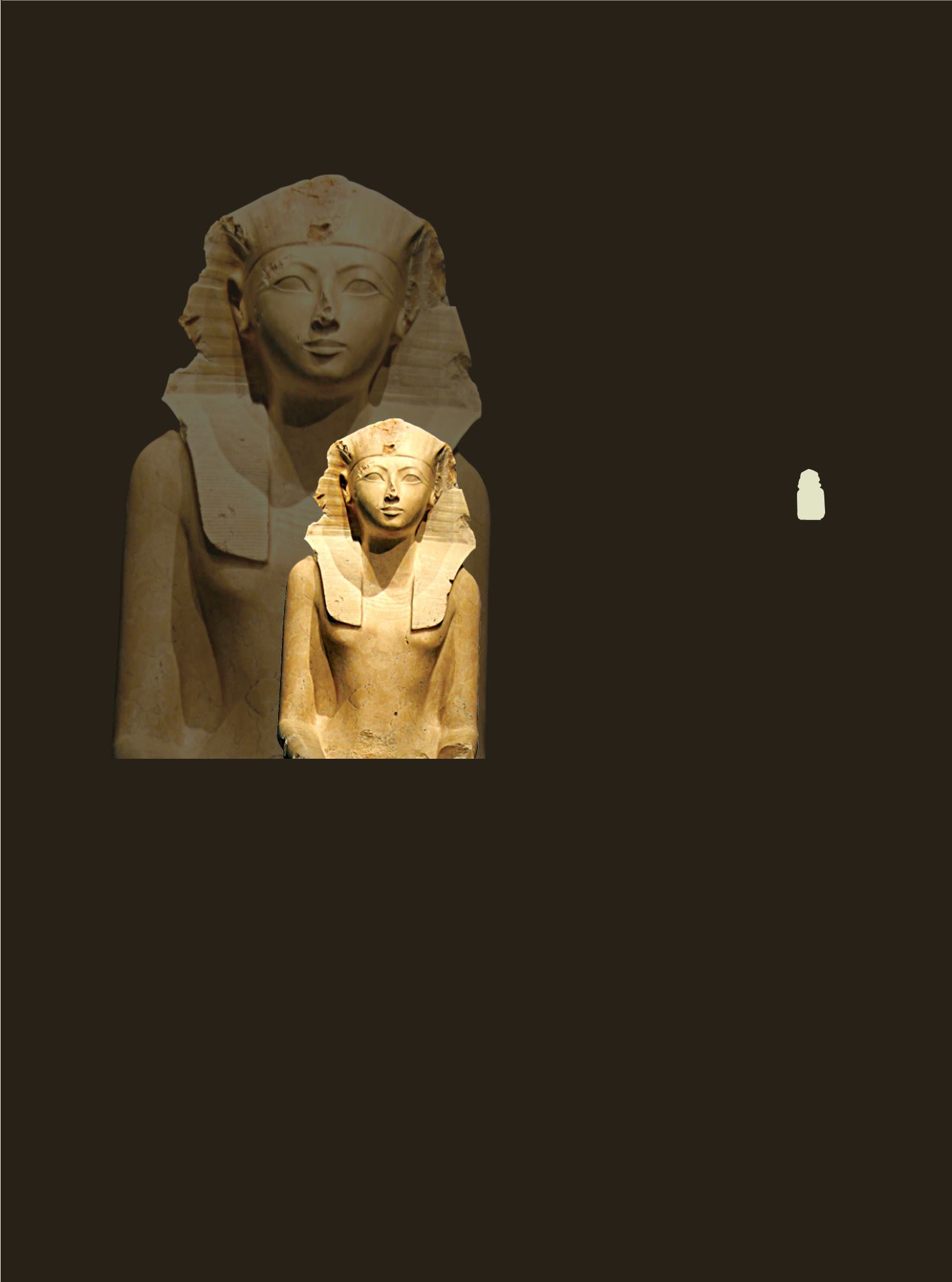
Hatshepsut: la reina-faraón
La expedición más célebre de la navegación egipcia fue dirigida e
ideada por la reina Hatshepsut de la dinastía XVIII, quien gobernó
con el nombre de Maatkara Hatshepsut entre el 1490 al 1468 a. C.
sobre el alto y bajo Egipto. Sus habitantes vivieron –durante los 22
años de su reinado– uno de los más largos períodos de paz y pros-
peridad económica. Ella restableció rutas comerciales; comisionó la
construcción de innumerables edificaciones, entre los cuales desta-
ca sobremanera su templo funerario en el complejo de Deir El Bahari,
situado en la ribera del Nilo, que en la actualidad está considerado
como una de las maravillas arquitectónicas del antiguo Egipto.
Hatshepsut era la hija primogénita y única del rey Thutmosis I y
de la Gran Esposa real Ahmose; al morir su padre, debió heredar su
poder por linaje y por la voluntad expresa del Faraón. Este era un de-
recho imposible de recibir, ya que existía la creencia de que los dio-
ses habían dictaminado que el papel de rey solo podía ser ostentado
por los hombres. Hatshepsut se casó entonces con su hermanastro
Tutmosis II, asumiendo el título de esposa principal y reina durante
15 años hasta la muerte de su cónyuge. Un hijo de este último con
una concubina, nombrado Tutmosis III, seguiría en la sucesión; sin
embargo, era apenas un niño, de manera que Hatshepsut reinó como
regente. En el año 1437 a. C., se auto coronó como faraón, dando
inicio a un inaudito y exitoso reinado, considerado como uno de los
episodios más brillantes de la historia del antiguo Egipto.
Hatshepsut: the PharaohQueen
The most famous Egyptian sailing expedition was commanded
and devised by queen Hatshepsut of the Eighteenth Dynasty, who
ruled by the name of Maatkare Hatshepsut between 1490 and 1468
BC over the Upper and Lower Egypt. People experienced—during
her 22-year reign—one of the longest periods of peace and eco-
nomic prosperity. She restored commercial routes and commis-
sioned the construction of countless buildings; among which, her
Mortuary Temple stands out in the Deir el-Bahari complex, located
at the banks of the Nile; it is currently considered one of the archi-
tectural wonders of ancient Egypt.
Hatshepsut was King Thutmose I and the Great Royal Wife Ah-
mose’s first and only daughter; when her father died, she was sup-
posed to inherit his position by lineage and by the express will of
the pharaoh. However, this proved an impossible right to claim
because there was a belief that the gods had proclaimed that the
position of a king could only be held by men. Hatshepsut thus mar-
ried her stepbrother Thutmose II, assuming the title of queen and
principal wife for 15 years until the death of her spouse. A son of
the king and a concubine, named Thutmose III, was to follow in suc-
cession; however, he was barely a child, and Hatshepsut reigned as
regent. In the year 1437 BC, she self-crowned as Pharaoh, marking
the beginning of an unprecedented and successful reign, considered
one of the brightest episodes in the history of ancient Egypt.
personaje •
personage
“Explore the routes to Punt, open the roads to the
Myrrh-terraces, and lead an expedition on water
and on land to bring exotic goods from the God’s
Land to this god who created her beauty.”
(Text from the inscriptions in the temple of
Queen Hatshepsut in Deir el-Bahari)
“Exploraré las rutas hacia Punt, descubriré los caminos
hacia las terrazas de mirra, tras guiar a la tropa por mar
y tierra para traer maravillas de la Tierra de dios para
este dios que ha creado sus perfecciones.”
(texto en las inscripciones del templo de
la reina Hatshepsut en Deir El Bahari)
5
5. Estatua de
Hatshepsut. Museo
Metropolitano de
Arte, Nueva York. /
Hatshepsut statue.
Metropolitan
Museum of Art, New
York.
·amura·
133