85
·amura·
planeta azul •
blue planet
expedition took on a new meaning and a more
defined purpose: to explore, video and photograph
the remains of these ancient ships that have spent
hundreds of years on the seabed.
"Chinchorro" is the name of a Caribbean network
used for fishing scaly species in coastal waters and it
is likely that ancient mariners named the reef due to
the large amount of ships that had become trapped in
the coral barrier, as well as the fish which remain
inert in the network.
Today, 18 galleons that were shipwrecked
between the 16th and 17th centuries and approxi-
mately 12 more vessels from the modern age have
been documented. Therefore, the reef is known
amongst diving enthusiasts as the largest "shipwreck
cemetery" in the country.
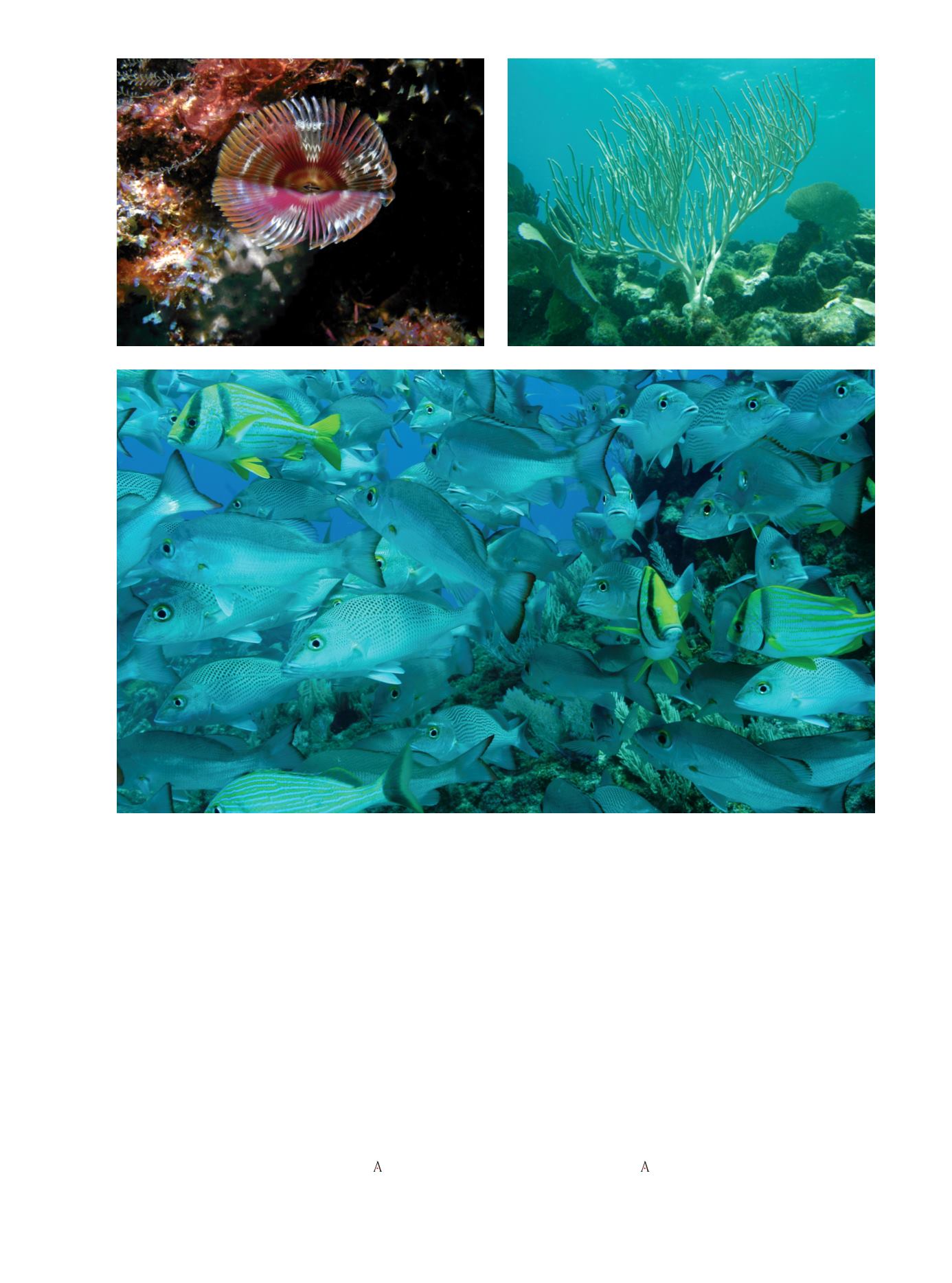
Diving in the waters of the Chinchorro Reef,
whether by day or by night, offers a unique experience
due to the enormous variety of coral, mollusks, fish,
crustaceans and algae that form a spectacular panora-
ma that we will remember for many years to come.
expedición tuvo un nuevo sentido y un propósito más
definido: explorar y documentar en video y fotografía
los restos de los barcos antiguos que llevan cientos de
años en los fondos marinos.
"Chinchorro" es el nombre de una red caribeña utili-
zada para la pesca de escama en aguas costeras, y es
probable que los antiguos marinos llamaran así al arre-
cife por la gran cantidad de naves que han quedado
atrapadas en la barrera coralina, así como los peces aca-
ban inertes en la red.
Hoy en día se han documentado 18 galeones que
naufragaron entre los siglos XVI y XVII, y aproximada-
mente 12 barcos más de la época moderna. Por esto, en-
tre los aficionados del buceo se conoce a Chinchorro co-
mo "el cementerio de barcos hundidos" más grande del
país.
Sumergirse en las aguas del Arrecife de Chinchorro,
de día o de noche, proporciona una experiencia única,
por la enorme variedad de corales, moluscos, peces,
crustáceos y algas que se integran en un paisaje espec-
tacular que recordaremos por mucho tiempo.


