especies •
species
86
·amura·
Texto /
Text
• Foto /
Photo
: Oscar S. Frey
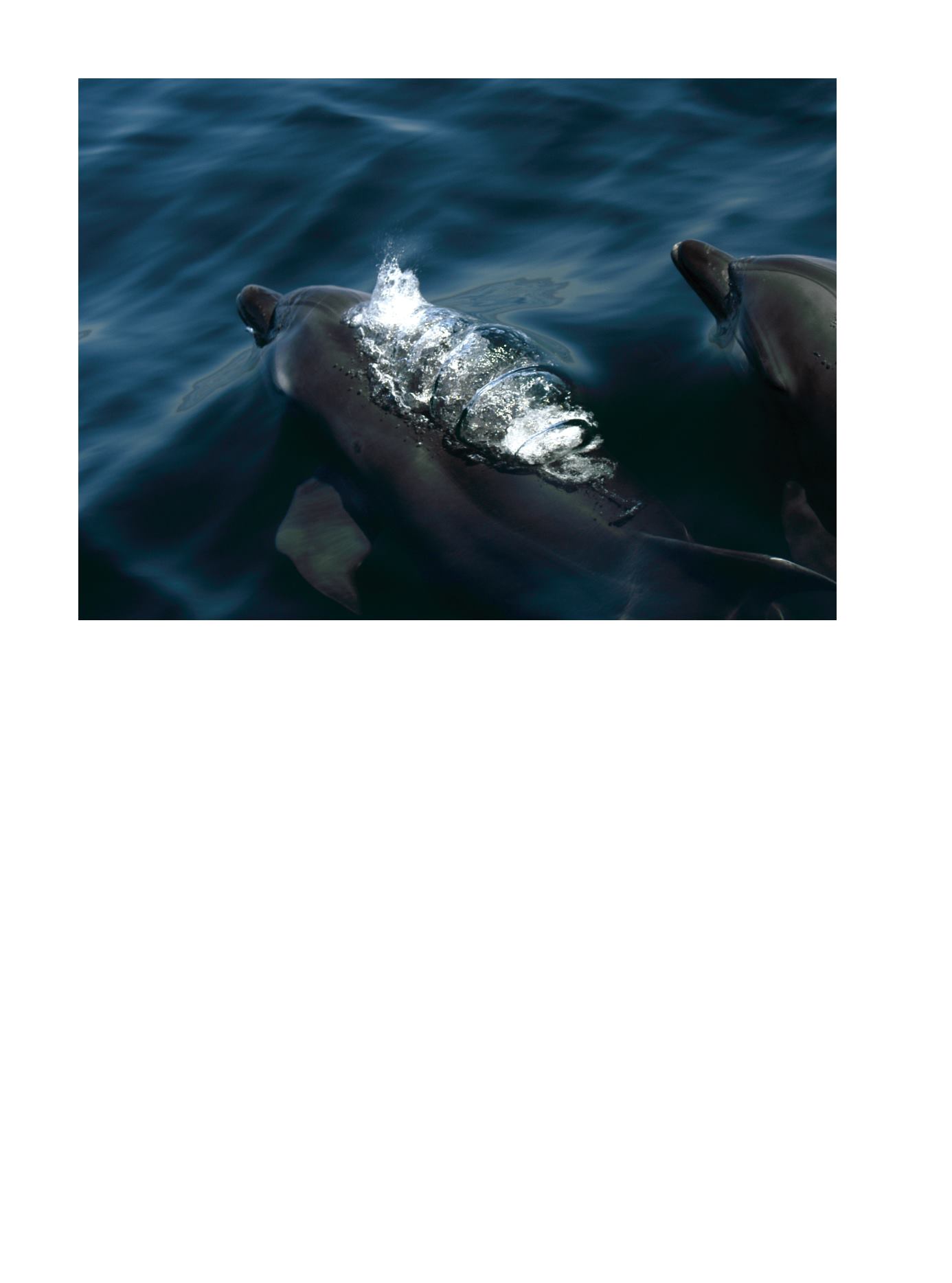
Dolphins, freedom and captivity
D
olphins belong to the Delphinidae family,
which is the largest and most diverse family of
whales due to its successful adaptation to the
maritime environment. The family includes numer-
ous species of dolphins, such as pilot whales, false
killer and killer whales, which in the fossil register are
recorded as dating back at least 11million years. Some
species only eat fish or squid, whereas others feed on a
variety of animals, including crustaceans.
Dolphin species have varied physical adaptations
that reflect their diet and methods of movement,
such as the form of their bodies, craniums and dental
characteristics. Wide-headed dolphins, such as the
pilot whale, eat squid , narrow-headed dolphins, such
as the common dolphin, the spinner dolphin and the
spotted dolphin, eat fish and dolphins with medium-
width craniums, such as the bottlenose dolphin and
the Atlantic white-sided dolphin have a more varied
diet, which includes fish and crustaceans.
The most well-known species of dolphins is the
bottlenose (Tursiops truncatus). These dolphins are
frequently trained to be used in aquariums and
theme parks and have been used by the military for
mine sweeping. In their natural habitat, they are
L
os delfines pertenecen a la familia
Delphinidae,
que es la más grande y diversa familia de cetáceos
debido a su éxito en la adaptación al medio mari-
no. Abarca a numerosas especies de delfines, ballenas
piloto, falsas orcas y orcas, que en el registro fósil regis-
tran una antigüedad de por lo menos 11 millones de
años. Algunas especies comen exclusivamente peces o
calamares, mientras otras se alimentan de una variedad
de animales, incluyendo crustáceos.
Las especies de delfines presentan variadas adapta-
ciones físicas que reflejan su dieta y métodos de locomo-
ción, como forma del cuerpo, cráneo y características
dentales. Los delfines de cabeza ancha (como las ballenas
piloto) comen calamares, los de cabeza angosta (como el
delfín común, el delfín de tornillo y el delfín moteado)
comen peces, y los delfines con un cráneo de anchura
intermedia (como el delfín nariz de botella y el delfín de
lados blancos) tienen una dieta más variada, que incluye
peces y crustáceos.
La especie de delfín mejor conocida es la del delfín
nariz de botella,
Tursiops truncatus.
Con frecuencia estos
delfines son entrenados para ser utilizados en acuarios y
parques de diversiones, y se han empleado para usos
militares en la localización de minas. En su ambiente
Delfines, libertad y cautiverio


