



 106 / 132

·amura·
104
planeta azul •
blue planet
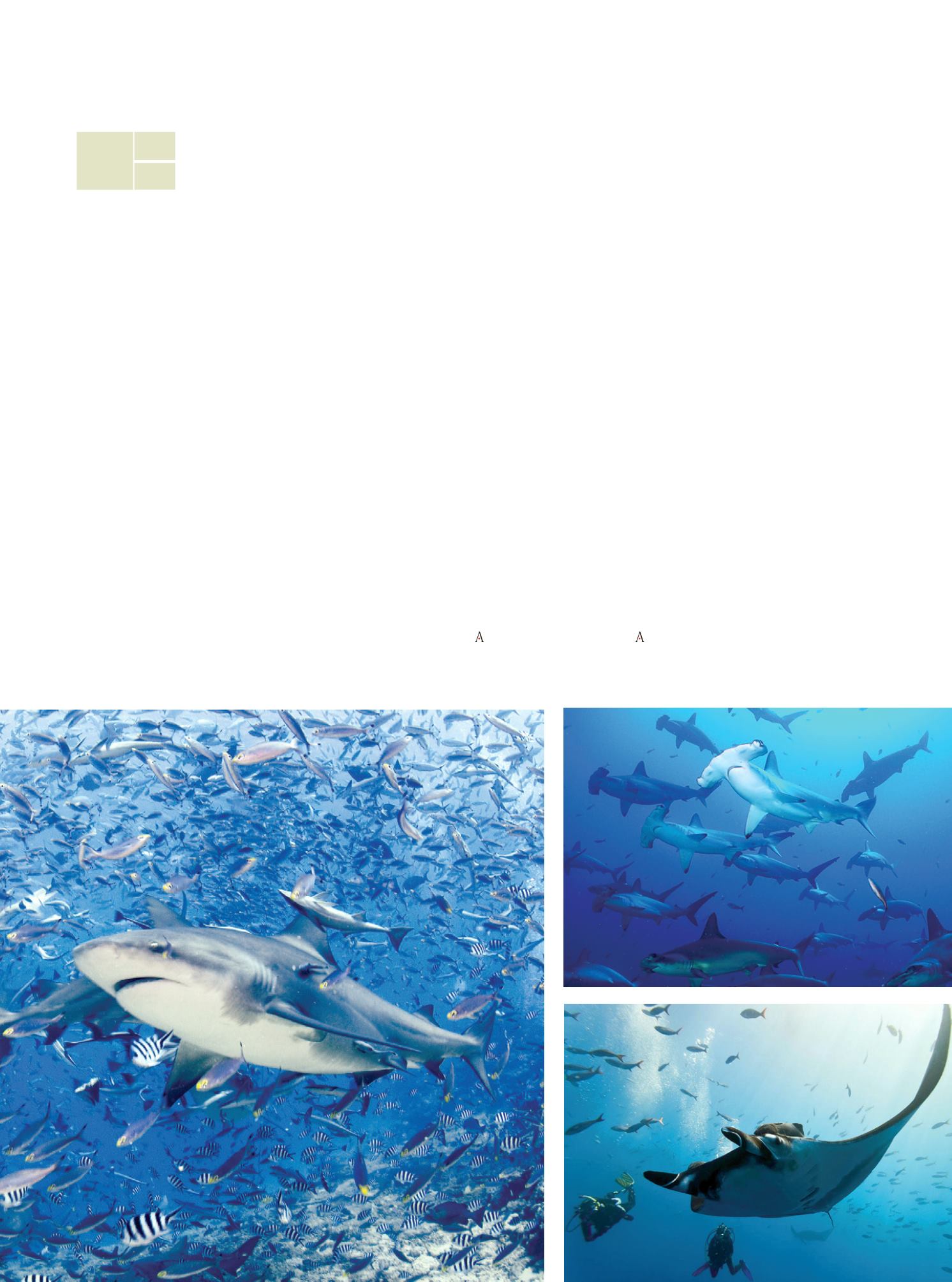
Afortunadamente, en esta zona su presencia es
abundante gracias a que la población indígena de
Fiyi observa un respeto tradicional y cultural de la
especie, cuyo nombre fiyiano es
Na Qio
; por lo que
es altamente posible que durante una inmersión se
presente un encuentro con alguno de los siguien-
tes ejemplares: tiburón de puntas plateadas
(Car-
charhinus albimarginatus),
tiburón de arrecife de
punta blanca
(Triaenodon obesus),
cazón negrudo
(Negaprion acutidens),
tiburón nodriza leonado
(Nebrius ferrugineus)
, tiburón cebra
(Stegostoma
fasciatum),
tiburón punta negra
(Carcharhinus me-
lanopterus),
tiburón gris
(Carcharhinus amblyrhyn-
chos),
tiburón sarda o tiburón toro
(Carcharhinus
leucas),
tiburón tigre (
Galeocerdo cuvier
), tiburón
martillo común
(Sphyrna lewini)
y el tiburón marti-
llo gigante o cornuda gigante
(Sphyrna mokarran).
La Universidad del Pacifico Sur en Suva ha
identificado 58 especies de tiburones que frecuen-
tan Fiyi, donde se venera a
Dakuwaqa
el “gran dios
tiburón”, protector ante cualquier peligro, amo y
señor de “la tierra bajo el agua”, como denominan
localmente a ciertas áreas del mundo submarino.
Fiyi ostenta 10,020 km
2
de arrecife de coral
disponibles para vivir a plenitud la aventura de
entrar en contacto con sus fabulosos habitantes.
Entre los sitos más conocidos se encuentran: el
arrecife arcoíris con 29 km de largo en el estrecho
de SomoSomo; Taveuni; el Mar de Koro; el gran
arrecife Astrolabe; Viti Levu; Beqa Lagoon y Ias is-
las Mamanuca, entre muchos otros.
O
Fortunately, in this area, their presence is
abundant because the Fijian indigenous popula-
tion harbors deep traditional and cultural respect
for this species, which Fijian name is
Na Qio.
This
is why it is highly possible that, while swimming,
you might experience an encounter with one of
the following specimens: The silvertip shark
(Car-
charhinus albimarginatus),
the whitetip reef shark
(Triaenodon obesus),
the sicklefin lemon shark
(Negaprion acutidens),
the tawny nurse shark
(Ne-
brius ferrugineus)
, the zebra shark
(Stegostoma
fasciatum),
the blacktip reef shark
(Carcharhinus
melanopterus),
the grey reef shark
(Carcharhinus
amblyrhynchos),
the bull shark
(Carcharhinus leu-
cas),
the tiger shark (
Galeocerdo cuvier
), the scal-
loped hammerhead
(Sphyrna lewini)
and the great
hammerhead
(Sphyrna mokarran).
The University of the South Pacific in Suva
has identified 58 shark species that frequent Fiji,
where
Dakuwaqa
, the “great shark god” is wor-
shipped, considered the protector to any danger,
lord and master of the “land underwater”, as the
undersea is locally denominated.
Fiji harbors 10,020 km
2
worth of coral reefs
available to enjoy the adventure of being in con-
tact with its fabulous inhabitants to the fullest.
Among the most relevant sites we find: the rain-
bow reef, 29 km long in the strait of SomoSomo,
Taveuni, the Koro Sea, the great Astrolabe reef, Viti
Levu, Beqa Lagoon, the Mamanuca Islands, and
many more.
6. Los tiburones
ayudan a regular
la abundancia y la
diversidad de las
especies mientras
mantienen el
equilibrio en un
ecosistema. /
Sharkshelpto
regulatespecies
abundanceand
diversitywhile
maintaining
balancethroughan
ecosystem.
7. Los tiburones son
muy importantes
para la salud general
de los océanos y, en
particular, para los
arrecifes de coral. /
Sharksareincredibly
importantforoverall
oceanhealthand,in
particular,forcoral
reefs.
8 Fiyi es un lugar
ideal para bucear con
tiburones y otras
especies marinas /
Fijiisanidealplace
fordivingwith
sharksandother
marinespecies.
6
7
8