


 112 / 132

MILLENARY VOYAGERS
It was an extraordinary culture of navigators, from which unfortu-
nately there exists little conclusive evidence of the origins as wells as
the ways in which they achieved the feat to navigate and expand their
presence from Papua, New Guinea to the remote Oceanic archipelagos.
Theymust have possessed extraordinary navigational knowledge that
took them in successful explorations that spanned millions of km
2
of
unfathomable oceans. Some compare this accomplishment with mak-
ing repeated journeys from Earth to the moon, a simile that refers to
not only distance, but to the challenges involved in such voyage.
It is estimated that they developed navigational skills that
were passed down from generation to generation for thousands of
years, that they were knowledgeable in the art of using the wind,
sailing and rowing, that they knew how to interpret solar time and
use the stars, bird flight, the direction of the shadows, and ocean
currents as reference, that they drew their own maps, and that
their maritime expertise was such that they must have consid-
ered the ocean as their home. According to which, they were not
only capable of discovering new sea routes, but they could also
return to their point of origin. Nothing was coincidence in their
relationship with the sea.
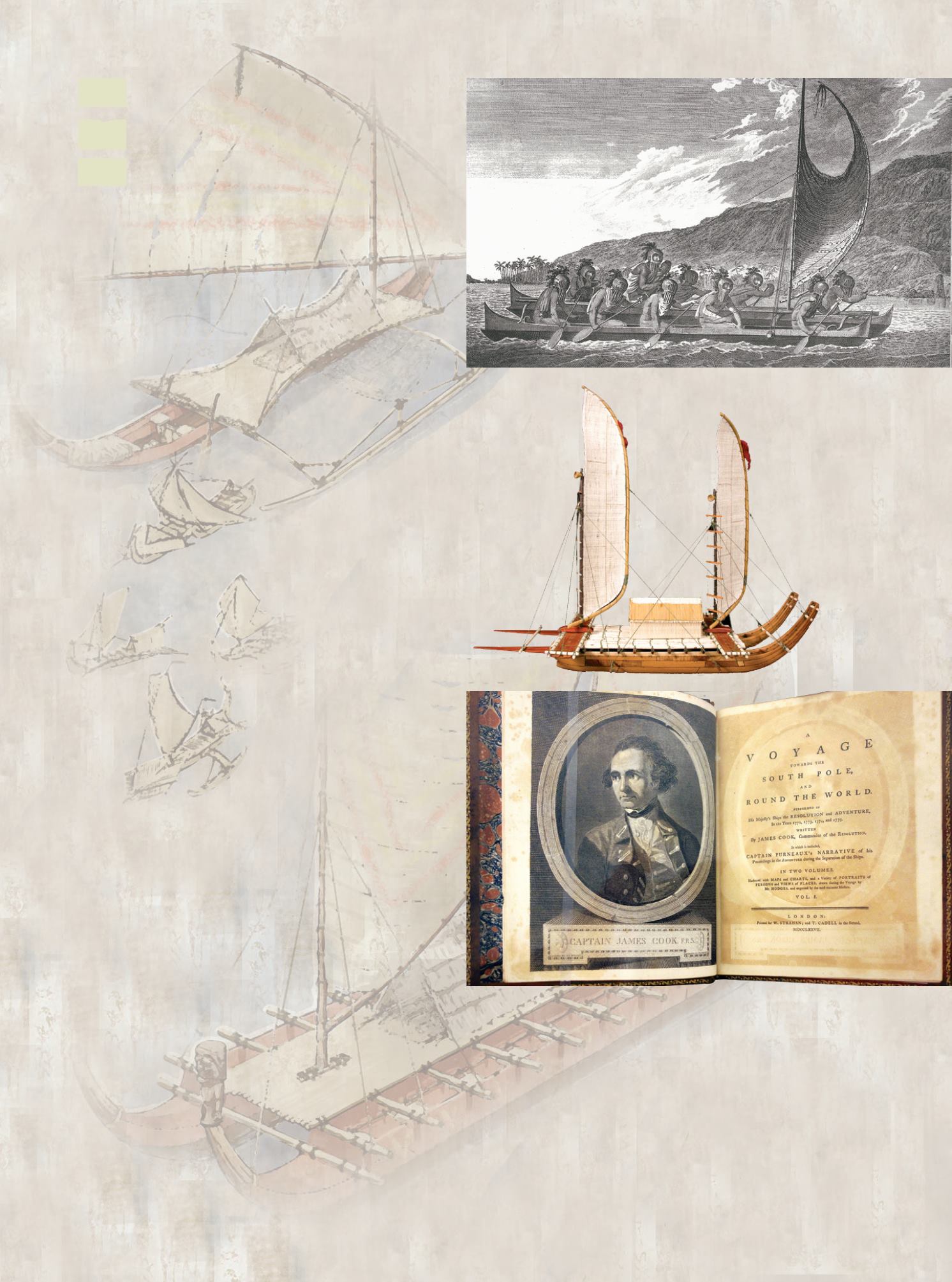
Despite extensive search, shipwrecks haven’t been found. Howev-
er, replicas have been produced of possible ships to follow the routes
taken by the Lapita and to experience and prove in practice the effi-
ciency of the techniques they were thought to use.
VIAJEROS MILENARIOS
La suya era una cultura de extraordinarios navegantes, de la que
desafortunadamente existe poca evidencia concluyente, tanto del
origen, así como del modo con el cual lograron la hazaña de navegar
para extender su presencia desde Papua Nueva Guinea hasta las re-
motas islas de los archipiélagos de Oceanía. Debieron poseer asom-
brosos conocimientos en navegación, que los llevaron a explorar exi-
tosamente millones de km
2
de insondables océanos. Una proeza que
algunos comparan con realizar repetidos viajes de la tierra a la luna;
símil que se refiere no sólo a la distancia, sino a los desafíos involu-
crados en semejante travesía.
Se conjetura que desarrollaron habilidades de navegación que
fueron transmitidas de generación en generación milenariamente;
que conocían el arte de aprovechar el viento, las embarcaciones a
vela o remos; que se orientaban por la posición del sol y las estrellas,
el vuelo de las aves, la dirección de las sombras, y las corrientes ma-
rinas; que incluso confeccionaban sus mapas, y que era tal su pericia
marinera, que debieron considerar al océano como su propio hogar.
De acuerdo a lo cual, no solo eran capaces de descubrir nuevos de-
rroteros, sino que podían regresar a su punto de origen. Nada ocurría
casualmente en su relación con el mar.
A pesar de las arduas investigaciones, no se han encontrado res-
tos de sus embarcaciones. Sin embargo, se han producido réplicas de
las posibles naves para seguir las rutas emprendidas por los ances-
tros Lapitas, con el fin de experimentar y comprobar en la práctica la
eficacia de las técnicas que se piensa utilizaron.
6
7
8
6.Secreeque losLapitaseran
grandesnavegantes./
Itis
believedthatLapitaswere
greatnavigators
.
7.Réplicadeunaembarcación
lapita./
Lapitaboatreplica.
8.JamesCook ‘Unviajehacia
elPoloSuryalrededordel
mundo’,Londres, Impresopara
StrahanyCadell,1777,Museo
RealdeOntario,Canadá./
JamesCook ‘AVoyageTowards
theSouthPoleandRound
theWorld’London,Printed
forStrahanandCadell,1777,
RoyalOntarioMuseum,
Canada.
Oceanía es también llamada Novísimo
Mundo, por ser el último continente
“descubierto” por Europa.
Oceania is also called the New World;
it was the last continent to be
discovered by Europe.
herencia cultural •
culture and heritage
·amura·
110
Foto /
Photo
: PANORAMIO / National Museum of Ethnology, Osaka / GLOBAL EDUCACION / PADRE / SQUARE SPACE