



 114 / 132

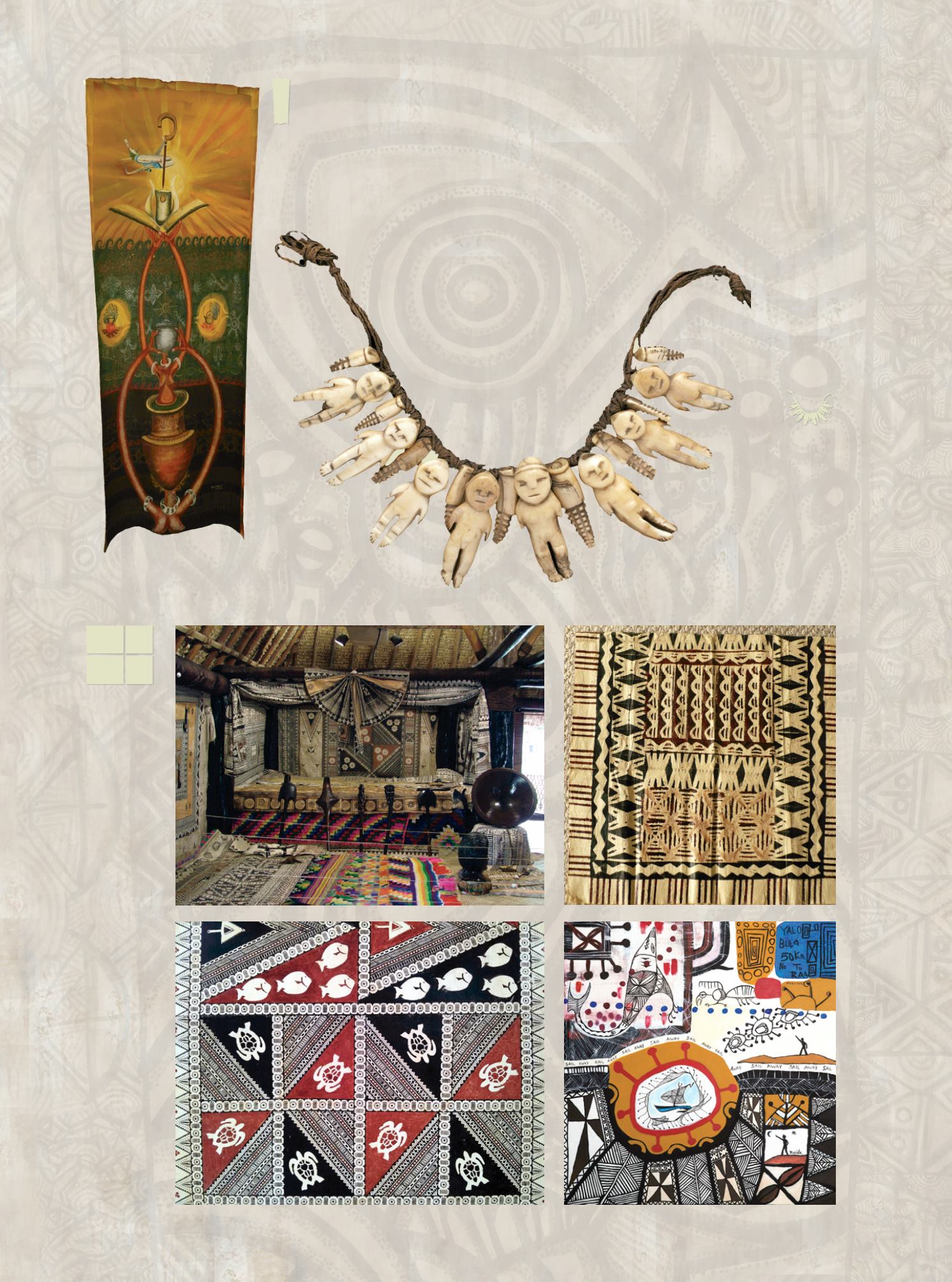
En el caso de Fiyi, los motivos ancestrales lapitas
se incluyen en las técnicas artísticas llamadas
Masi,
que son utilizadas en textiles, maderas, y grabados
diversos. Las telas de corteza del árbol de la morera
también conservan un significado muy especial en
la vestimenta ceremonial, utilizada para asistir a las
celebraciones comunitarias como investiduras de los
jefes, bodas, funerales, danzas y ritos de iniciación.
14. Vale Levu: La
“gran casa” del jefe
es la más decorada
del pueblo, con
tejidos, materiales
y diseños
tradicionales. /
Vale
Levu:Thechief’s
“greathouse”isthe
mostdecoratedin
thevillagewith
traditionalfabric,
materialsand
designs.
15.16. Auténticos
Masi
o Tapa, telas
de las islas Fiyi. /
Authentic
Masi
or
Thapa,clothsfrom
theFijiislands.
17
.
“Lapita
Journey” de
Rusiate Lali. El
linaje del artista
está conectado con
el pueblo Lapita.
/
“LapitaJourney”
byRusiateLali,The
artist’slineageis
connectedtothe
Lapitapeople.
In Fiji’s case, the ancestral Lapita motifs are
part of artistic techniques called
Masi
, used
in textiles, woods and varied carvings. The
fabrics that come from the
Morus Alba
tree
bark also have a very special meaning
in the ceremonial vestment, used to
attend community celebrations
such as investitures of chiefs,
weddings, funerals, dances
and initiation rituals.
12
14
15
16
17
herencia cultural •
culture and heritage
13. Collar de
figuras de
marfil siglo
XIX, Fiyi. Museo
de Arqueología
y Antropología,
Universidad
de Cambridge.
/
Necklaceof
ivoryfiguresXIX
century,Fiji.Museum
ofArchaeology
andAnthropology,
Univerisityof
Cambridge.
12. ”Lapita”, de
Beben Natum
(Acrílico sobre
lienzo). / “
Lapita”
byBebenNatum
(AcryliconCanvas).
13
Foto /
Photo
: SMART HISTORY / FUNDATION / SUZANNE BASTIEN / YASAWA / TRAVELER
·amura·
112