


 113 / 132

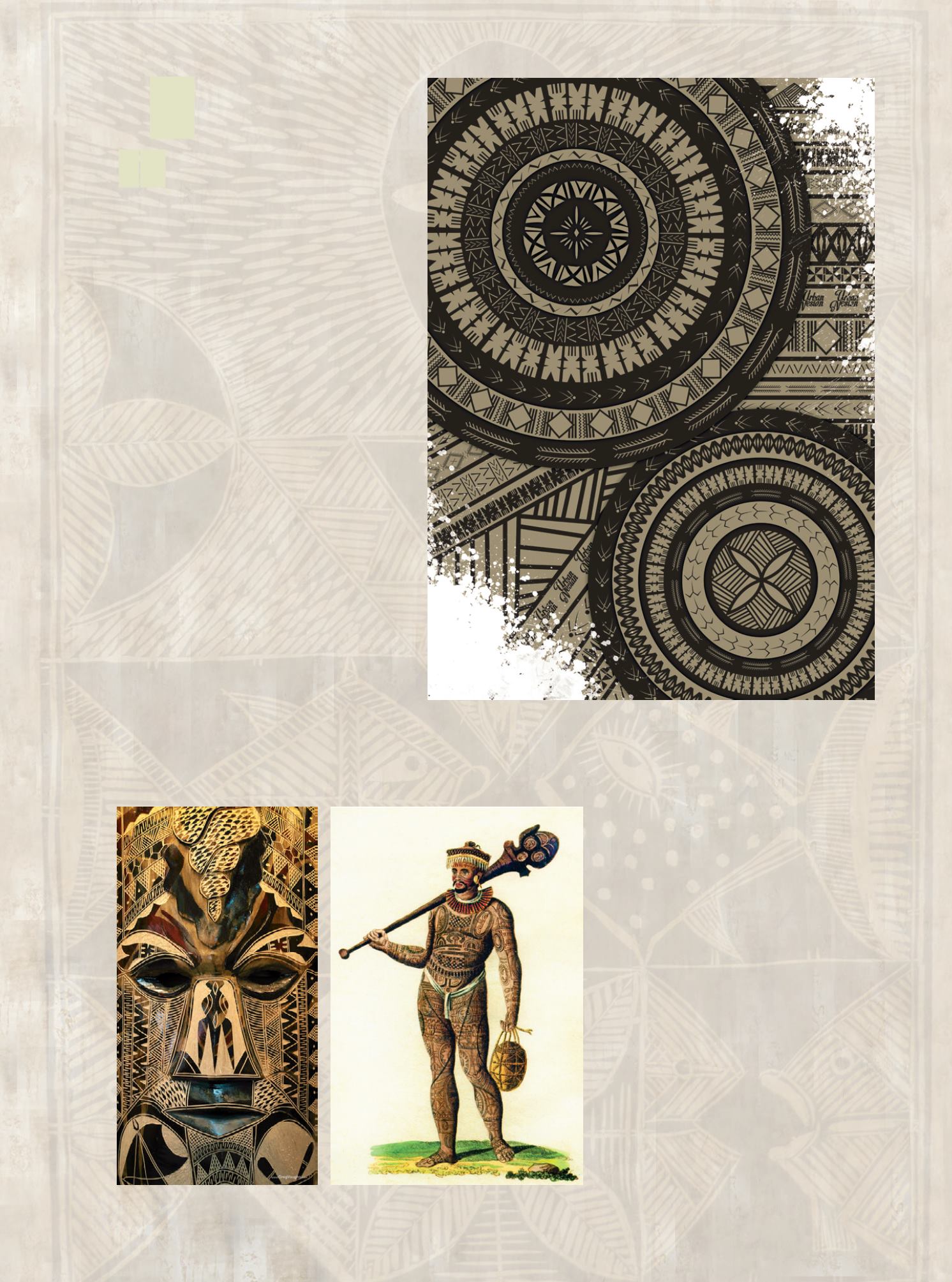
9. Siapo es el término
samoano para un
paño fino hecho de la
corteza del árbol de la
mora. En Fiyi, se llama
Masi
, en Tonga:
Ngatu
.
/
SiapoistheSamoan
wordforafinecloth
madefromthebarkof
theMulberrytree.In
Fiji,itiscalled
Masi
,in
Tonga:
Ngatu
.
10. Arte fiyiano. /
Fijianart.
11. Antiguos tatuajes
de la cultura lapita,
Oceanía. /
Ancient
tattoosofLapita
culture,Oceania.
LAPITA ART AND
LEGACY
The current inhabitants of Fiji and the rest of the
Oceanic nations—albeit some differences—pre-
serve their gods and mythological beliefs. They re-
spect and reverentially worship their forefathers
and ancestral heroes. Their myths emphasize the
significance they give to the connection between
the elements, the supernatural or magic, as essen-
tial parts of their daily lives. There is an intricate
link between language, coexistence, rituality, cul-
ture and forces of nature.
Without a doubt, Lapita pottery is the main as-
pect through which to learn more about this com-
munity and heritage. The motifs found in such
pieces are described as repetitive and complex geo-
metrical series that archeologists have classified in
more than 100 different motifs; at the same time,
they continue to create methods and drawing maps
to locate their distribution in all of Oceania. Some
of their characteristics have been related to Polyne-
sian patterns that are still used in modern tattoos.
These designs are reproduced in the traditional
crafts called
ngatu
in Tonga, or
siapo
in Samoa.
ARTE Y LEGADO LAPITA
Los pobladores actuales de Fiyi, y del resto de las
naciones de Oceanía –aunque con diferencias–
conservan sus dioses y creencias mitológicas.
Respetan y practican un culto reverencial a sus
antepasados y héroes ancestrales. Sus mitos ex-
ponen la importancia que otorgan a la conexión
entre los elementos, lo sobrenatural o la magia,
como partes esenciales de su cotidianeidad. Hay
un estrecho vínculo entre lenguaje, convivencia,
ritualidad, cultura y fuerzas de la naturaleza.
Sin lugar a dudas, la cerámica lapita es el fun-
damento primordial para conocer sobre este pue-
blo y su herencia. Los motivos encontrados en
las piezas se describen como series geométricas
repetitivas complejas que los arqueólogos han
clasificado en más de 100 motivos diferentes; a
la vez, continúan ideando métodos y elaborando
mapas para ubicar su distribución por toda Ocea-
nía. Algunas de sus características han sido rela-
cionadas con los patrones polinesios que todavía
son usados en los tatuajes contemporáneos. Es-
tos diseños son reproducidos además en las arte-
sanías tradicionales llamadas
ngatu
en Tonga, o
siapo
de Samoa.
9
10 11
·amura·
111
herencia cultural •
culture and heritage