·amura·
34
compás int • int compass
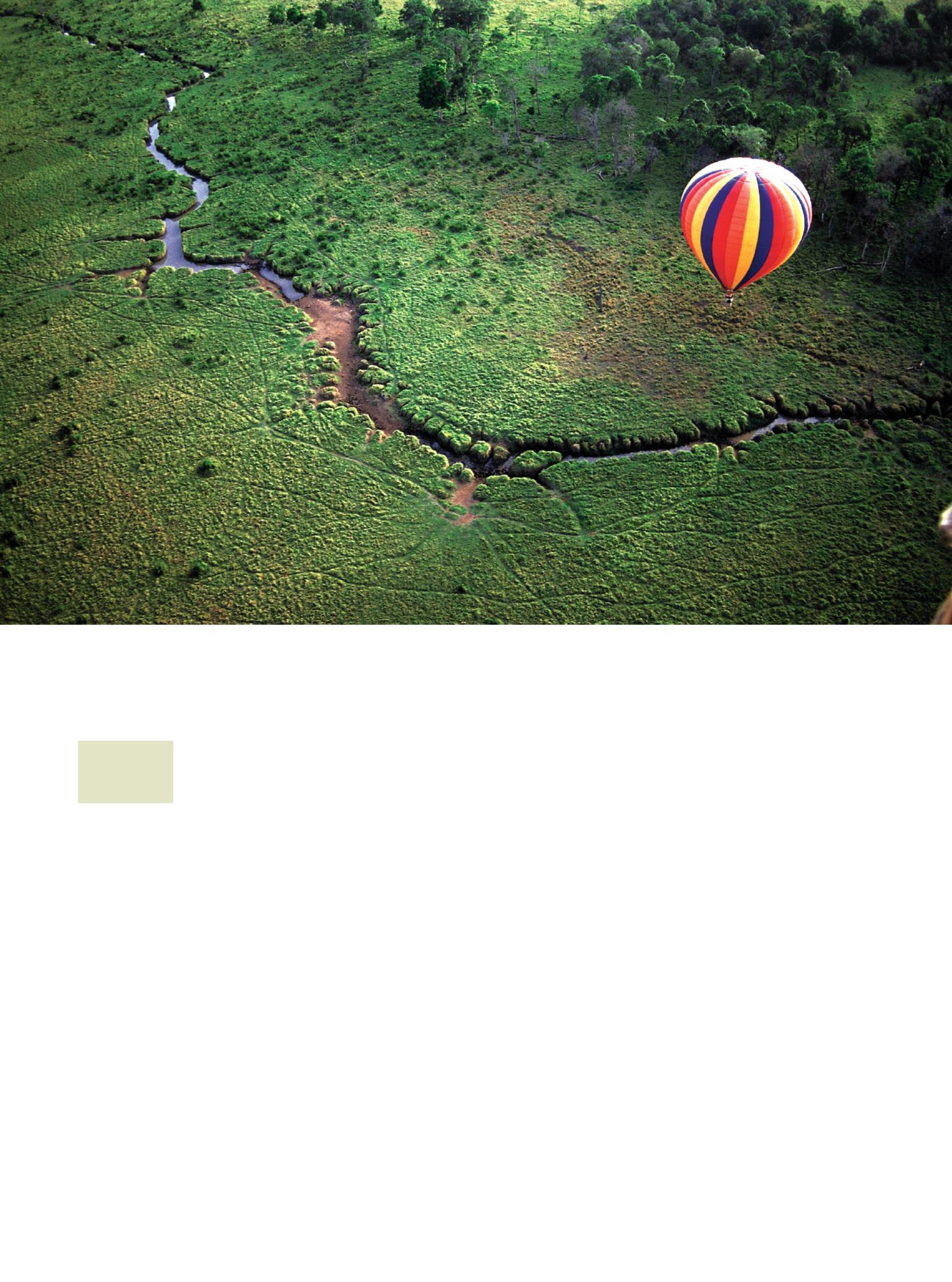
5. Air balloon ride over The
Masai Mara. /
Viaje en glo-
bo sobre el Masai Mara.
5
Grandes oleadas de comerciantes árabes llegaron
a las costas de Kenia entre los siglos séptimo y déci-
mo, en donde paulatinamente fueron estableciendo
ciudades y expandieron sus redes comerciales hacia el
interior del territorio keniano. Los árabes se integraron
con los pueblos africanos, dando origen a la cultura de-
nominada como Swahili, cuyo idioma actualmente es el
oficial en Kenia.
Posteriormente, a partir del siglo XIII llegaron por-
tugueses, quienes establecieron enclaves comerciales
y durante varios siglos libraron batallas con los árabes
para controlar las costas de África Oriental, hasta que a
finales del siglo XVII los árabes perdieron el Fuerte Jesús,
localizado en Mombasa.
La presencia europea y árabe en Mombasa se re-
monta a los principios de la Edad Moderna, pero la
exploración del interior comenzó en el siglo XIX. El Im-
perio Británico estableció el Protectorado del Este de
África en 1895, desde 1920 conocido como la Colonia
de Kenia. La República Independiente de Kenia se es-
tableció en 1963.
Actualmente, en la sociedad de Kenia conviven indi-
viduos de diversos orígenes étnicos, el más numeroso
es el de los Kikuyu (22%), seguido de los Iuhya (14%),
los Luo (13%), los Kalenjin (12%) y los Kamba (11%) y
en menor medida los de origen Kisii (6%), Meru (6%)
y otros grupos africanos (15%), así como de origen no
africano (asiáticos, europeos y árabes, en un 1%).
A great amount of Arabic commerce arrived
to the coasts of Kenya between the seventh and
tenth centuries. They began to settle and create
cities, expanding inside the territory along with
their commerce network. Arabic integrated with
African people, originating a cosmopolitan culture
denominated Swahili, who’s tongue is the official
Kenyan language.
In the thirteenth century, the Portuguese arrived;
they began to establish enclosed commerce and for
several centuries freed battles with the Arabian to con-
trol the costs of the Western African shores, until, by
the last months of the seventeenth century, the Arabi-
an lost control over Fuerte Jesus, located in Mombasa.
The European and Arabian presence in Mombasa
remotes to the beginnings of the Modern Ages, but
its internal exploration started in the nineteenth cen-
tury. The British Empire established a protectorate in
the East of Africa in 1895, known as the Kenyan Col-
ony since 1920. The Independent Republic of Kenya
was established in 1963.
Today, society in Kenya is made up of an enor-
mous diversity of ethnic origins, the largest minority
are the Kikuyu (22%), followed by the Iuhya (14%),
the Luo (13%), the Kalenjin (12%) and the Kamba
(11%). With less population, we find the Kisii (6%),
Meru (6%) and other African groups (15%), among
others of Asian, European and Arab roots (1%).


