·amura·
28
compás int • int compass
Antecedentes
La cultura en Líbano, desde los albores fenicios, ha
sido realista, humana y universal, comparable a una
sinfonía que adquiere, por conciencia, su poderío de
expresión. Este carácter dio pábulo, mediante las co-
rrientes migratorias, a un diálogo con los cinco conti-
nentes, dejando abiertas las compuertas de su tradi-
ción milenaria, para integrar sus mentes en todos los
confines del mundo. Por otra parte, es actualmente un
país de gran atractivo turístico, con vestigios arqueo-
lógicos, increíble gastronomía y diversión para cual-
quier gusto y edad.
Los cananeos fenicios enriquecieron sus dominios
históricos anteriores; incluso en su obra, “La Odisea”,
Homero habla de los hombres y de las mercancías de
Sidón, al igual que en la literatura clásica griega como
las “Historias fenicias e india” o en “La ciencia de la an-
tigüedad fenicia” de Hierónimo, rey de Siracusa (216
a 214 a.C.), se ha estudiado lo privativo de su cultu-
ra. Y si ello ocurre con un país minúsculo, es porque
la templanza de los libaneses se adapta a todo medio
geográfico, etnológico y psicológico, cimiento de su
legado civilizador.
Background
The culture in Lebanon, ever since the Phoeni-
cians, has been realist, humane and universal, com-
parable to a symphony that acquires through con-
scious its power of expression. This character made
way, through migratory currents, a dialogue with
the five continents, leaving the doors open of its
millenary tradition to integrate their minds to the
ends of the world. On the other hand, it is currently
a country of great tourist appeal, with archeological
traces, incredible gastronomy and diversion for any
taste and age.
The Phoenicians from Cananea enriched their
previous historic domains; even in their work, The
Odyssey, Homer spoke of the men and merchants of
Sidon, as well as of the classic Greek literature as the
Phoenician stories and India or in The Science of the
Ancient Phoenicians by Hieronimo, King of Syracuse
(216 a 214 a.C.), the privative side of their culture has
been studied. If this happen with a small country, is
due to the template of the Lebanese which adapts to
all geographicmean, ethnological and physiologic, a
foundation of their civilized legacy.
1. “Gruta de la Paloma”,
lugar de la evidencia más
antigua de la existencia
humana en Líbano.
/
“Pi-
geon Grotto”, place of the
oldest human footstep in
Lebanon.
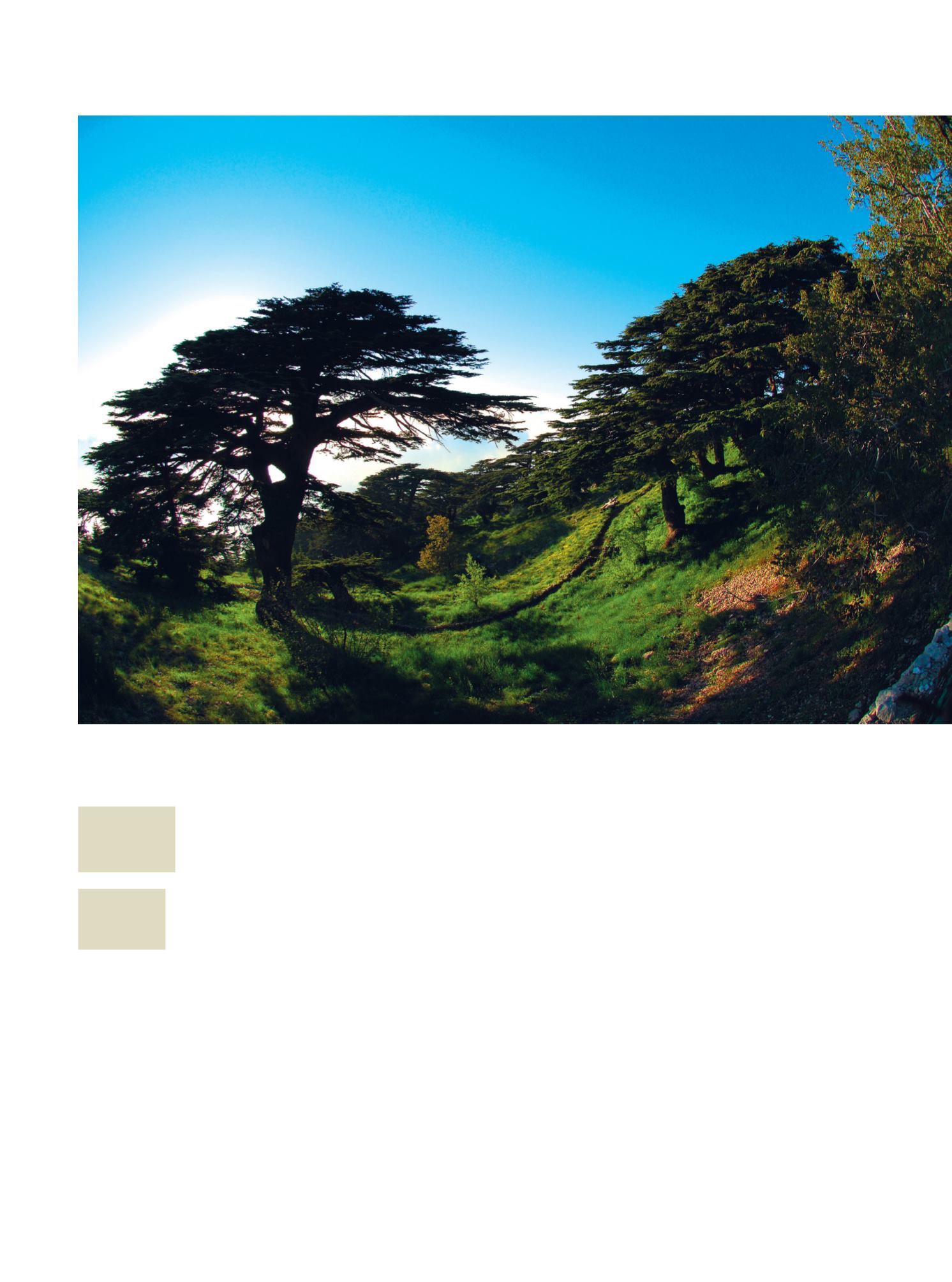
2. Cedros, un árbol
milenario. Barouk,
Monte Líbano.
/ Cedars,
millenary tree. Barouk,
Mount Lebanon.
1
2
Foto: Skyscrapercity / Flickr / SOLIDERE / frvsd / SXC / wkm / Mundo Crown / Lebanon Travel / WPS / moja bieda / SPF


