



 100 / 132

·amura·
98
HoVrmet •
gourmet
La Cocina de
Tita Moning
La antigüedad que vive en la calle San Rafael
Antiquity lives at San Rafael Street
I
f what you are looking for is an entirely tra-
ditional experience, this place is a must. The
gastronomic options of this restaurant are
truly unforgettable. The structure of the an-
cient house used to belong to a Filipino doc-
tor who was famous throughout the capital for the
sumptuous banquets he used to offer to his guests.
The guided tour through the antique home is
beautiful and it ends at the patio, where you will be
grated with melted cheese ball tapas and iced tea.
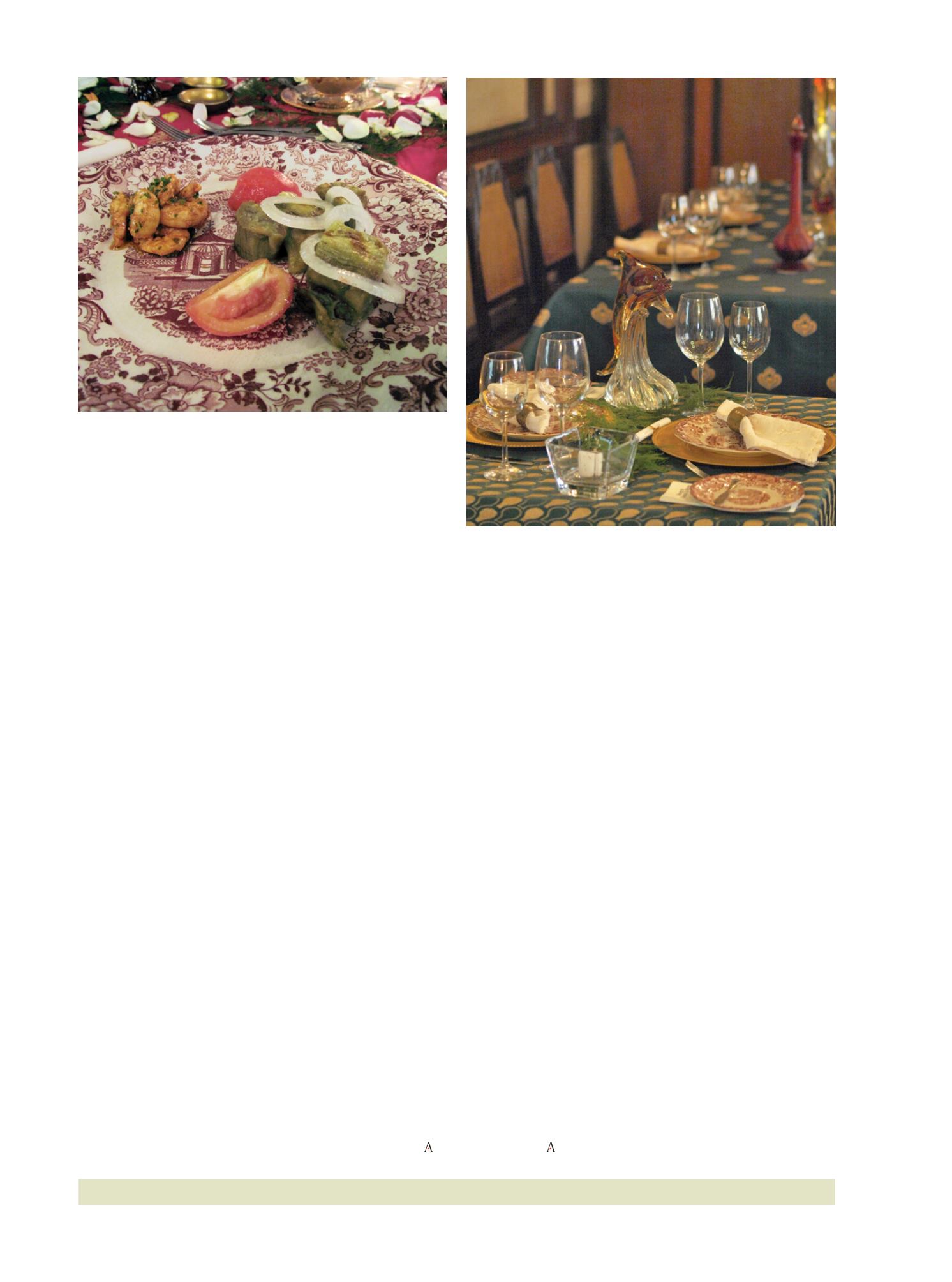
Theoriginal chinaof thehouse still remains intact
and it continues to serve guests,on it, you can still de-
light in original dishes that date from the 1900s, that
despite being entirely from the Philippines, they hold
Spaniard elements of this traditional cuisine.
Something quite unmissable is Salsa Monja, this
sauce was created by the Spanish nuns that arrived to
the Philippines, and it was invented for the purpose of
adding more flavour to the traditional food they were
encountered with, it has a base of onions and garlic.
If you dine at this restaurant, several courses will be
offered, but the ones that are popular are easy to spot:
goldensoup-madeofpumpkin-,theporksteakandthe
insigniadessert: TitaMoningpudding.
The original recipes don’t exist anymore, they
were used by some of the most influential local
familiesmany centuries ago. A clear example of this
is pandan - a sauce created to add flavour to sodas
and desserts.
Info:
San Rafael St, San Miguel, Manila, 1005 Metro Manila, Philippines / Tel: +63 2 734 2141
S
i lo que buscan es una experiencia entera-
NFOtF tSBEJDJoOBM FTtF MVHBS FT VO
must
.
-B oQDJwO DVMJOBSJB EF FTtF SFTtBVSBOtF FT
GSBODBNFOtF JOoMWJEBCMF -B FTtSVDtVSB
es la de una antigua casa que pertenecía
B VO EoDtoS ¬MJQJOo GBNoTo FO toEB MB DBQJtBM QoS oGSF-
DFS TVOtVoToT CBORVFtFT B TVT JOWJtBEoT
&M toVS HVJBEo QoS MB BOtJHVB DBToOB FT IFSNo-
To Z toEo DoODMVZF FO FM QBtJo EF MB DBTB EoOEF TF-
SgO SFDJCJEoT DoO tBQBT EF RVFTo CoMB Z tn IFMBEo
-B WBKJMMB oSJHJOBM EF MB DBTB TJHVF JOtBDtB Z DoO-
tJO|B TJSWJFOEo B TVT DoNFOTBMFT FO FMMB B|O TF
QVFEFO EFHVTtBS QMBtJMMoT oSJHJOBMFT EF MoT
T
RVF QFTF B TFS FOtFSBNFOtF GJMJQJOoT HVBSEBO FMF-
mentos de la gastronomía española.
AMHo JNQFSEJCMF FT MB £TBMTB NoOKB¤ VO BEFSF-
zo creado por las monjas españolas que llegaban
B FJMJQJOBT JOWFOtBEB DoO FM QSoQwTJto EF EBS NgT
gusto a los platos tradicionales y cuya base de ajo y
DFCoMMBT FT JODoOGVOEJCMF 4J WBO B DFOBS B FTtF SFT-
tBVSBOtF IBCSgO NVZ EJTtJOtBT oQDJoOFT QFSo VOo
de los elementos imperdibles es la “sopa de oro”
IFDIB B CBTF EF DBMBCB[B o CJFO FM GJMFtF EF DFSEo
asado y el postre insignia: budín de Tita Moning.
-BT SFDFtBT oSJHJOBMFT EF FTtF MVHBS ToO FYDMVTJWBT Oo
IBZ GoSNB EF SFQMJDBSMBT Z GVFSoO VTBEBT EVSBOtF NVDIo
tJFNQo QoS MBT GBNJMJBT NgT JOVZFOtFT EF FJMJQJOBT UO
DMBSo FKFNQMo EF FTto FT FM £QBOEBO¤ VO BEFSF[o DSFBEo
QBSB EBS VO TBCoSNgT GVFStF B SFGSFTDoT Z QoTtSFT