128
·amura·
Texto /
Text
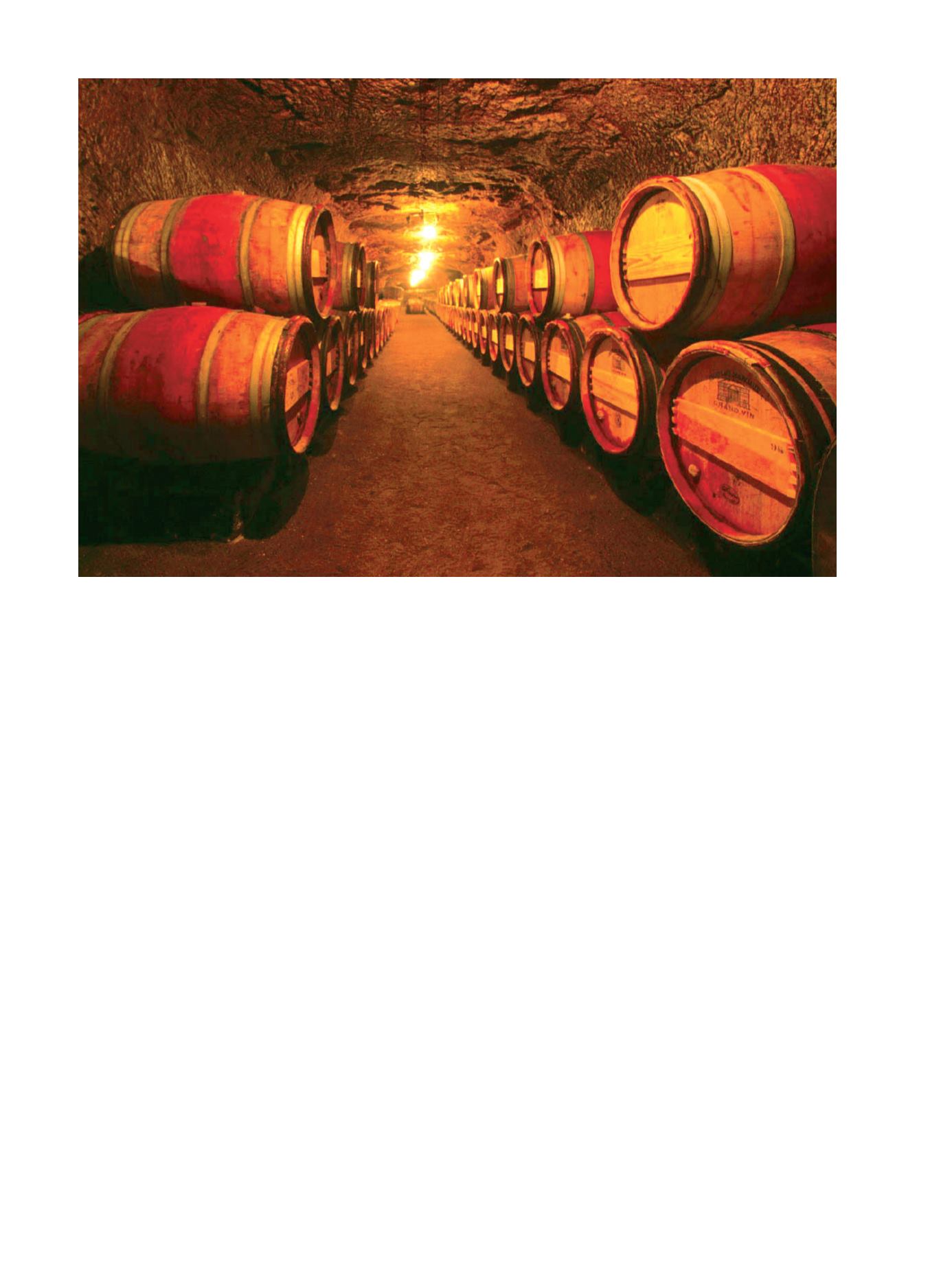
: Sommelier Georgina Estrada Gil, Restaurante LeCirque Ciudad de México • Foto /
Photo
: Grupo La Castellana, Adrián García V. / Poggio, Gaillac, W
W
ine, a divine substance whose marvelous
myths are illuminated by a wide range of
writings. It has been around throughout the
history of humanity and we enjoy its pleasures still.
Since prehistoric times, wine has been a cultural
element of everyday life and has also been closely
related to the sacred. We will therefore take a trip
through time to discover how wine reached the Old
World. We will also travel to themajor wine producing
and consuming countries.
Others believe that some 6,000 years before
Christ, nomads were already using must to produce
wine. Most experts coincide that this was 8,000 years
before our era, in regions of Asia Minor, near the Black
and the Caspian Seas.
6,000 B.C.
Paintings alluding to wine were found in tombs of
pharaohs in Phoenicia and Egypt.
5,000 B.C.
The tourniquet method is invented. It consisted of
pressing a large bag which had two wooden paddles at
either end. The grapes where placed inside and it was
twisted in such a way that the must was extracted.
The first golden age took place in Egypt, during the
catadores •
tasters
E
l vino, sustancia divina cuyas maravillosas mitolo-
gías iluminan una amplia literatura, es contempo-
ráneo de la historia de la humanidad y gratamente
nos permite hoy en día disfrutar de los placeres que de él
se derivan.
Desde la prehistoria el vino es un componente de la
cultura que forma parte de la vida cotidiana, así como tam-
biénmantiene su relación con lo sagrado. Por ello, haremos
un recorrido a través del tiempo para descubrir cómo llega
el vino al ViejoMundo, así como también viajaremos por los
principales países productores y consumidores.
Se considera que unos 6,000 años a.C. los pueblos
nómadas ya vinificaban el mosto, aunque la mayoría de
los investigadores coinciden en que fue 8,000 años an-
tes de nuestra era, en las regiones cercanas al Mar Negro
y al Caspio, en Asia Menor.
6,000 a.C.
En Fenicia y Egipto se encontraron pinturas alusivas al
vino dentro de las tumbas faraónicas.
5,000 a.C.
Se inventa el método del torniquete. Consistía en pren-
sar un costal que tenía dos palas de madera en las extre-
midades, allí se metían las uvas y se torcía de manera
que se extraía el mosto de la fruta. En Egipto se da el pri-
Vinos del Viejo Mundo,
historia y tradición
Wines of the Old World, history and tradition


