33
rendez-vous
·amura·
Proceso de selección
“La polémica que rodea a la peletería se debe a que exis-
te demasiada mala información al respecto”, comenta
tajante Rogelio Hans. “Existe la caza irresponsable y
clandestina, pero los peleteros trabajamos con animales
criados en ranchos especializados, principalmente en la
Unión Americana, Canadá y Finlandia. Son criaderos le-
gales, controlados y con doctores que están al pendien-
te de los animales, verificando su alimentación y
cuidado del proceso, para asegurarse de que no sufran al
momento de su muerte. No trabajamos especies que se
encuentran en peligro de extinción”.
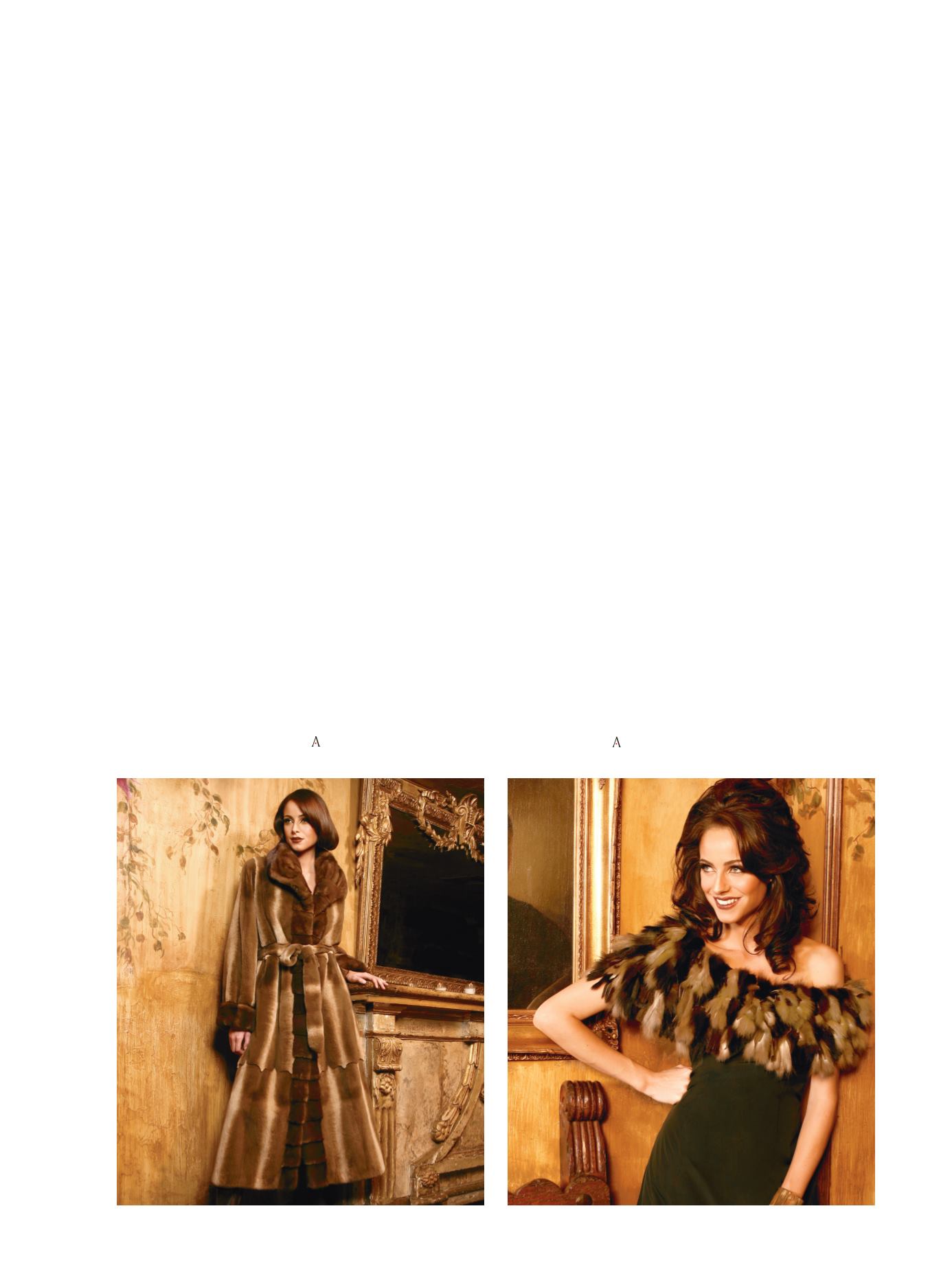
Hanson trabaja el mink, la chinchilla, el castor y la ci-
belina. Elaboran además prendas a base de rex, un cone-
jo francés cuyo pelo es casi tan sedoso como el de la
chinchilla y además no lo tira. Rogelio Hans afirma que
se necesita gran inversión y tecnología para lograr fu-
siones y mutaciones, hacer cruzas de colores y mejorar
la calidad de las especies.
Cuidado de las prendas de piel
Es recomendable llevar las pieles con el peletero una vez
al año para su revitalización con líquidos especiales. Se
les desinfecta con pistolas y planchas de vapor que les
quitan el polvo. “Nuestro personal ha tomado cursos es-
pecializados para brindar limpieza profesional. Damos
servicio y remodelamos las prendas, incluso abrigos que
no sean nuestros. Los rasuramos, revitalizamos y trans-
formamos al gusto de nuestra clientela”.
Satisfacción
Pieles Hanson continuará con el concepto familiar del
negocio. Rogelio Hans sabe que precisamente ése ha si-
do su mayor logro, “la idea es seguir expandiéndonos y
creando más generaciones para llegar a mayores luga-
res. Mi padre lo logró ver en vida, y afortunadamente
conservamos una excelente respuesta de nuestros
clientes”. El objetivo es alcanzado con éxito. La casa de
pieles se mantiene en la cima, sabiendo que permanecer
en el primer lugar corresponde a su infalible y excepcio-
nal servicio, calidad y respeto al cliente.
Selection Process
“The debate surrounding the use of furs is due to the
great amount of misinformation that is available”, said
Rogelio Hans. “There is irresponsible, clandestine hunt-
ing but furriers work only with animals bred in special-
ized farms mainly in the United States, Canada and
Finland. They are legal, controlled breeders and have
doctors who are continuously verifying the wellbeing
of the animals, checking their food and taking extreme
care during the process. They make sure that the ani-
mals do not suffer at the moment of their death. We do
not work with species that are in danger of extinction”.
Hanson works with mink, chinchilla, beaver and
sable. They alsomake garments with rex, a French rab-
bit that does not shed and its hair is almost as shiny as
a chinchilla’s. Rogelio Hans mentions that a large
investment and the latest technology are required to
achieve these fusions and mutations, to breed differ-
ent colors and better the quality of the species.
Taking Care of Furs
It is suggested that furs be taken to a furrier once a
year to have them revitalized with special liquids.
They are also disinfected with steam irons and hair
dryers that eliminate dust. “Our employees have
taken specialized courses in order to professionally
clean the coats. We service and remodel them, even
those that are not our own. We shave, revitalize and
transform them according to the client’s taste”.
Satisfaction
Pieles Hanson will continue with the family tradition.
Rogelio Hans says that this is their major accomplish-
ment. “The idea is to continue to expand and create
new generations who will reach other places. My
father saw it in his lifetime and, fortunately, our
clients have been faithful”. The goal is successfully
achieved. These renowned furriers are at the top and
know that they maintain their position thanks to
their infallible, exceptional service and quality as
well as their respect for their clients.


