·amura·
116
1920. Praga desarrolló el cubismo empleándolo casi
a cualquier área, desde la escultura, la pintura, has-
ta la arquitectura. En esta ciudad se pueden encon-
trar los ejemplos más memorables de la arquitectu-
ra cubista. Uno de ellos, precisamente es la
Casa de
la Madona Negra
, diseñada por Josef Gocar en 1912
y que ahora alberga la impresionante colección del
cubismo de aquel país.
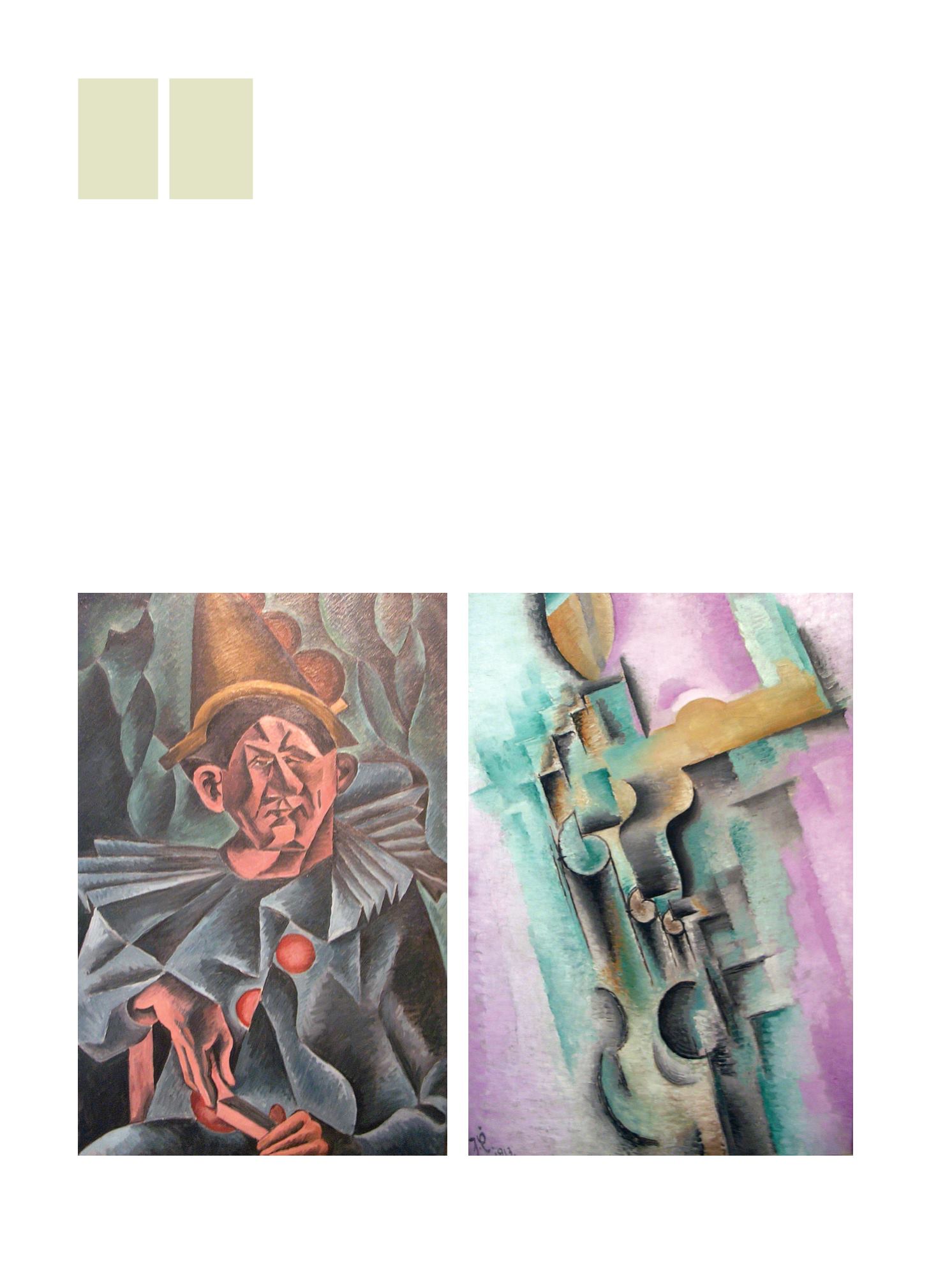
Empezamos a recorrer la exposición por el segun-
do piso, mirando las imponentes pinturas de Emil Filla
como
El escritor
(1912) y
El lector
(1913), entre otras.
Encontramos además esculturas de bronce de Otto
Gutfreud y la maravillosa vajilla de Pavel Janak con su
peculiar servicio de café en porcelana; además nos en-
contraremos también con los muebles diseñados por
Josef Gocar como el gigantesco sofá que creó para el
actor Otto Boleska en 1913.
Subiremos por sus peculiares escaleras para
encontrar en el tercer piso piezas de Capek, Vicenc
Benes y Otakar Kubin, así como de Vajav Spala y su
fascinante
Canto de la primavera
(1915). En el cuar-
to piso disfrutaremos las exposiciones temporales y
concluiremos tomando un café en el Gran Café Orien-
te, cuyo interior, también cubista, fue diseñado por el
talentoso Mr. Gocar. El recinto cuenta también con un
centro educativo.
El cubismo checo contribuyó de manera significa-
tiva al desarrollo del arte, el diseño y la arquitectura
en Europa central en la primera mitad del siglo XX.
Prague developed cubismby implementing it to
almost all creative fields; from sculpture, to paint-
ing, even to architecture. In this city, one can find
some of the most memorable examples of cubist
architecture. An example is The House of the Black
Madonna, designed by Josef Gocar in 1912; which
houses an impressive collection of cubist works
from local artists.
You can start by exploring the secondfloor of the
exhibit, admiring the imposing paintings done by
Emil Filla, such as The Writer (1912), and The Reader
(1913), among others. Furthermore, you come face
to face with the bronze sculptures of Otto Gutfreud,
and the wonderful vases of PavelJanak, featuring
a distinctive porcelain coffee set. You will also find
furniture designed by Josef Gocar, such as the im-
mense sofa made for the actor Otto Boleska in 1913.
On the third level you will admire works of such
artists as Capek, Vicenc, Benes, and OtakarHubin,
as well as from VajavSpala and his fascinating
Spring Song (1915). On the fourth floor, enjoy the
temporary expositions and conclude your tour
by sipping on coffee at the Grand Oriental, which
interior is also cubist and was designed by the
talented Mr.Gocar. The building is also home to a
learning center.
Czech cubism has a significant place in the de-
velopment of art, design and architecture in central
Europe the first half of the 20th century. The central
los conquistadores •
the conquerors
1.
/ Cubist clown portrait, Museum of Czech Cub-
ism, House of the Black madonna, Prague.
2.
/ Cubist figurative painting, Museum of Czech
cubism, House of the Black madonna, Prague.
1.
2.


