·amura·
75
C
omprender el origen etimológico de las palabras
esturión, caviar ymalossol, desdeel contextopre-
vio al imperio ruso hasta el dominio de los zares,
en el mar Caspio, es indispensable. Sólo así es posible el
entendimiento genuino de un producto que representa
calidad inigualable, tradición y cultura.
El esturión es el único productor de caviar legítimo
del planeta. Su nombre no es solamente ancestral sino
también bizantino, de variantes compuestas con las
raíces
ac
(en la rama)
aci
(como en acies) y
acu
(como
en acus “aguja”). Elementos heredados de gran valor
etimológico para los interesados en el origen de los
nombres modernos de todas sus especies.
Un punto importante que refleja las relaciones in-
terculturales es la mezcla y equivalencias fonéticas
entre la lengua prestada del eslávico hablado del Este
y la lengua acreedora del griego bizantino. Todas ellas
conocidas en el Cáucaso y el área del Mar Caspio domi-
nado por los cosacos.
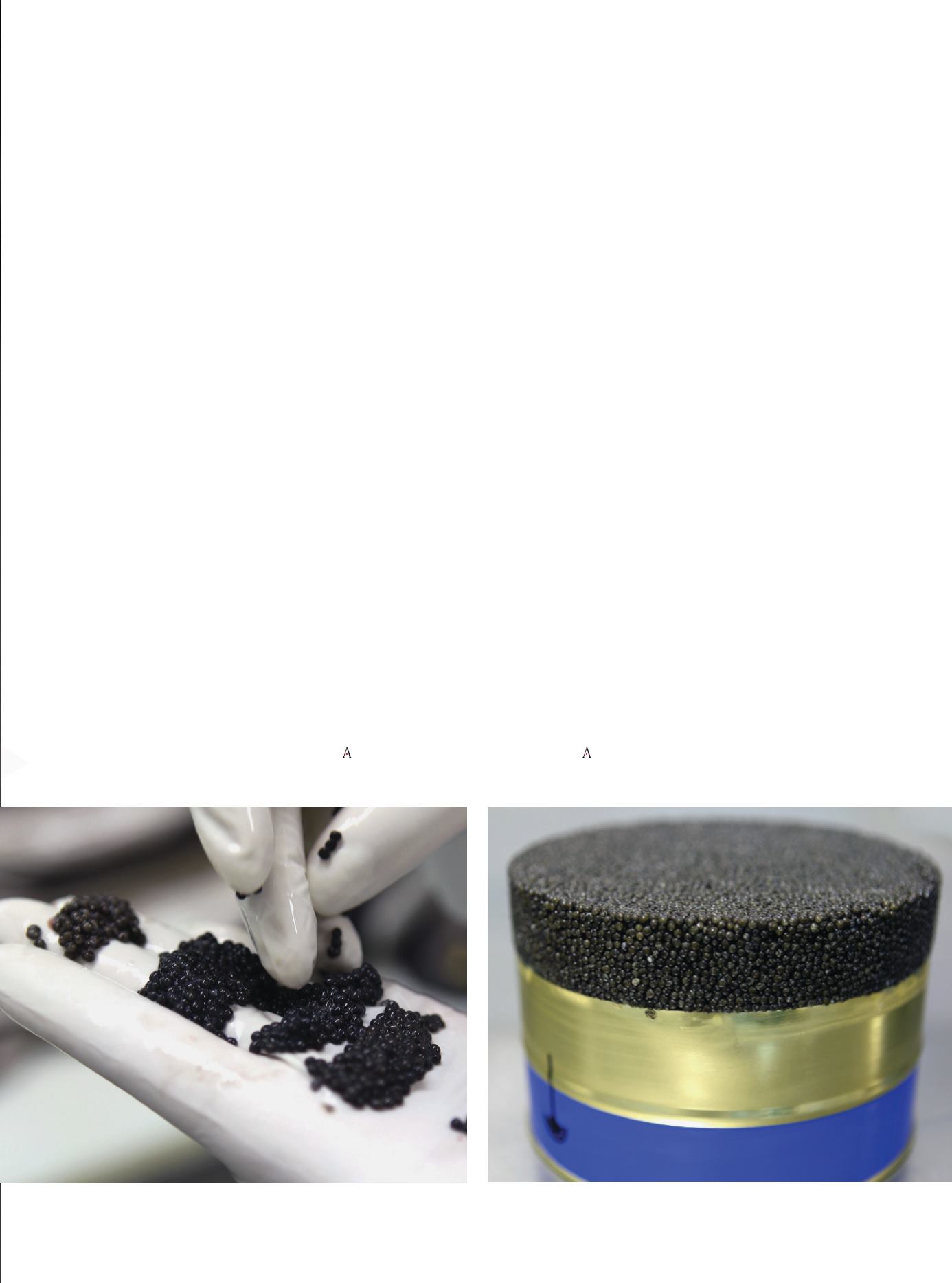
Malossol en ruso significa ligeramente salado. Única-
mente la hueva de esturión en condiciones excepcionales
puede denominarse de estamanera, por lo que se requie-
re un alto grado de experiencia para juzgar con precisión
su estado al ser extraída. El juicio del maestro es crítico
porque aquí se determinará el valor tanto comercial como
gastronómico del caviar.
El momento en que se decide si ha de ser malossol o
no es crucial. No se define únicamente cómo será conser-
vado el caviar sino también los niveles de salinidad que ha
de tener. Las variaciones en este proceso sonprecisamen-
te lasquebrindancomplejidada la tradición rusa. Comoen
el vinícola, el mundo del caviar es una experiencia diferen-
te en cada lata que consumimos.
Uniformidad y consistencia, tamaño, textura, fra-
gancia, firmeza, brillo y color son los elementos en los
que está basada la graduación que se le da a cada reme-
sa y, por tanto, su denominación. Así, Rusia brinda al
mundo una delicadeza y a su vez un lenguaje único para
poder entenderla.
U
nderstand the etymology origin of the words
sturgeon, caviar and malossol from the con-
text prior to theRussianEmpire to thedomain
of the Czars in the Caspian Sea is essencial. Only thus
can be genuine understanding of a product which rep-
resentsunsurpassedquality, traditionandculture.
The sturgeon is the only producer of legiti-
mate caviar in the world. Its name is not only
ancient but also Byzantine, variants with roots
ac (in branch) aci (as in acies) and acu (as in acus,
“needle”). Elements inherited from great etymo-
logical value for those interested in the origin of
the modern names of all species.
An important point that reflects the intercultural
relations is the mixture and phonetic equivalences
between the borrowed language of the slavic spoken
in the East and the creditor Byzantine Greek language.
All of them are well known in the Caucasus and the
area of the Caspian Sea, dominated by the Cossacks.
Malossol in Russian means slightly salty. Only
the roe of sturgeon in exceptional condition can be
called in this way, so a high degree of expertise is
required to accurately judge its State to be removed.
The judgment of the master is critical because here
the commercial and gastronomic value of caviar
will be determined.
The moment that decides whether it should be
malossol or not is crucial. It is not only defined how
will bepreserved the caviar but also the levels of salin-
ity which must be. The variations in this process are
precisely those that provide complexity to the Rus-
sian tradition. As in thewine, theworld of the caviar is
a different experience in each canwe consume
Uniformity and consistency, size, texture, fra-
grance, firmness, brightness and color are the ele-
ments inwhich the ranking given to each shipment
and, therefore, its name is based. So Russia provides
the world a delicate and at the same time a unique
language to understand it.
gourmet •
gourmet


