


 160 / 184

·amura·
154
Sinfonía No. 3 Escocesa
Compuesta en 1842.
En el Werano de 1829, FnliY Mendelssohn llegw a Edimbur-
go para Wisitar la capilla en ruinas de Marra Estuardo. La
melodra inicial de la Sinfonra Escocesa sirWe de gura. Des-
puns de una caminata por las montavas regresw a Alema-
nia, ypronto continuw aRoma endondediKoRue era impo-
sible deKar la nostalgia del clima h|medo de Escocia. Sus
pensamientos son indelebles en la Sinfonra Escocesa no
3 de las cinco Rue compuso . El primer moWimiento recrea
la nostalgia y su atmwsfera. Lamelancolra cede a un tercer
tema Rue eYhibe la magistral ligere[a con Rue el m|sico
maneKa sus impresiones de una tormenta y un Wentarrwn
Rue atraWiesan la capilla en ruinas. Losprimeros compases
forman una transiciwn en un Scher[o.
El segundomoWimiento es el mgs bucwlico y se siente
un bienestar Rue seguramente nace de las rarces esco-
cesas. Esta nota se desWanece antes de terminar. El rico
potencial de Mendelssohn muestra maestrra al introdu-
cir una marcha contrastante antes de deWolWer el tema
principal a la orRuesta. El final tiene el trtulo de Allegro
guerrero Rue describe las guerras entre los clanes. El en-
cuentrode la batalla estg brillantemente escritoy culmina
con cambios notables Rue perecen al anunciar un mundo
meKor. MaY Bruch es un nombre Rue lo inmortali[w con un
famoso Concierto para 7iolrn en sol menor pero nomenos
distinguida es su Fantasia Escocesa y el Kol Nidrei, ambas
producto de la madure[ del compositor. Bruch naciw en
Colonia en 1838 y muriw en Friedenau en 1929. Sus com-
posiciones son sinceras, melodiosas, de una estructura
magistral y con el encanto de los aspectos descriptiWos.
TuWomenostalentoRueMendelssohn,SchubertoBrahms
y los eYpertos lo han comparado en estilo con los tres.
Symphony No 3 Scottish
Composed in 1842.
In the summer of 1829 Felix Mendelssohn arrived
at Edinburgh to visit the chapel in ruins of Mary
Stuart. The initial melody of the Scottish Sym-
phony serves as guide. After the visit at Scot-
land he felt a nostalgic feeling and missed the
humidity of the Scottish climate. His thoughts
are expressed in the symphony (No. 3, of the five
that he composed). The first movement recalls a
nostalgia ant its atmosphere. The melancholy
enters as a genial stroke of lightness where the
composer describes a thunderstorm that opens
its light to the chapel in ruins and the first notes
form a transition in a scherzo.
The second movement is the most lyrical of
all the work and reflects the scottish roots. The
rich potential of Mendelssohn contrast a march
before returning to the principal theme of the
orchestra.
The finale bears the title of “allegro gueriero”
describing the battles of the clans, brilliantly
written and indications that a better world
lies ahead.
Max Bruch achieved immortality with his
Scottish Fantasy and the Kol Nidrei, both prod-
ucts of his finest moments. Bruch was born in
Cologne in 1838 and died in Friedenau in 1929.
His compositions are sincere, melodic and with a
fabulous structure and irresistible descriptions.
He had less talent than Mendelssohn, Schubert
or Brahms but the experts compared his style
with all three.
.eet tIe mVTic • .|TicB
1 2
3
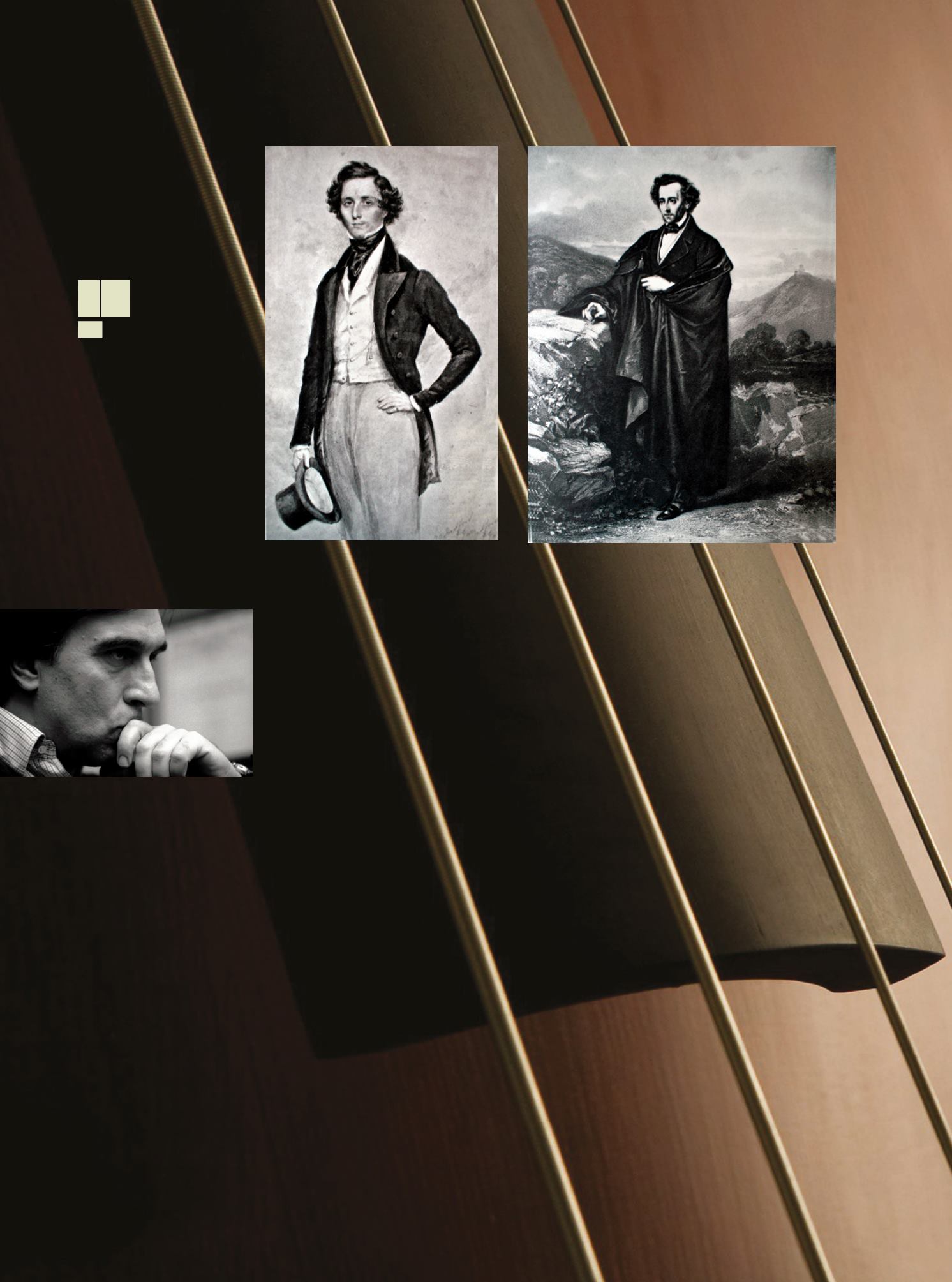
1. El KoWen
Mendelssohn./
The
youngMendelssohn
.
2.FeliY Mendelssohn.
/
FelixMendelssohn.
3. ClaudioAbbado.
DirectordeorRuesta.
/
ClaudioAbbado.
Conductor.