·amura·
121
tips & tops
Tops
• El Parque Natural Provincial Tatshenshini-Alsek se
creó en 1993 tras una campaña ecologista para pro-
teger el patrimonio natural de la industria minera,
en él habita una extensa población de osos grizzly,
es la única parte de Canadá donde se les encuentra.
Los ríos Alsek y Tatshenshini corren a través de él.
Entró a la lista de Patrimonio de la Humanidad en
1994 por la belleza de sus paisajes.
• El Paso Chilkoot era a finales de 1890 la ruta de acce-
so a las minas de oro de Yukón, en 1899 quedó obso-
leto cuando se construyó el ferrocarril de Skagway
Dye, en 1978 fue nombrado Monumento Histórico
Nacional de Estados Unidos, y en 1987 adquirió el
título de Sitio Histórico Nacional de Canadá. Hoy es
un destino popular entre exploradores que buscan
aventuras y un contacto íntimo con la naturaleza.
• El Fuerte Selkirk es un puesto de operaciones ubi-
cado en el río Yukón, durante años fue la sede de
la Primera Nación Selkirk y las evidencias muestran
que el lugar fue habitado hace casi 8 mil años. Que-
dó abandonado a mediados de 1950 y actualmente
muchas de sus construcciones han sido restaura-
das. No hay un camino directo para llegar a él, y sólo
se puede acceder vía marítima o aérea.
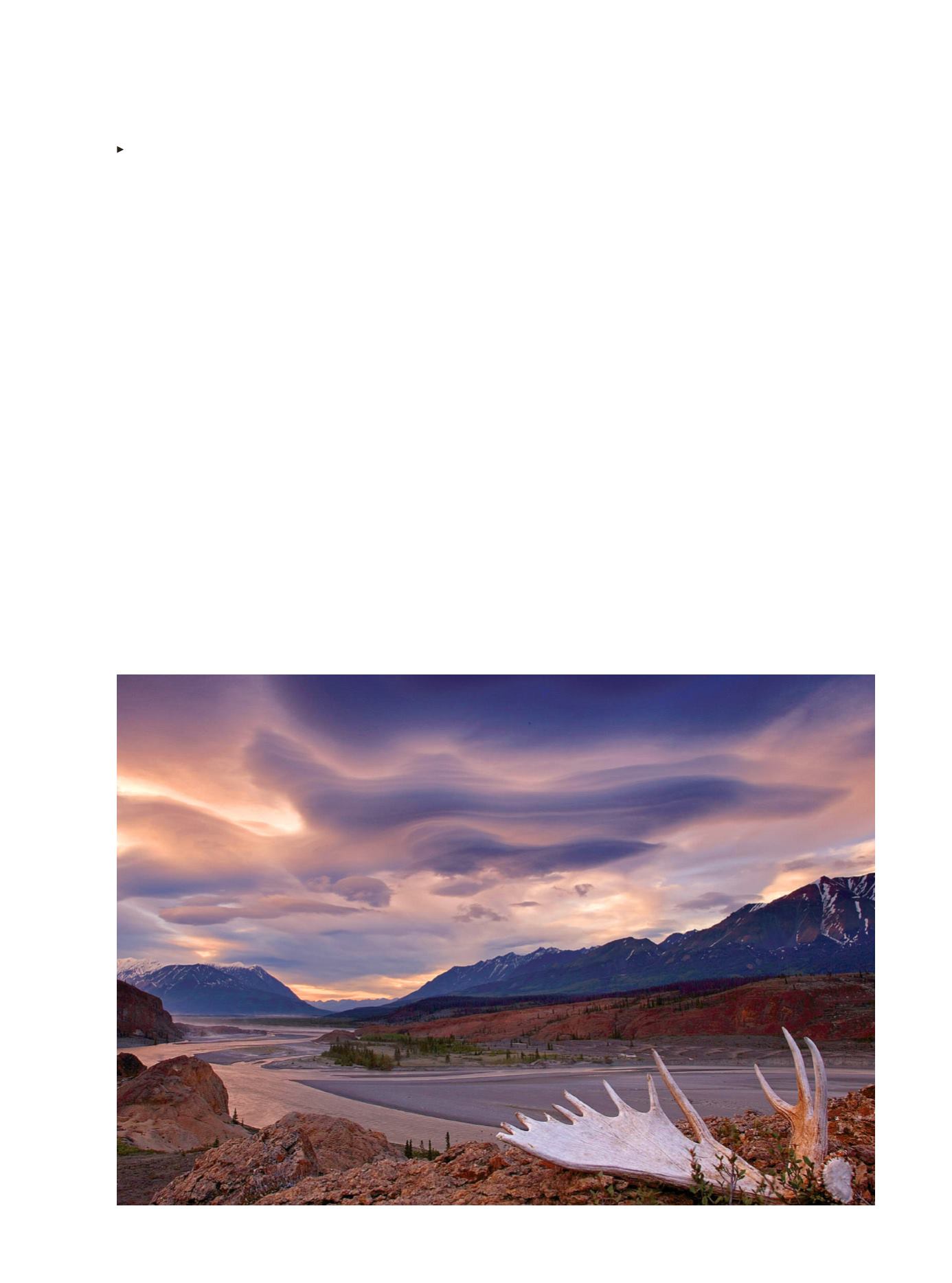
• En Yukón se encuentra Kluane, el campo de hielo no
polar más grande del mundo, durante el estío el sol
calienta lo suficiente para que florezca la vegeta-
ción. Esas características le permiten ofrecer paisa-
jes incomparables en cualquier momento del año.
• The Park Tatshenshini-Alsek Provincial Natural
was created in 1993 after an environmental cam-
paign to protect the natural heritage of the min-
ing industry, it is inhabited by a large population
of grizzly bears, and it’s the only part of Canada
where they are located. The Alsek and Tatshenshi-
ni rivers run through it. It entered the list ofWorld
Heritage in 1994 for the beauty of its landscapes.
• The Chilkoot Trail was in late 1890 the path to
the gold mines of the Yukon, became obsolete
in 1899 when they built the railroad from Skag-
way Dye, in 1978 was named a National Historic
Landmark U.S., and in 1987 acquired the title of
National Historic Site of Canada. Today is a popu-
lar destination for explorers and people who seek
a closer contact with nature.
•The Fort Selkirk is a tradingpost locatedon theYu-
kon River, for years it housed the headquarters of
the Selkirk First Nation and the evidence shows
that the site was inhabited almost 8 thousand
years ago. It was abandoned inmid 1950 and now
many of its buildings have been restored. There is
no direct way to get to it, and it’s only accessible
by sea or air.
• At Yukon is the Kluane, the non-polar icefield in
the world’s largest, during the summer time the
sun warms enough for vegetation to flourish.
These features allow you to offer unique and di-
verse landscapes at any time of year.


