


 115 / 142

·amura·
113
especies •
species
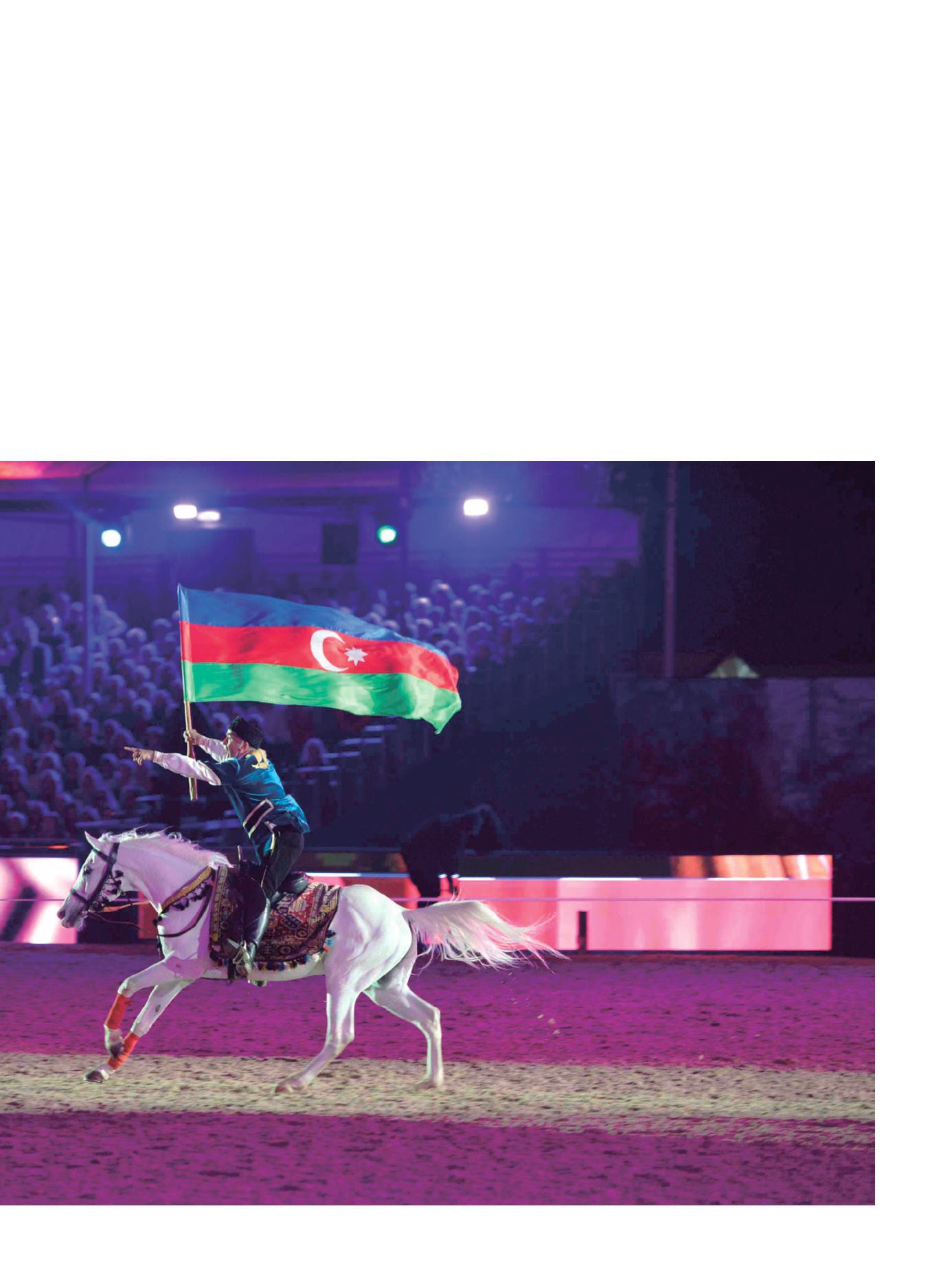
Está presente en incontables representaciones
artísticas a lo largo de la historia, tejido en los ta-
pices, plasmado en los cuadros de los grandes pin-
tores, estampado en los sellos, acuñado sobre las
monedas; persiste la esencia de un caballo gallardo
y fuerte “el milagro negro-rojo-de oro de Karabaj”
como fue cantado en el romance histórico clásico:
Alí y Nino. Dato curioso: el verdadero autor de esta
obra es todavía un misterio, fue publicado por pri-
mera vez en el año 1937, en Viena, por Kurban Said,
seudónimo que utilizó la baronesa Elfriede Ehr-
enfels, quien registró la obra ante las autoridades
alemanas de la época. Los especialistas se debaten
entre otros dos escritores probables: por una parte
se le atribuye a Lev Nussimbaum, quien solía firmar
su literatura como Essad Bey; mientras que en Azer-
baiyán se afirma que fue relatado por Yusif Vazir
Chamanzaminli, nacionalista azerbaiyano fallecido
en el
gulag,
campo de prisión política de Stalin.
The horse is depicted in countless artistic ren-
ditions throughout history, and its image can be
found in tapestry, on the canvases of famous paint-
ers, stamped on seals, and set on coin. They persist
as the essence of a gallant and mighty horse, “the
black-red-gold miracle of Karabaj,” as it was sung
in the classical historical romance, “Ali and Nino.”
Curious fact: the true identity of the author of this
work remains a mystery, and it was first published
in the year 1937, in Vienna, by Kurban Said, the
pseudonym used by the Baroness Elfriede Ehren-
fels, who submitted the work to the German author-
ities at the time. Experts still debate one another
on whether one of two writers wrote the work: Leve
Nussimbaum, who used to sign his works as “Essad
Bey”; The Azerbaijani, on the other hand, contest
that it is a story by Yusif Vazir Chamanzaminli, an
Azerbaijani nationalist killed in a gulag, a soviet
camp for political prisoners.