



 120 / 142

·amura·
118
conservancy • conservación
Foto /
Photo
: MU
SEUMS SIN / Rita Willaert Gobustan / ESADEEMIC / maxresdefault / WEEPING
·amura·
118
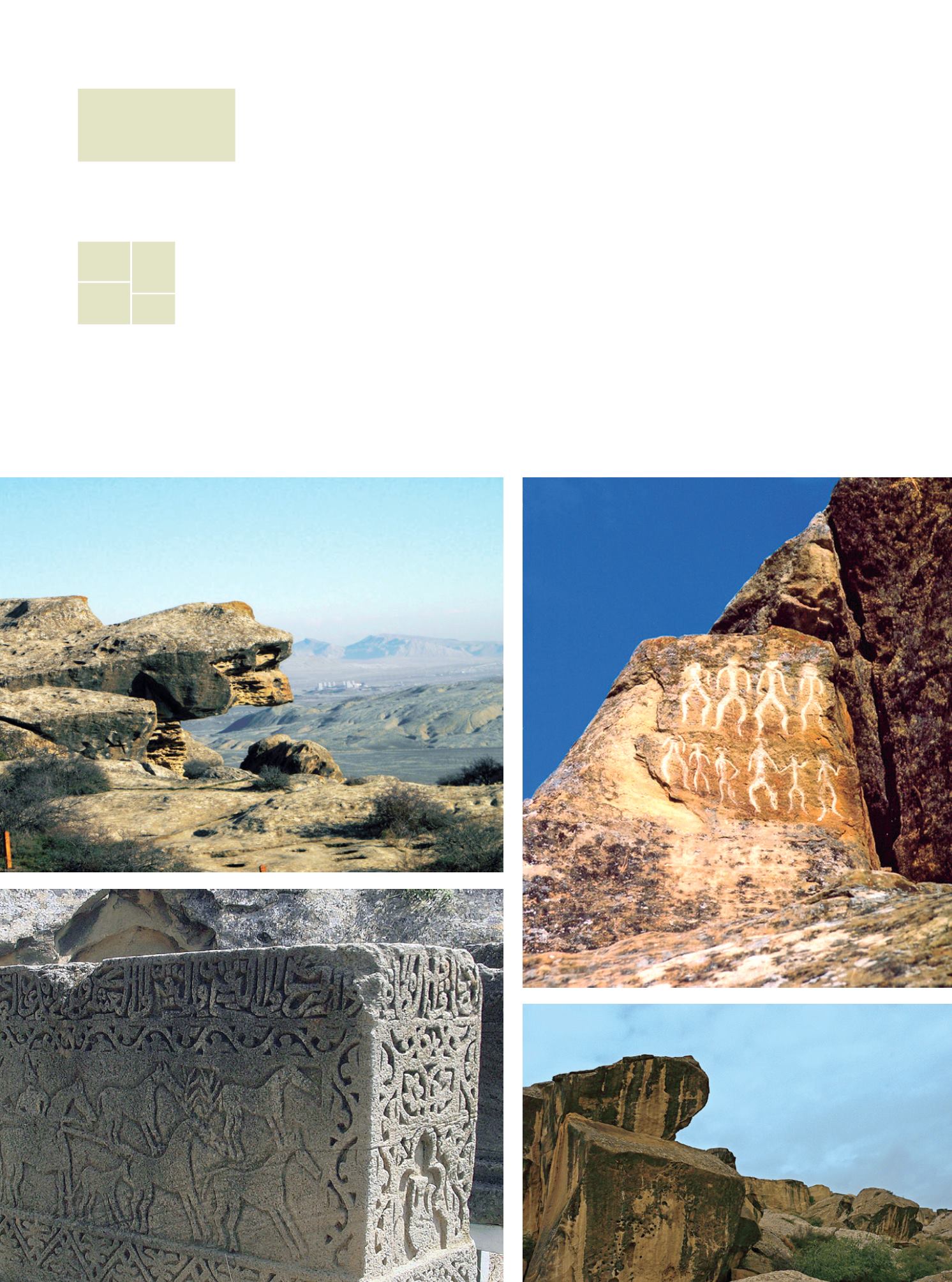
Localizada a 64 km de Bakú, esta reserva natural
alberga la más larga tradición continua de arte ru-
pestre del mundo que abarca, desde el paleolítico a
la Edad Media, razón por la cual en el año 2007 se le
confirió el título de Patrimonio de la Humanidad, que
otorga la UNESCO (Organización de las Naciones, la
Educación, la Ciencia y la Cultura) a lugares específicos
del planeta para catalogar, preservar y dar a conocer
su importancia cultural o natural para la herencia co-
mún de la humanidad. A partir del año 1966, las 536 ha
que conforman el Paisaje Cultural de Arte Rupestre, fue
declarada reserva histórica artística, y en 2011 toda
la zona fue declarada Reserva Estatal, por decreto del
presidente de la República de Azerbaiyán, Ilham Aliyev.
Las investigaciones señalan que los petroglifos más
antiguos se localizan en las terrazas superiores de las
montañas de Beyukdash y Kichikdash; los monumentos
del paleolítico y del neolítico en las terrazas inferiores;
y los de la Edad de Bronce y la Edad de Hierro al pie de la
montaña, formando una escalera inversa que narra una
parte significativa de la historia de la humanidad.
Located 64 km away from Baku, this national
park is come to the longest continuing tradi-
tion of cave art in the world, dating back to the
Paleolithic times, and it is because of this that
in 2007 UNESCO named it a World Heritage Site.
Only a few, specific places on Earth are recog-
nized as such in order to catalog and preserves
the important natural and cultural inheritance
of humanity. Starting in 1966, the 543 pieces
that form the Natural Cave Art Landscape were
declared a historic artistic reserve; and, in 2011,
the area was designated a National Park, by de-
cree from the President of the Republic of Azer-
baijan, Ilham Aliyev.
Investigators have cited that oldest petro-
glyphs are located on the upper levels of the
Beyukdash and Kichikdash mountains, and the
Paleolithic and Neolithic monuments on the low-
ers levels. Those of the Bronze and Iron Age are
set at the foot of the mountain, forming and in-
verse ladder of great significance for humanity.
conservancy • conservación
1. Parque Nacional
de Gobustan,
Azerbaiyán. /
Gobustan National
Park, Azerbaijan .
2 y 5. Paisaje de
Gobustan. /
Gobustan landscape.
3. Petroglifos de
Gobustan,
10,000 a. C.. /
Petroglyphs in
Gobustan, Azerbaijan,
10,000 BC.
4. Estelas esculpidas en
piedra. /
Stelae carved
in stone.
1
2
3
4
5
Fot /
Phot
: MU
SEUMS IN / Rita Willaert Gobustan / ESADEEMIC / maxresdefault / WEEPING