



 121 / 142

·amura·
119
conservancy •
conservación
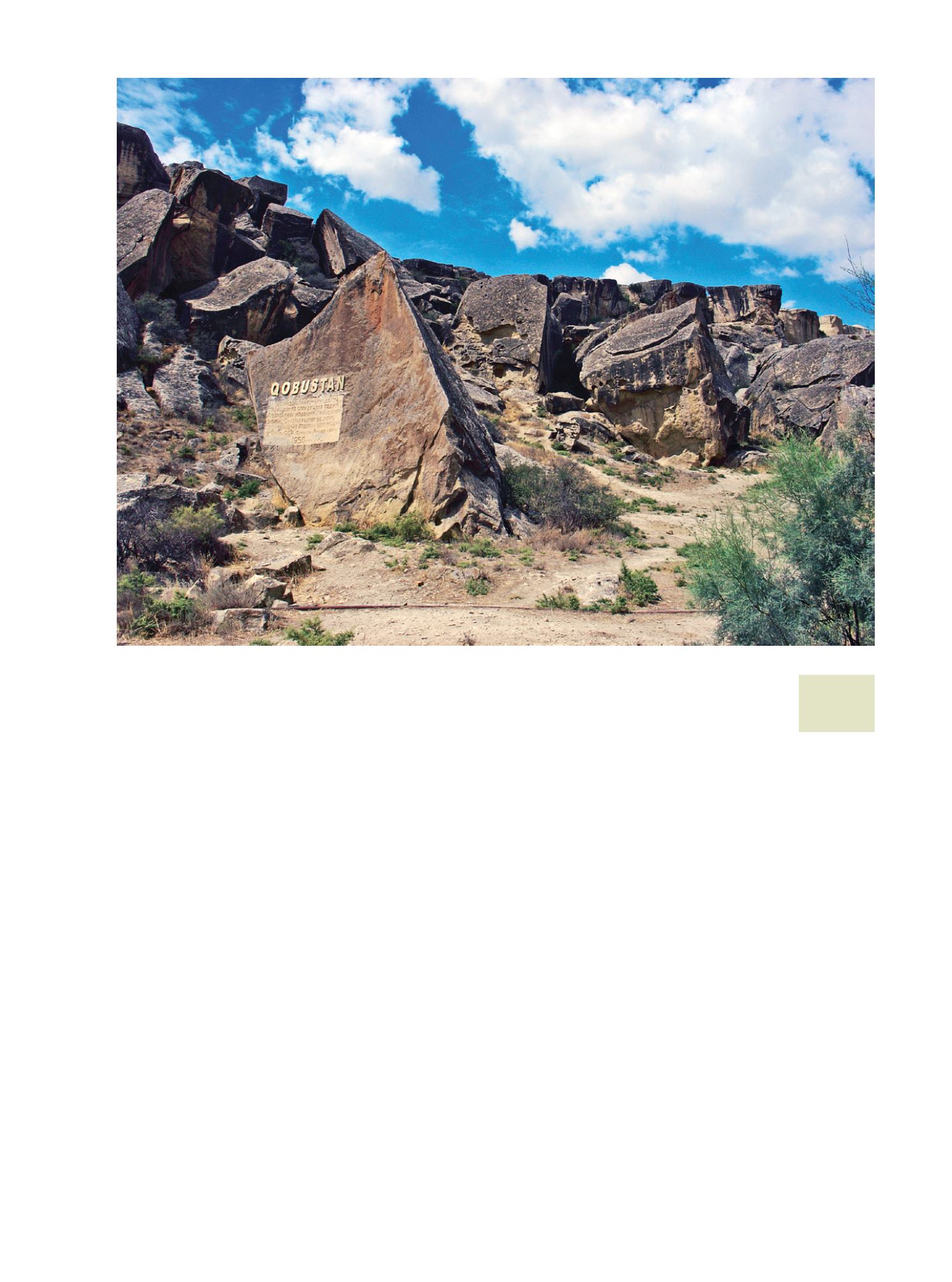
6. Petroglifos en
el Museo al aire
libre de Gobustán. /
Petroglyphs in the
Open Air Museum
of Gobustan.
6
The Kichikdash Gaya Arasi Mountain attracts
special interest given the life-size image of a
large fish, said to depict a dolphin. The figure
dates by to quaternary glacial cycles. The age of
the petroglyphs was established by an interdis-
ciplinary group of specialist in various fields:
anthropology, geology, paleozoology, amongst
others. They all form part of a thousand-year
old network of cave paintings that were used by
the original inhabitants of this region as dwell-
ing spots, religious sanctuaries, and mystical
gatherings.
Some of these traditions are kept alive up
to our day and age near Gobustan. For example,
the local residents considered the ancient bridal
procession as a mandatory ritual; they arrive at
Beyukdash and commence to dance at the foot
of the caved-painted rock, which depicts figures
dancing as a sign of worship.
It was believed that the cave paintings in
Gobustan date back to 10,000 B.C., yet, as of late,
this figure has been corrected and it is now es-
tablished that they date back to at least 35-
40,000 B.C. To preserve these, the government of
Azerbaijan has taken legal and administrative
measures to enhance conservation guidelines.
La montaña Kichikdash
Gaya Arasi
atrae un especial
interés debido a la imagende ungranpez de proporciones
equivalentes a su tamaño natural, que se dice representa
a un delfín; la figura data del cuaternario superior caracte-
rizado por ciclos de glaciaciones. La antigüedad de los pe-
troglifos está establecida por un grupo interdisciplinario
de especialistas en diversas ciencias: antropología, geolo-
gía, paleozoología, paleobotánica, entre otras. Compren-
denmás de 10,000 años grabados en las cuevas y laderas
de las montañas que fueron utilizadas por los habitantes
originales como lugar para vivir, santuario religioso y de
ceremoniasmágicas.
Algunas de estas tradiciones se mantienen vivas
hasta nuestros días en las proximidades de Gobustán,
por ejemplo, los residentes locales consideran la an-
cestral procesión de la boda como un ritual obligato-
rio; llegan hasta la montaña Beyukdash, para ofrendar
su baile delante de la roca con petroglifos, que repre-
sentan a personas danzando en señal de adoración.
En un principio se creyó que los hallazgos de Go-
bustán databan de 10,000 años a. C., en la actuali-
dad han quedado establecidos con una antigüedad
entre 35-40,000 años a. C. Para preservarlos, el go-
bierno de Azerbaiyán ha determinado incluso me-
didas legales y administrativas para apuntalar los
sistemas de su conservación.