


 34 / 132

Sólo una tercera parte de las islas está habitada;
la mayor parte de la población se concentra en Viti
Levu y Vanua Levu, las islas más grandes de la Repú-
blica, y esto hace del resto de Fiyi uno de los lugares
más prístinos del planeta. Sus vistas y las aventuras
únicas que ofrece han atraído a visitantes de todo el
mundo, perfecto para lunas de miel, o para relajarse
con amigos y familia, además de ser una experiencia
inolvidable. Recorramos los caminos de las islas y na-
veguemos por las transparentes aguas del Pacífico,
hipnotizados por los colores de la naturaleza y las vi-
vaces personalidades que habitan cada isla.
La historia de Fiyi comienza cuando los primeros
pobladores Lapita –fiyianos prehistóricos– emigraron
desde el oeste en el período Holoceno. Existe un deba-
te con respecto a sus influencias: si son principalmen-
te melanesios del sudoeste de Oceanía o polinesios
del Pacífico central. Arqueológicamente, algunos cien-
tíficos sostienen que sus orígenes se encuentran en el
sur, y que más tarde evolucionaron para convertirse
en la cultura melanesia. Sin embargo, en términos de
lenguaje, el Fiyiano pertenece al subgrupo de lenguas
oceánicas del Pacífico central, originarias de Polinesia.
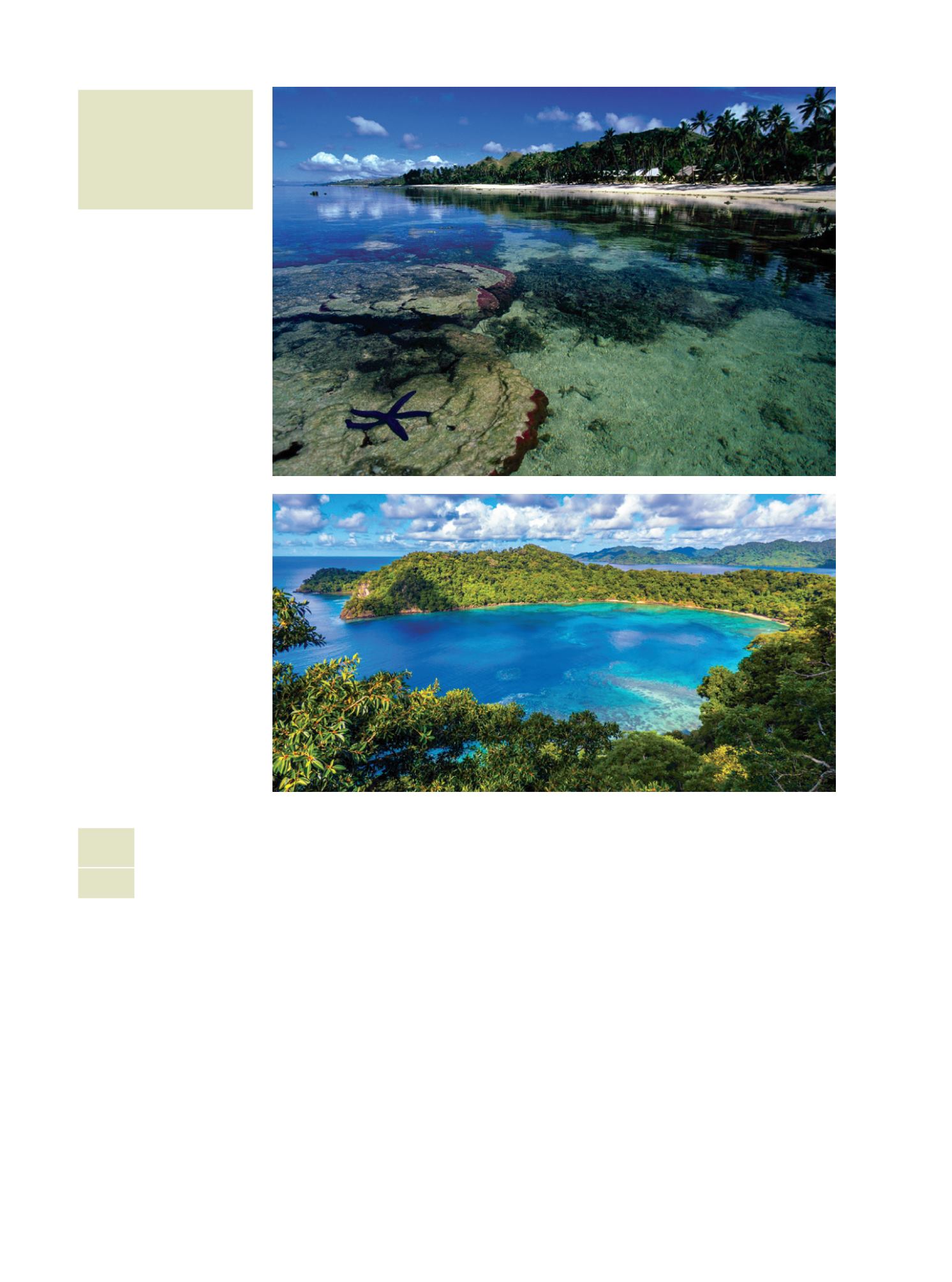
1.Fijiesconsiderado
unode losmejores
destinostropicalesen
elmundograciasasus
prístinospaisajes,su
abundanciaenhoteles
de lujo,sucultura
y lagranvariedad
deactividadesy
festivalesqueofrece./
Fijiisconsideredone
ofthebesttropical
destinationsinthe
worldthankstoits
pristinelandscapes,
luxuryhotels,its
cultureandthewide
varietyofactivities
andfestivalsitoffers.
2.AFijise leconoce
como lacapital
mundialdelcoral
suaveconmás
de10,000km
2
de
arrecifesycientos
deespecies./
Fijiis
knownastheSoft
CoralCapitalofthe
Worldwithmoretan
10,000km
2
ofcoral
reefsandhundredsof
species.
3.Manaesunade las
islaspertenecientes
alarchipielagode
MamanucaenFiyi,
dondese llevaacabo
elmitode la“Cajade
Bendiciones”./
Mana
isoneoftheislands
oftheMamanuca
archipelagoinFiji,
wherethemythof
the“BoxofBlessings”
takesplace.
compás int • int compass
·amura·
32
1
2
3
Onlyonethirdoftheislandsisinhabited,withmost
of the population concentrated in Viti Levu and Vanua
Levu, the largest islands of the Republic, and this fact
makes the rest of the Fijian islands some of the most
unspoiled locations in the planet. Its pristine sights
and the unique adventures it provides have attracted
visitorsfromallovertheworld,perfectforhoneymoons
and relaxation with family and friends, in addition to
an unforgettable experience. Let us wander along the
inland roads and sail over the transparent waters of
the Pacific, mesmerized by the colors of nature and the
livelypeople that formeach island.
The history of Fiji begins when the first Lapita
settlers—prehistoric Fijians—migrated from the
west in the Holocene period. There is an ongoing
debate regarding their influences, whether they are
mostly Melanesian from the southwest of Oceania
or Polynesian from the central Pacific. Archeologi-
cally, scientists argue that their origins lie in the
south, which later evolved into Melanesian culture.
However, in terms of language, Fijian belongs to
the Central Pacific subgroup of Oceanic languages,
which originated in Polynesia.
Foto /
Photo:
SPIC TH / LIGTH FOOT / ARKADIUS REJMAN / FIJI FOR / PATRICK SWAN / RYAN FOWLER / BLUE LAGOON CRUISES / WPA