·amura·
86
especies •
species
•
Tamaño:
Macho 2.6m, hembra 3.3 m y al nacer pre-
sentan una longitud de 1m.
•
Hábitat:
Se localizan alrededor de los arrecifes ro-
cosos y restos de naufragio en aguas templadas y
tropicales. Se pueden observar desde la superficie a
200m o más profundidad.
•
Comportamiento:
A menudo han sido vistos en el
fondo, flotando e inmóviles, un comportamiento
adquirido por su capacidad de nadar a la superficie
para tomar aire, éste permite al tiburón flotar de la
misma manera en que lo hace un pez que llena su
vejiga natatoria de aire. Aunque dócil, el tigre de
arena tiene la facultad de lanzarse hacia adelante
con gran velocidad cuando está a la caza o en busca
de alimento. Su dieta varía según dónde se encuen-
tre localizado, generalmente consta de peces óseos,
pequeños tiburones y rayas.
•
Reproducción:
Ovovivíparos y embriófagos. Los em-
briones que se encuentran en desarrollo practican el
canibalismo intrauterino comiéndose a sus herma-
nos menores, hasta que un tiburón permanece en
cada útero. Machos en cautiverio hanmordido a hem-
bras cerca de la región de las agallas para tener dónde
sostenerse durante la cópula. Las hembras dejan de
alimentarse durante el periodo de gestación hasta el
punto de que les crecen hidroides en los dientes.
•
Especies Similares:
Tiburón tigre de arena de dien-
tes pequeños (Odontaspis ferox) Identificados por
su voluminoso y cónico hocico, por la posición de su
aleta dorsal que está más adelante y es más larga.
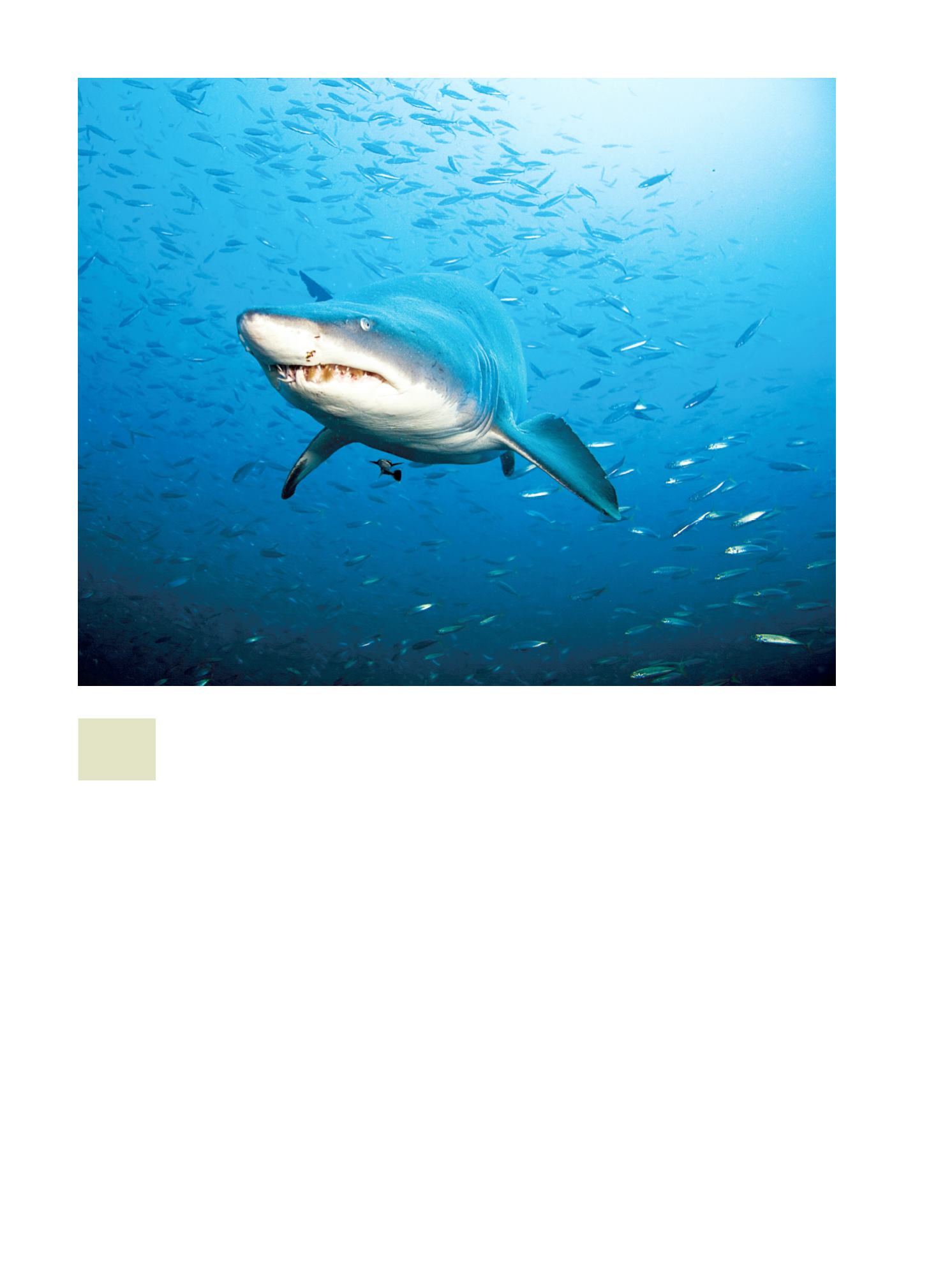
1.
El tiburón me
observa fijamente
mientras posa para
la cámara. /
The
shark staring me
while it poses for
the camera.
1
•
Size:
Male 2.6m, female 3.3 m and, when born, are
1 m in length.
•
Habitat:
They are located in and around rocky
coral reefs and sunken ships, in warm and tropi-
cal water. They can be observed from the surface
200m or more in clear water.
•
Behavior:
Frequently seen at the bottom of the
ocean, floating and static, a behaviour acquired
for their ability to swim to the surface for air,
this allows the shark to floats in the same man-
ner that a fish would by filling its natatory
bladder with air. Although docile, the sand ti-
ger shark is known for thrusting itself at great
speed when it’s hunting or looking for food. Its
diet varies according to where it is located, gen-
erally consisting of bony fishes, smaller sharks,
and rays.
•
Reproduction:
Ovoid and embryologic, the em-
bryos that are found in development practice can-
nibalism, eating their younger brothers, until one
shark remains in each uterus. Aggression during
mating has been recorded. Males in captivity have
bitten females close the gills to have a place to
hold on to during mating. The females stop feed-
ing themselves during a gestation period, up to
the point where hydroids grow on their teeth.
•
Similar Species:
Sand tiger shark with smaller
teeth (Odontaspis ferox) identifiable by their vo-
luminous and conic snout, by the position of the
dorsal fin that is longer, and closer to the head.


