


 101 / 132

·amura·
99
especies •
species
Debido a su popularidad y a su relación tan intrín-
seca con la imagen británica de Gibraltar, los macacos se
han convertido en un gran atractivo turístico. La Reina
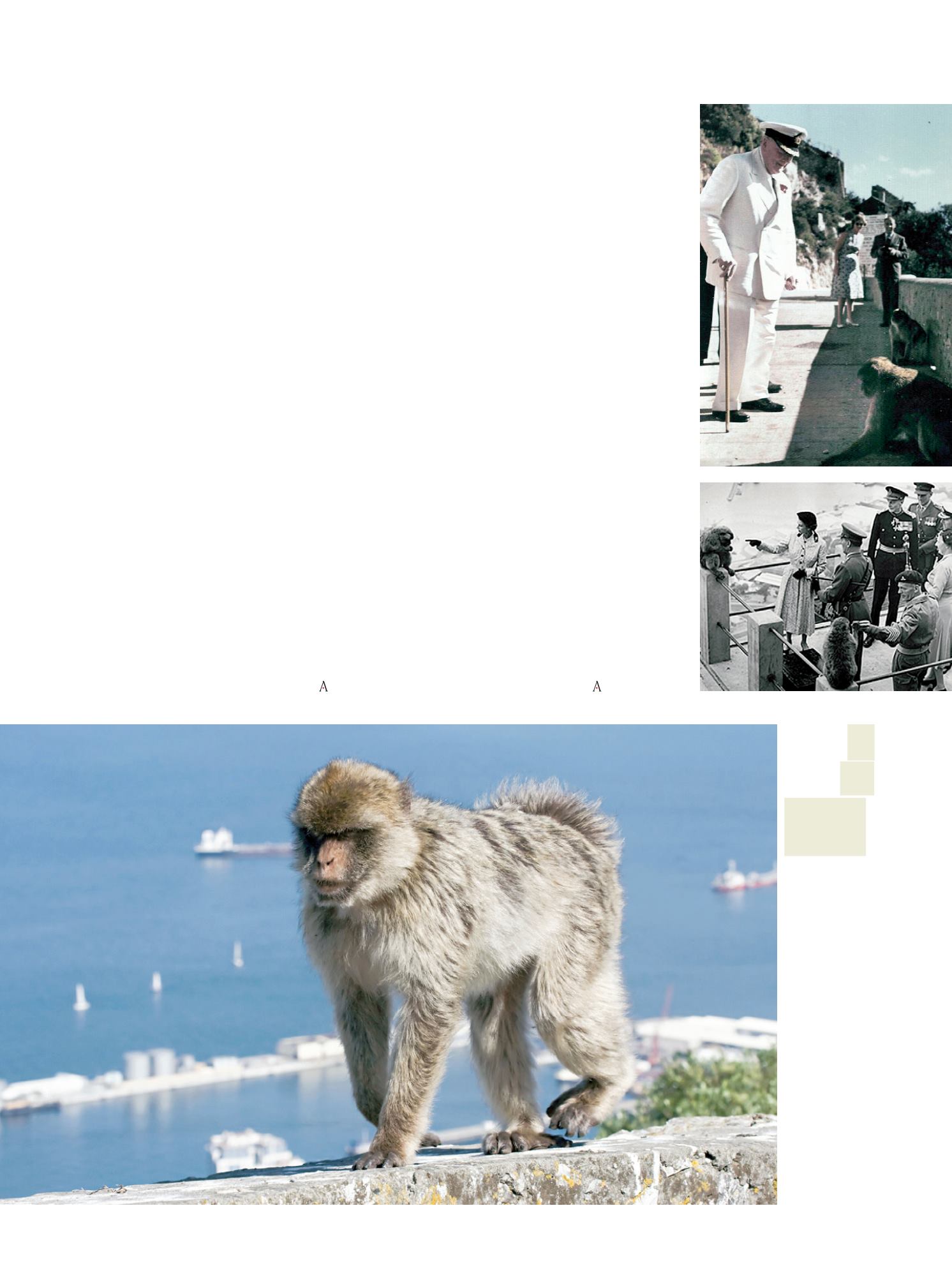
Elizabeth II y el Príncipe Philip, Duque de Edimburgo, vi-
sitaron la Roca en 1954 con sus hijos, el Príncipe Char-
les y la Princesa Anne; las fotos de su visita recorrieron
el mundo y atrajeron vacacionistas de todo el mundo.
Desde entonces, los habitantes de Gibraltar se han be-
neficiado al mantener trabajos enfocados al sector turís-
tico. Las autoridades han impuesto reglas y prohibicio-
nes en cuanto a las interacciones entre mono y turista;
está prohibido alimentarlos y semultará a quien lo haga,
ya que tienen su propia dieta y los alimentos procesa-
dos pueden causarles daño y reducir su expectativa de
vida. Asimismo, se recomienda mantener una distancia,
ya que son animales salvajes que pueden reaccionar de
forma impredecible si se sienten amenazados. Otra su-
gerencia importante es conservar la higiene después de
haber interactuado con ellos. Estas regulacionesmantie-
nen una relación beneficiosa entre humanos y macacos
que ha durado alrededor de tres siglos.
Sin embargo, la intervención humana ha daña-
do a esta especie de igual forma en que la ha ayu-
dado. Los macacos que habitan la parte superior
de la Roca son los únicos primates en Europa que
viven en libertad. Pero su libertad es condicional
y monitoreada para protegerlos del peligro de ex-
tinción en el que se encuentran. Los macacos se
han acostumbrado a convivir con el ser humano,
y su nivel de confianza, desafortunadamente, ha
causado problemas como la extracción de especí-
menes, particularmente de crías, con propósitos
comerciales, o la llamada “mascotización”. A pe-
sar de esto, los macacos de Gibraltar disfrutan del
contacto humano y de los privilegios de vivir en
aquella reserva, donde seguirán siendo uno de los
mayores atractivos de Gibraltar.
Due to their popularity and their intrinsic rela-
tionship with the British image of Gibraltar, thema-
caques have turned into a tourist attraction. Queen
Elizabeth II and Prince Philip, Duke of Edinburgh,
visited the Rock in 1954 with their children, Prince
Charles and Princess Anne; photographs of their
visit attracted vacationers from all over the world.
Ever since, Gibraltarians have benefitted with jobs
in the tourist sector. Authorities have imposed
rules and prohibitions regarding monkey-tourist
interactions; it is forbidden to feed them and any-
one who does so will be fined; they have their own
diet and processed foods can harm them and reduce
their life expectancy. Additionally, it is recommend-
ed to give thema wide berth, since they are wild ani-
mals and can display unpredictable behavior if they
feel threatened. Another important suggestion is
to keep good hygiene after having interacted with
them. These regulations maintain a beneficial rela-
tionship between humans and macaques that has
lasted around three centuries.
However, human intervention has damaged
this species as much as it has helped them. The
macaques that inhabit the upper region of the
Rock are the only primates in Europe that live in
the wild. But their freedom is conditional and
constantly monitored to protect them from the
danger of extinction in which they currently are.
Macaques have gotten used to human interaction,
and their level of trust has, unfortunately, caused
problems such as the subtraction of specimens,
particularly the young ones, with commercializa-
tion purposes or to turn them into pets. Despite
this, the macaques of Gibraltar enjoy human con-
tact and the privileges they obtain from living in
the reserve, where they will continue to be one of
the greatest attractions in Gibraltar.
9
10
11
9. Winston Churchill
contribuyó a la
repoblación de
macacos en la Roca
durante la Segunda
Guerra Mundial. /
Winston Churchill
contributed to the
repopulation of
macaques on the
Rock during the
SecondWorldWar.
10. La Reina Elizabeth
II de Inglaterra y el
Príncipe Philip en
su visita al Peñón
en 1954. /
Queen
Elizabeth II of
England and Prince
Philip during their
visit to the Rock in
1954.
11. Los macacos
de Berbería son los
únicos primates que
viven en libertad en
toda Europa. /
The
BarbaryMacaque are
the only primates
that live in the wild
in the whole of
Europe.