


 110 / 132

·amura·
Mitos •
Myths
108
Foto /
Photo
: GIBRARTAR INFO/NATIONAL GEOGRAPHIC/5C FOTO/ VISITGIBRALTAR
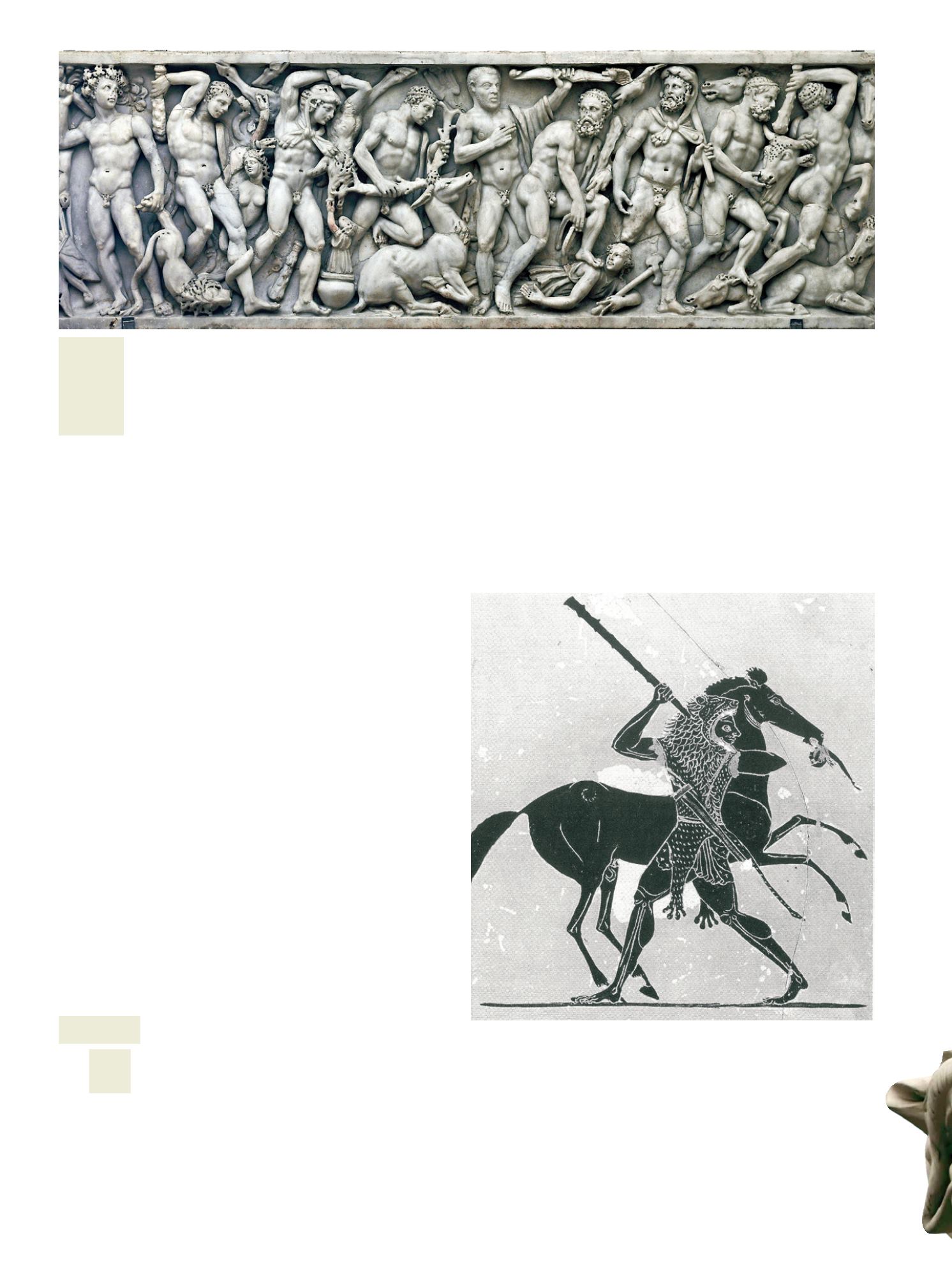
These 12 labors were: to get the skin of the Nemean
Lion, to kill the Lernean Hydra of multiple heads, to cap-
ture the Cerynian Hind, the Stymphalian Birds, and the
Erymanthian Boar. To clean the Augean Stables in one day,
he changed the course of the river Alpheus to flow through
them. Other feats involved capturing the Cretan Bull, the
Horses of Diomedes, the Cattle of Geryon; he also had to
secure the Girdle of the Amazon QueenHippolyte and steal
the Golden Apples of the Hesperides, and lastly, to capture
Cerberus, the guard dog of Hades (the Greek underworld).
All these featswere accomplishedone by one, andHercules
was victorious in each of them.
Estos doce trabajos fueron: conseguir la piel del
terrible león de Nemea; matar a la hidra de múltiples
cabezas de Lerna; capturar a la Cierva de Cerinea; a
los Pájaros de Estínfalo; y al jabalí de Erimanto. Para
limpiar en un solo día los establos de Augías, cam-
bió el curso del caudaloso río Alfeo. Otras hazañas
consistieron en capturar al indomable toro de Cre-
ta, a las salvajes yeguas de Diomedes, y a los toros
rojos de Gerión; así también, tuvo que conseguir el
cinturón de Hipólita, reina de las Amazonas; robar
las manzanas del Jardín de Hespérides, y por último,
capturar a Cerbero, guardián de la puerta del Hades
(el inframundo griego). Una tras otra fueron cumpli-
das todas estas gestas y Hércules salió victorioso de
cada una de ellas.
All known sources prove that, in times before Plato,
Greeks only knew, and clearly mentioned, only one set of
‘Pillars of Hercules,’ the ones at the Strait of Gibraltar, next
to the Atlantic and the region of Gadeira.
Georgeos Díaz-Montexano, Atlantologist, Writer, Explorer.
Todas las fuentes conocidas demuestran que, en los
tiempos anteriores a Platón, los griegos solamente
conocen, y mencionan claramente, a unas únicas
‘Columnas de Hércules’, las del estrecho marítimo de
Gibraltar, junto al Atlántico y la región de Gadeira.
Georgeos Díaz-Montexano, Atlantólogo, Escritor, Explorador.
1. Una obra del artista
ceutí Ginés Serrán
Pagán que representa
el mito de las columnas
de Hércules. /
Piece by
Ceutan artist Ginés
Serrán Pagán that
represents the myth of
the Pillars of Hercules.
1
2.Los12trabajosde
Hércules-Sarcofago
Romano.Siglo IIIa.c./
The12
laborsofHerculesRoman
sarcophagus.3rdcentury
B.C.
3.Vasoáticode510a.C.
ilustrandoaHeracles
acometiendoaunade las
yeguas/
Atticvasefrom510
BCillustratingHeracles
chargingoneofthemares
.
2
3