


 112 / 132

Sculptures of Gibraltar
Las esculturas de
Gibraltar
In 2007, sculptor Ginés Serrán-Pagán created two sym-
bolic works dedicated to this myth. The first, called
The
Pillars of Hercules: Abyla and Calpe
, represents the sepa-
ration of the two continents, and the second portrays
Hercules uniting the two pillars:
The Union of the World:
Monument to World Peace.
They are two colossal figures
of Hercules, sculpted in bronze, eight meters high and
eight tons each. They are the largest works of art depict-
ing Classic mythology in the contemporary world, and
symbolize the place where some claim the myth took
place: the Strait of Gibraltar.
Durante el año 2007, el escultor Ginés Serrán-Pagán creó
dos obras simbólicas dedicadas a este mito. La primera, lla-
mada
Las dos columnas de Hércules: Abyla y Calpe
, represen-
ta la separación de los dos continentes, y la segunda retrata
a Hércules uniendo las dos columnas:
La unión del mundo:
monumento a la paz mundial
. Son dos figuras colosales de
Hércules, esculpidas en bronce, de ocho metros de altura y
con ocho toneladas de peso cada una. Constituyen las obras
de mayor dimensión sobre la mitología clásica en el mundo
contemporáneo, y ocupan el sitio donde se afirma ocurrió el
mito: el estrecho de Gibraltar.
Mitos •
Myths
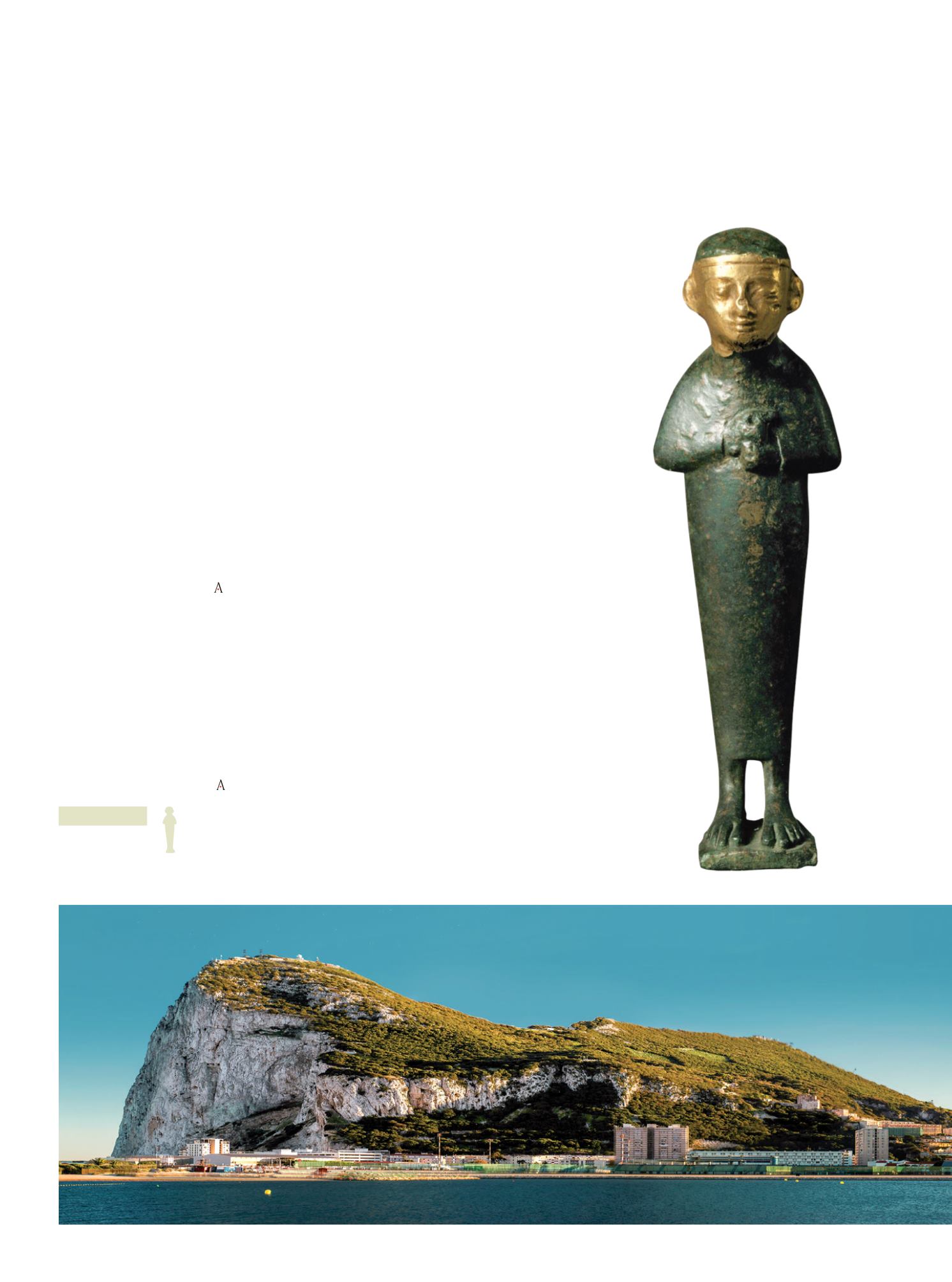
5. El Peñón de
Gibraltar era conocido
en la antigüedad como
Monte Calpe. /
The
Rock of Gibraltar was
known as
Mons Calpe
in ancient times.
5
6. Melkart,
divinidad fenicia
relacionada
con Hércules
/
Melqart,
Phoenician deity
associated to
Hercules.
6
·amura·
110