


 115 / 132

O
ur imagination goes wild at the
thought of this place on earth
where Africa and Europe face
each other; from the Rock of
Gibraltar, nestled in the Iberian
Peninsula, the African coasts of
Ceuta (Spanish colony in Mo-
roccan territory) sit clearly in the horizon.
Its cultural importance began in prehistoric times,
when primitive men crossed from one continent to
the other through the Strait from Ceuta, where it is
believed our ancestors settled 250,000 years ago. Ac-
cording to the history of the origins of human beings
on the planet, the first one was the
Australopithecus
,
foundintheSouthAfricanregion;theylivedbetween
1,000,000 and 600,000 BC. The
Homo Habilis
existed
in the same period, and they already displayed
skills in tool-making and included meat in their
diet. Afterwards, the
HomusErectus
livedbetween
500,000 and 200,000 BC, and had solid maxillary
bones, big teeth, and a smaller brain than their
predecessors; they were also better adapted for
a straight walking posture. The
Homo Nean-
derthalensis
was thus named because they
were located in Neandertal, Germany,
although there were similar discover-
ies in France, Yugoslavia, Palestine
and South Africa; they might have
roamed the earth around 120,000
to60,000BC.
L
a imaginación vuela con solo pen-
sar en este punto de la tierra donde
África y Europa se pueden observar
entre sí, ya que en el Peñón de Gi-
braltar, enclavado en la Península
Ibérica, se asoma nítida en el ho-
rizonte la costa africana de Ceuta
(Colonia española en territorio marroquí).
Su importancia cultural comienza en la prehis-
toria, cuando los hombres primitivos cruzaron de
un continente a otro a través del Estrecho, des-
de Ceuta, donde se cree se asentaron nuestros
antepasados hace 250.000 años. De acuerdo con
la historia sobre los orígenes del ser humano en
el planeta, primero fue el
Australopithecus
, en-
contrado en la región de África del Sur, que vivió
entre 1,000.000 a 600 000 años a.C. Contemporá-
neamente existió el
Homo Habilis
, quien ya tenía
destrezas en la fabricación de herramientas de
piedra y había incluido la carne en su dieta. Des-
pués, el
Homus Erectus
, entre los años 500.000 y
200.000 a.C., poseía maxilares macizos, dientes
grandes, un menor cerebro que sus antecesores
y estaba mejor adaptado a la postura erecta al
caminar. El
Homo Neanderthalensis
debe su nom-
bre a que fue hallado en el Valle de Neander, Ale-
mania, aunque también hubo descubrimientos
equivalentes en Francia, Yugoslavia, Palestina
y África del sur; pudo haber existido hace unos
120.000 a 60.000 a.C.
·amura·
113
herencia cultural •
culture and heriage
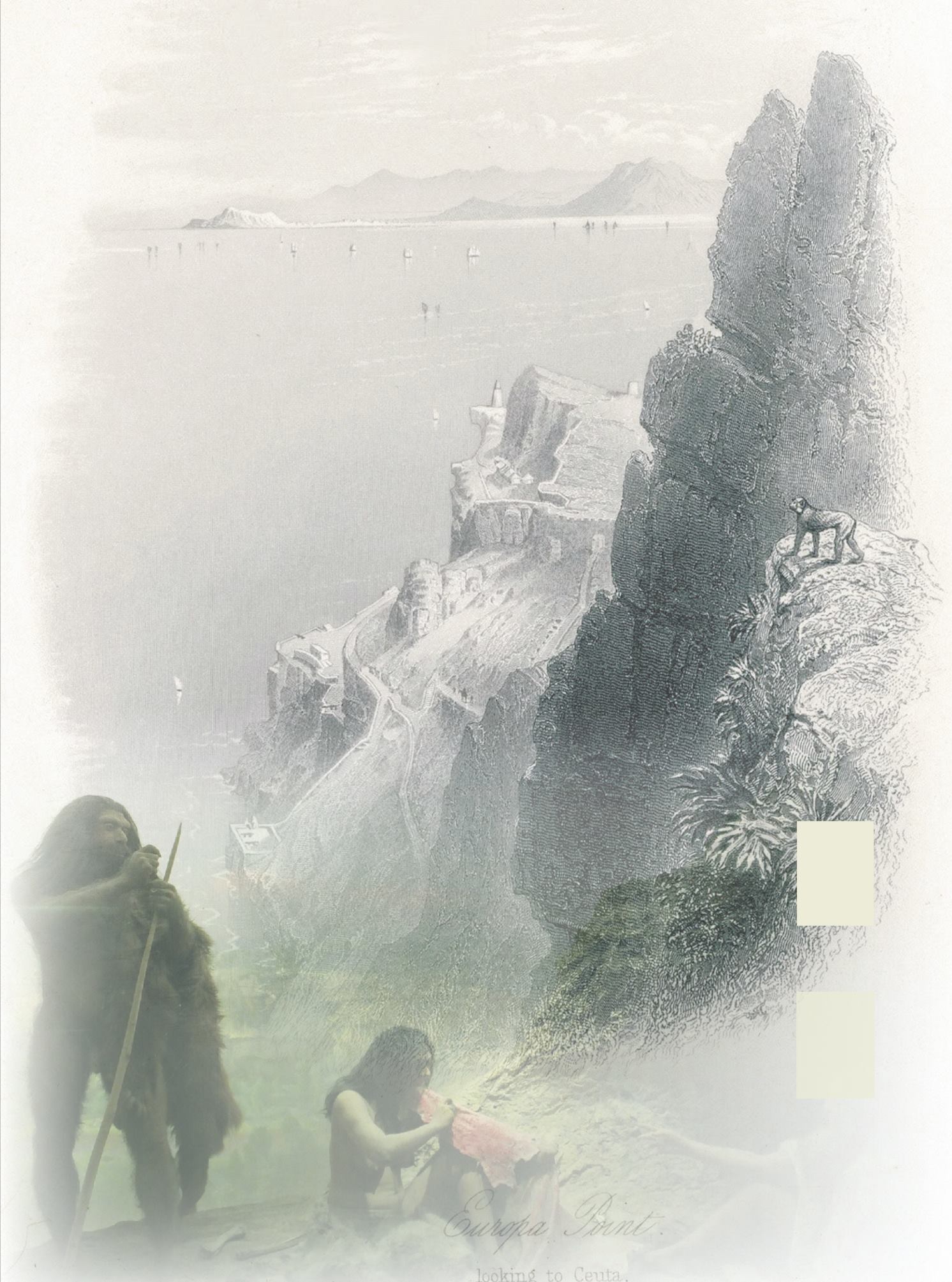
2. Neardentales - La
vista hacia Punta
Europa y Africa /
Neanderthals-The
viewtowardsEuropa
PointandAfrica
(1851-William
HenryBartlett).
2
1. Península Ibérica
vista desde el
espacio /
TheIberian
Peninsulafrom
space
.
1