


 117 / 132

herencia cultural •
culture and heritage
·amura·
115
Los científicos sugieren que 50,000 años a. C
se conformaron los primeros asentamientos hu-
manos en el Estrecho. Dicha información está
avalada por el hallazgo del cráneo del
Homo Cal-
Picus
(Hombre de Gibraltar)
junto a herramientas
y otros vestigios esparcidos principalmente en
cuatro cavernas, entre ellas Gorham’s Cave, que
han sido consideradas patrimonio mundial por la
UNESCO, ya que contienen viviendas identificables
del hombre prehistórico. Otras pruebas incuestio-
nables han quedado plasmadas en el arte rupes-
tre del Paleolítico superior y medio, Neolítico, y la
Edad de Bronce, de diversas grutas de la zona.
Scientists
theorize
that
approximately
50,000 BC, the first human settlements were
formed in the Strait. However, the discovery of
a
Homo calpicus
(Gibraltar Man)
cranium and
other tools, suggest they inhabited the area
40,000 years ago in four caverns—among them,
Gorham’s Cave—that have been granted UNESCO
World Heritage status due to the identifiable
trace of Neanderthal dwellings. Other unques-
tionable proof was immortalized in different
caves in the form of parietal art, which belonged
to the Middle and Upper Paleolithic, the Neolith-
ic, and the Bronze Age.
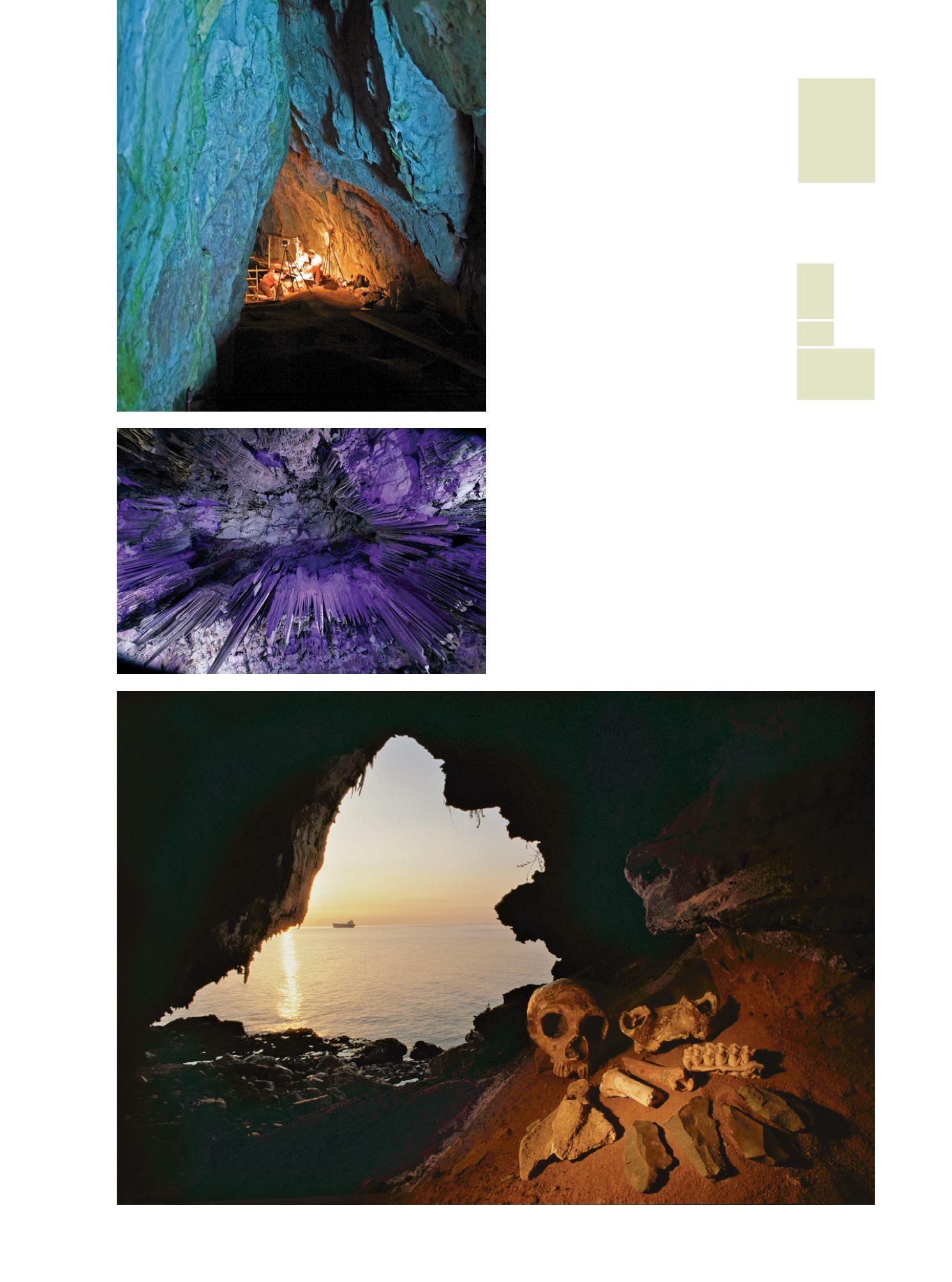
3. Vista desde
el interior de
Gorham’s Cave /
ViewfromGorham’s
Cave,Gibraltar
3
4. Excavaciones
científicas en
Gorham’s Cave
/
Scientific
Excavationsat
Gorham’sCave.
5. El complejo de la
cueva de Gorham,
un sitio del
patrimonio mundial
de la UNESCO /
Gorham’sCave
complex,UNESCO
WorldHeritageSite
6. Cráneo de
un Neanderthal
femenino en una
cueva en Gibraltar/
Skullofafemale
Neanderthalinacave
inGibraltar.
4
5
6