


 119 / 132

·amura·
117
herencia cultural •
culture and heritage
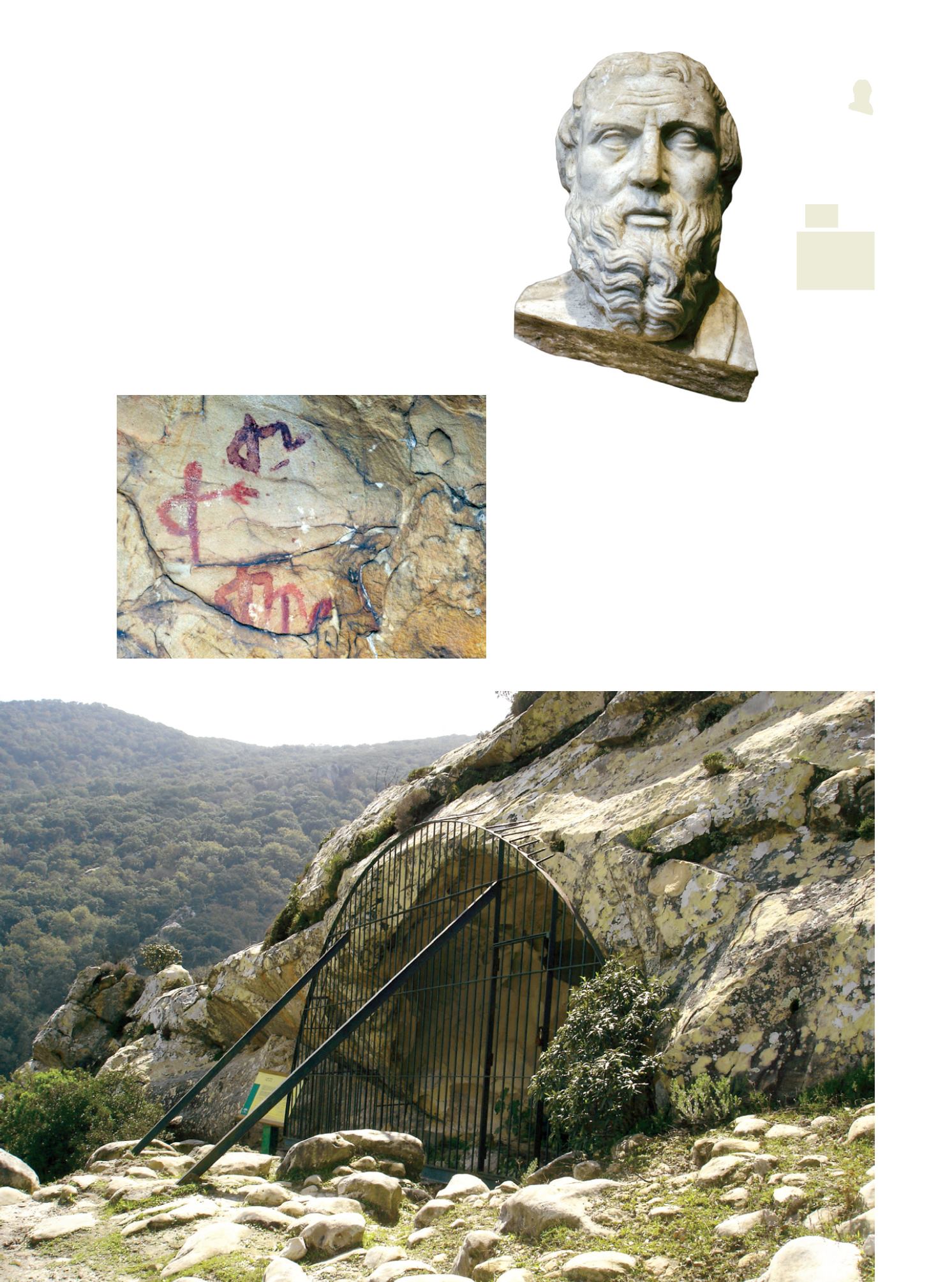
From 1450 BC onwards, the Phoenicians (a civilization that
originated in the Middle East from Lebanon, Syria, and Pales-
tine) became the protagonists of every major event. According to
Herodotus, they arrived to the Mediterranean from the coasts of
the Persian Gulf, following the coasts of Arabia, and brought with
them treasures of human intellect: the alphabet, astronomy, medi-
cine, and stoic philosophy. Socially, their skills regarding the ex-
pansion of international commerce are notable, along with their
diplomacy, orderly city life, Phoenician democracy, as well as
glass, purple ink, and ships. The first graphic testimony of naviga-
tion across the Strait goes back to 1000 BC: a painting in the cave
of Laja Alta depicting Phoenician ships; they marked
Mons Calpe
(Gibraltar) as the limit for Mediterranean navigational security.
A partir del año 1450 a.C., los fenicios (originarios del Medio Oriente,
provenientes del Líbano, Siria y Palestina) se vuelven protagonistas de los
acontecimientos en el Estrecho de Gibraltar. De acuerdo a Herodoto, desde
las costas del golfo Pérsico llegaron al Mediterráneo, siguiendo las costas
de Arabia, y trajeron consigo tesoros del pensamiento humano: el alfa-
beto, la astronomía, la medicina, la filosofía estoica. Socialmente, resal-
taba su pericia en la expansión del comercio internacional, la diplomacia,
la vida ordenada en ciudades, la democracia fenicia; así como el vidrio, la
tinta púrpura, y los barcos. El primer testimonio gráfico de la navegación
en el Estrecho data del año 1000 a. C., y se trata de una pintura rupestre
en la Cueva de La Laja, representando naves fenicias; ellos fueron quienes
marcaron el peñón de Calpe (Gibraltar) como el límite de seguridad para la
navegación mediterránea.
11.Heródoto(426a.
C.),historiadorgriego
consideradoyadesde la
antigüedadcomoelPadre
de laHistoria/
Herodotus
(426BC),Greekhistorian
consideredastheFatherof
Historysinceancienttimes
.
13
11
12
12.Lacuevade laLajaes
unode los lugarescon
pinturasrupestresmás
representativosde la
Península Ibérica/
Thecave
ofLajaAltaisoneofthe
mostimportantlocations
withparietalartinthe
IberianPeninsula
13.Entradaa lacuevade la
Laja/
Entrancetothecave
ofLajaAlta.