·amura·
119
los conquistadores •
the conquerors
Los temas que explora la muestra en sus distin-
tas salas son el entorno y la condición de las he-
roínas: la iconografía de la soledad, las campesinas,
cariátides, las ménades y bacantes, las cazadoras y
atletas, las vírgenes acorazadas y el retorno de las
amazonas, las magas, mártires y místicas, las lec-
toras, en cuyos cuerpos leemos cómo somatizan o
escenifican lo que leen. Y finalmente, después de
muchas figuras femeninas producidas por varones,
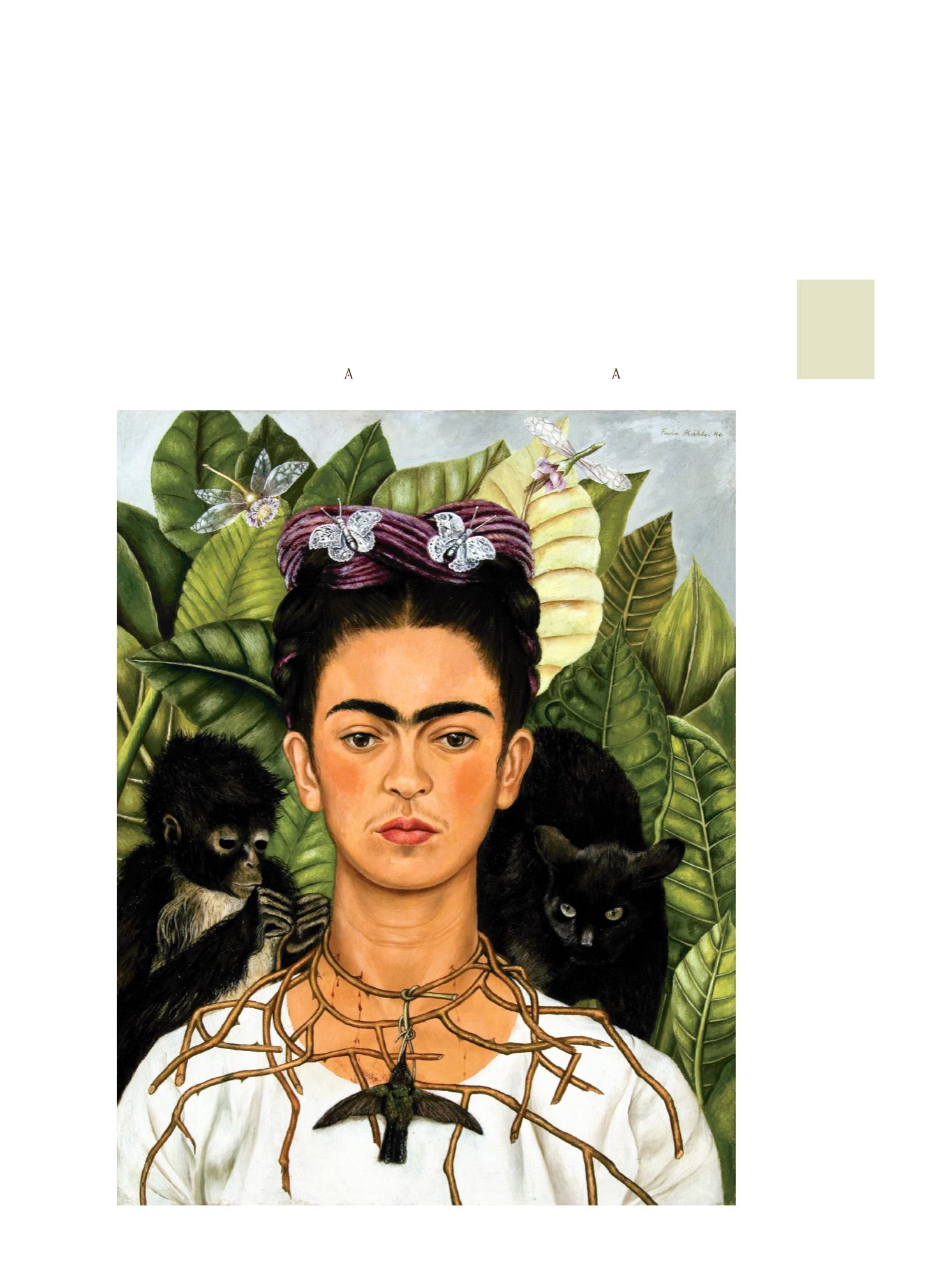
el último capítulo de la exposición está consagrado
a las interpretaciones que las mujeres han concebi-
do frente al espejo, lo que les permitió ser autoras o
creadoras, sin dejar de ser modelos, adoptando así
los dos roles al mismo tiempo: el activo o masculi-
no de la creación, junto al pasivo o papel femenino
por tradición. Esta astuta combinación de actividad
y pasividad fue la clave del éxito del autorretrato
femenino en una sociedad patriarcal.
The themes the exhibition explores in its dif-
ferent halls are the contexts and vocations of these
heroines: the iconography of solitude; peasant
women, caryatids; maenads and bacchantes; hunt-
ers and athletes; virgins in armor and the return
of the amazons; sorceresses, martyrs and mystics;
readers, the bodies in which we can read how the
woman acts out or somatises what she reads; and
lastly, following these numerous female figures
created by men, the final section of the exhibition
is devoted to images that women have created be-
fore the mirror, which allowed women to be author
or creator while continuing to be the model, thus
adopting two roles at the same time: creative-active
or masculine along with the traditionally passive
female role. This judicious combination of activity
and passivity was the key to the success of the fe-
male self-portrait in a patriarchal society.
1
1. Frida Kahlo
Autorretrato con
collar de espinas y
colibri, 1940
Oleo sobre lienzo
sobre masonita, 62,2
x 48,3 cm
Harry Ransom Cen-
ter, The University of
Texas at Austin
(Nickolas Muray
Collection)/ VEGAP
2011, Madrid


