135
·amura·
•
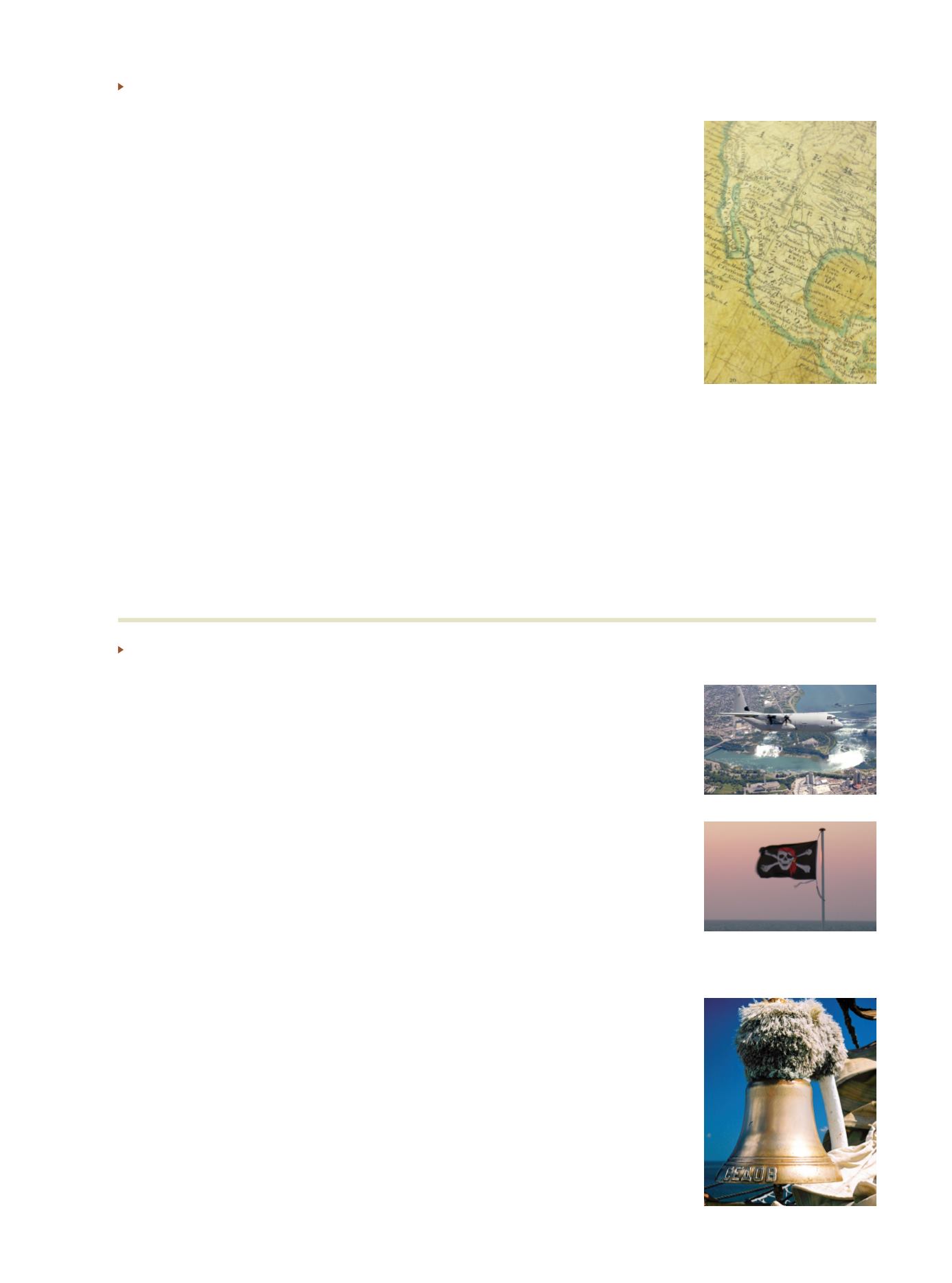
According to international maritime laws, when an
airplane circles a boat on the open sea three times,
noisily fires up its engines and then flies toward a
determined spot, it means that there is a boat or
ship that is an emergency situation there. The cap-
tain of the boat should go there to offer help.
•
Contrary to popular belief, there was a marked dif-
ference between buccaneers and privateers: the
former were pirates who plied the waters of the
Caribbean while the latter navigated exclusively in
the Mediterranean.
•
In times of Christopher Columbus, it was a common
for the ship’s captain to perform a ritual every
morning. He would point to the North Star with his
finger and then lower his arm slowly, forming an
arch until he touched the compass. This custom is
known as “the pilot’s blessing.”
•
According to tradition, on New Year’s Eve all vessels
that have a bell should ring it 16 times, eight for the
years gone by and eight for those to come.
Generally, the more experienced members of the
crew ring the first eight times and the younger
members are responsible for those that represent
the coming years.
During World War II, several allied vessels installed
copper cables in their hulls through which they
passed an electric current. That was to alter the boat’s
magnetic field and repel submarine mines.
En el maletín /
In your attaché case
Tesoros /
Treasures
• Según las leyes marítimas internacionales, cuando
una aeronave circula una embarcación en mar abierto
tres veces mientras dispara con estruendos sus mo-
tores y luego se dirige a un punto determinado quie-
re decir que existe un barco o bote con una
emergencia en ese punto. El capitán del barco debe
acudir en su ayuda.
• Contrariamente a lo que se piensa, los bucaneros y
los corsarios tenían una marcada diferencia: los pri-
meros eran piratas de aguas caribeñas y los segundos
navegaban exclusivamente en el mar Mediterráneo.
• En tiempos de Cristóbal Colón era un ritual común que
cada mañana el capitán señalara con el dedo hacia la
Estrella del Norte, y luego bajara su brazo lentamente
formando un arco hasta llegar a la brújula. A esta cos-
tumbre se la llamaba “La bendición del piloto”.
• Según lo marca la tradición, en cada víspera de Año
Nuevo todo navío que cuente con una campana debe
hacerla sonar 16 veces, ocho por los años que se van
y ocho por los que vienen. Generalmente, los más ex-
perimentados de la tripulación hacen sonar las prime-
ras ocho y los miembros más jóvenes se encargan de
las campanadas que representan los años venideros.
• Durante la Segunda Guerra Mundial varias embarca-
ciones aliadas instalaban en sus cascos cables de co-
bre por los cuales pasaba una corriente eléctrica. Esto
era para alterar el campo magnético del barco y repe-
ler la atracción de las minas submarinas.
To dock at any Mexican port, a foreign boat must pres-
ent an arrival application, including the following
information, to the Harbormaster’s Office:
•
Name of the vessel
•
Flag
•
Draft: bow and stern
•
Gross tonnage
•
Dead weight
•
Length and beam
•
Type of boat
•
Registration number
•
Port of origin
•
Anticipated date and time of arrival
•
Distinctive call signal, if applicable
•
Anticipated date and time for weighing anchor
•
Date and time for dropping anchor, if applicable
•
List the last six ports at which the boat stopped
•
If applicable, list of passengers who will be enter-
ing the country and those who will board the boat
again.
•
Declaration of the provisions on board and declara-
tion of the crew’s goods and merchandise
•
Exit dispatch from port of origin or similar official
document issued by a competent authority that
guarantees the vessel’s place of origin
For further information:
Source:
Para que una embarcación extranjera pueda llegar a
cualquier puerto mexicano es necesario presentar una
solicitud de arribo a la Capitanía del puerto. Esta solici-
tud debe incluir los siguientes datos:
• Nombre de la embarcación
• Bandera
• Calados: proa y popa
• Tonelaje bruto
• Peso muerto
• Eslora y manga
• Tipo de embarcación
• Número de matrícula
• Puerto de procedencia
• Fecha y hora de arribo previstas
• Señal distintiva de llamada, en su caso
• Fecha y hora de zarpe previstas
• Fecha y hora de fondeo, si es que se hace
• Señalar los últimos seis puertos que tocó la embar-
cación
• En su caso, lista de pasajeros que habrán de
internarse en el país y de los que volverán a embarcar
• Declaración de provisiones a bordo y declaración de
efectos y mercancías de la tripulación
• Despacho de salida del puerto de origen o documen-
to oficial similar expedido por la autoridad compe-
tente que acredite la procedencia de la embarcación
Para más información:
Fuente:
tips & tops


