133
los conquistadores •
the conquerors
·amura·
tiempo y el buen gusto como factores de decisión, ade-
más de maximizar el dinero del que se dispone.
Por otra parte, la intención de los artistas, en gene-
ral, es internacionalizarse por medio de las galerías y los
dealers
o corredores para penetrar en los mercados do-
minantes, especialmente en Estados Unidos y en Euro-
pa. Sin embargo, la tensión del mercado provoca que
algunos de ellos se dediquen a buscar el control opera-
tivo en conjunto con los distribuidores, olvidándose del
discurso estético e ideológico, por lo que algunos logran
pasar el tamiz histórico.
Pareciera que se enfrentan los gustos de los coleccio-
nistas con la búsqueda de los artistas, ymás aún con la in-
formación globalizada. En definitiva es importante
observar que se trata de un fenómeno cultural que es con-
secuencia directa de la tendencia del mercado en los últi-
mos años. Sin dudas, la demanda por consumo de obras
de arte se verá ampliada por los compradores asiáticos ba-
jo los patrones del mercado europeo y norteamericano, tal
vez con un quehacer por parte de los artistas en la aplica-
ción de nuevas técnicas, pero sin perder de vista la férrea
estructura tradicional de los dos siglos anteriores.
Los circuitos internacionales de venta, incorporadas
las ferias de arte, han aumentado en número los espa-
cios y su frecuencia de exhibiciones. Esto permite en-
tender y confirmar que se dan las suficientes
operaciones de mercado, sin olvidar que circula de todo
(malo, regular, bueno y excelente), donde la decisión es-
tá, en gran medida, en el comprador.
El mercado de arte como tal seguirá siendo un ám-
bito de oportunidades financieras al abrirse más de lo
que hasta hoy lo conocemos. Se puede sostener que fal-
ta muy poco tiempo para que los precios que actual-
mente nos escandalizan sean una referencia histórica
para quien invierta con conocimiento de causa. Y es ca-
si seguro de que podrá disfrutar de las obras adquiridas
y de una fuerte utilidad cuando las venda.
On the other hand, artists generally want to
become internationally known through galleries and
dealers or brokers in order to penetrate in the major
markets, especially in the United States and Europe.
However, tension in the marketplace makes some of
them to seek joint operative control with their dis-
tributors, forgetting aesthetic and ideological rheto-
ric, thus allowing some of them to pass through the
screen of history.
It would appear that there is a confrontation
between the tastes of the collectors and the artists’
search, and even more so with global information. It
is decidedly important to observe that it concerns a
cultural phenomenon that is a direct consequence of
the market tendency in the past few years. There is
no doubt that the demand for works of art will be
increased by Asian buyers following the patterns of
the European and North American markets. Perhaps
this means that artists will have to use new tech-
niques, but not lose sight of the tight traditional
structure of previous centuries.
International sales circuits, including art fairs,
have increased the number and frequency of
exhibits. This makes it possible to understand and
confirm that there are enough operations in the
market, without forgetting that everything (bad,
regular, good and excellent) continues to circulate,
and that the final decision is based, in good part, on
the buyer.
By broadening its horizons even more so than it
has to date, the art market, as such, will continue to be
a place of financial opportunity. A case can be made
for the fact that in just a short period of time the
shocking prices of today will become an historic refer-
ence for those who invest wisely. And it is almost cer-
tain that you will be able to enjoy the works that you
acquire and a strong profit when you sell them.
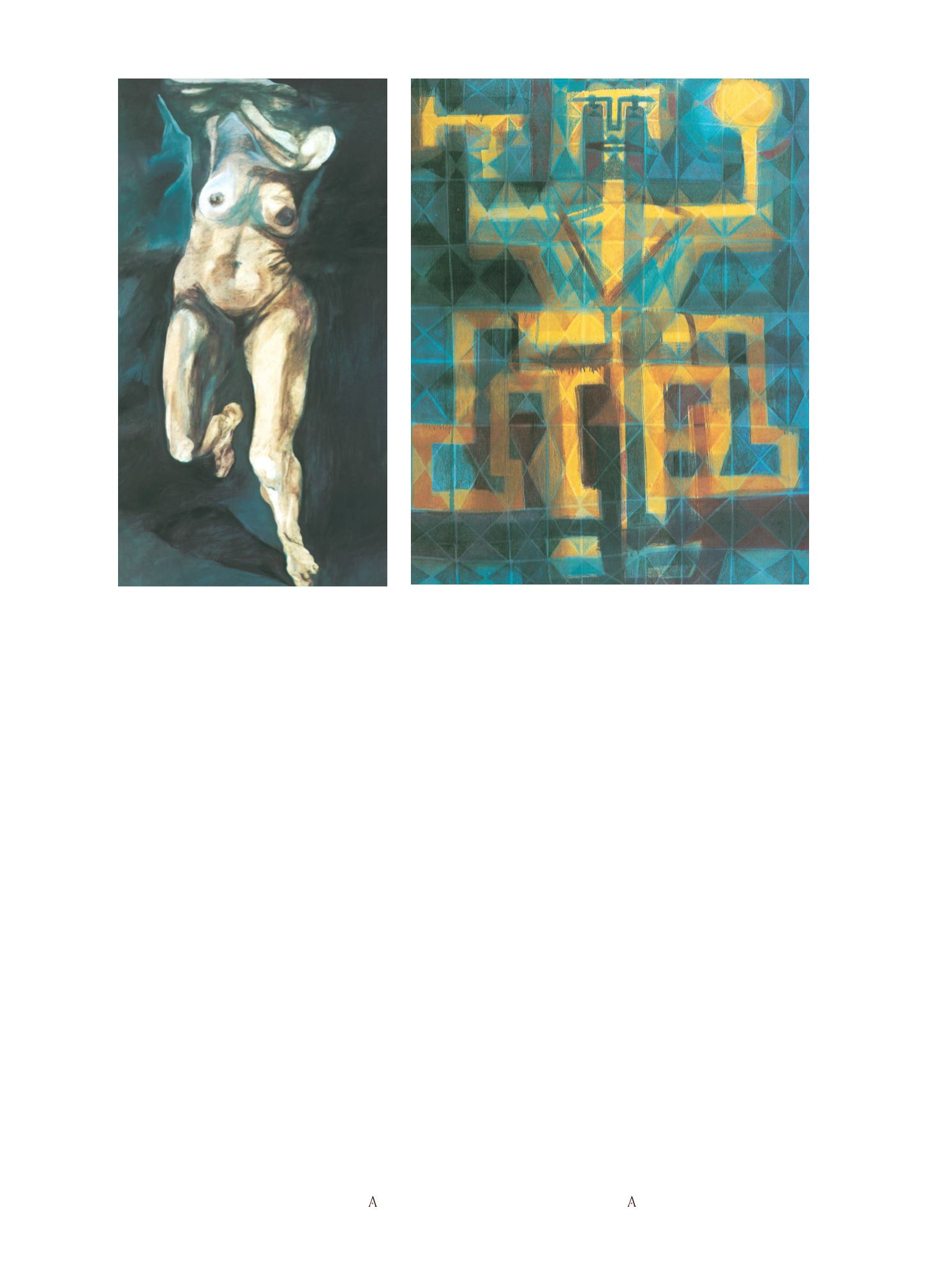
(izquierda)
Gustavo Aceves
Misticismo de la carne
Óleo sobre tela
(1991)
(derecha)
Maximo
Baño de oro
(ca.
1988)


