5
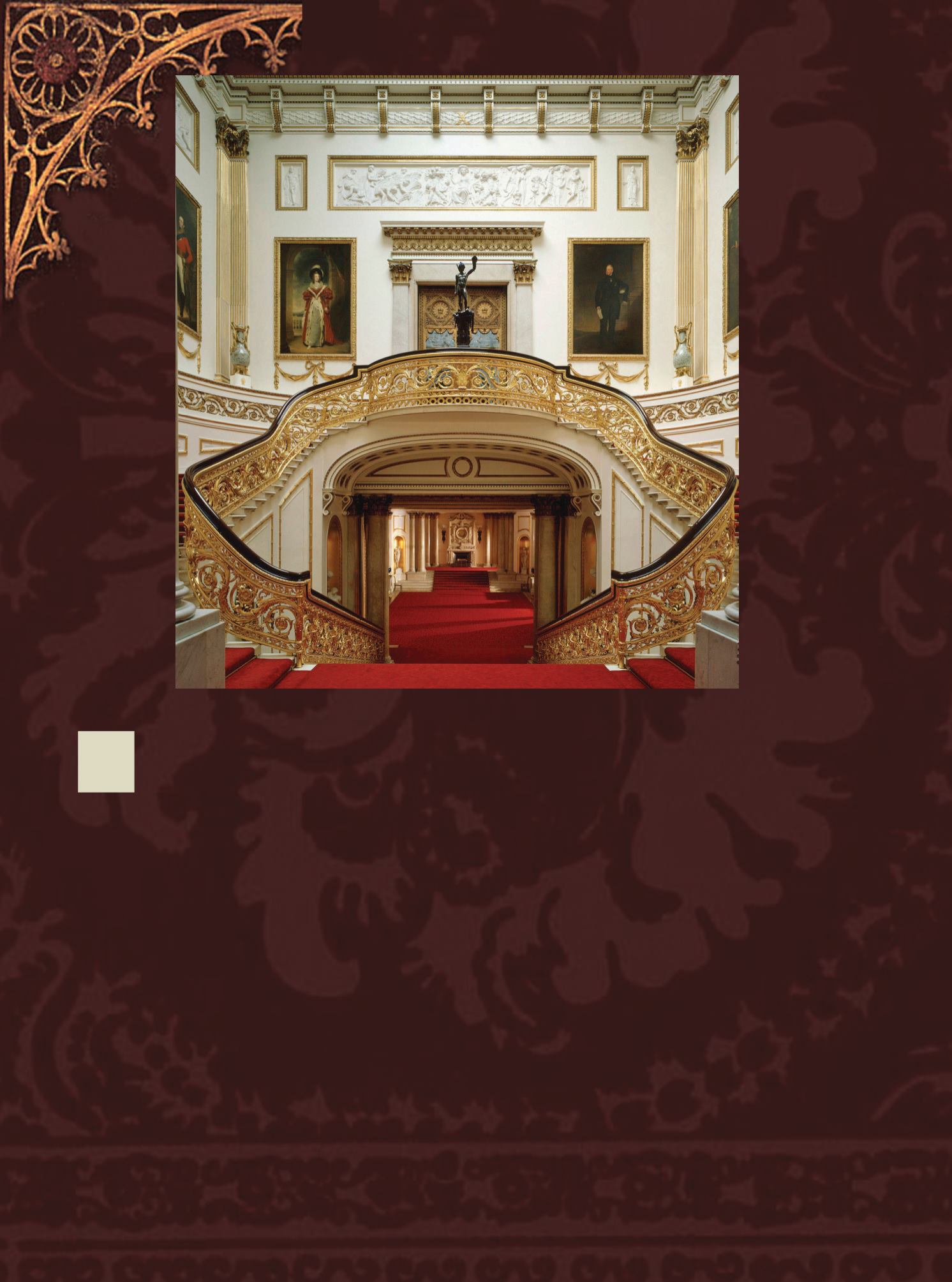
5. Interior del
Castillo de Windsor,
sede de la Corte
Real de Isabel I /
Inside the Castle
of Windsort,
headquarters of
the Royal Court of
Elizabeth I.
María fue coronada reina. Decidida a restablecer el
catolicismo en Inglaterra, veía en Isabel, su hermanas-
tra protestante, una amenaza que resolvió encarcelán-
dola en la Torre de Londres bajo la acusación de convivir
con un grupo de conspiradores. Isabel aparentó su con-
versión al cristianismo y eventualmente fue liberada.
María, hija de Catalina de Aragón, se había casado
con su tío Felipe II, quien no correspondía a su amor.
Murió sin descendencia, cinco años después de haber
asumido el reinado. Cuando Isabel llegó al trono se
propuso que Inglaterra volviera al Protestantismo; de
hecho, uno de sus mayores legados fue establecer y
afianzar una vertiente inglesa de protestantismo.
Inglaterra enfrentaba una guerra sin cuartel con
Francia, una economía débil, conflictos religiosos y cons-
piraciones contra la corona. En esas circunstancias se
consideró la opción de que Isabel se casara con el viudo
Felipe II, a quien ella veía con buenos ojos, para afianzar
una alianza muy conveniente para España e Inglaterra.
La unión se frustró cuando Felipe II se enteró de que la
soberana padecía cierta incapacidad para engendrar. Se
cree que este rechazo hizo a la reina tomar la decisión
radical de jamás casarse, e incluso de lanzar una perse-
cución contra católicos y calvinistas. Esto provocó que el
Papa Pío V la excomulgara y que ella reaccionara fundan-
do la Iglesia Anglicana, separada del Vaticano.
Dotada de una personalidad autócrata, o de gran
seguridad, Isabel tomaba todas las decisiones; pero
tuvo la inteligencia de hacerse rodear de excelentes
Mary was crowned queen and was determined to
restore Catholicism in England. She felt threatened by
Elizabeth,herstepsisterwhowasaProtestant.Sosheim-
prisonedher in theTower of Londononcharges of living
with a group of conspirators. Elizabeth then, faked her
conversiontoCatholicismandwaseventuallyreleased.
Mary, the daughter of Catherine of Aragon, had
married her uncle Philip II, who did not love her. She
died childless, five years after she took the reign.
When Elizabeth came to the throne, it was proposed
that England returned to Protestantism. In fact,
one of her greatest legacies was to establish and
strengthen English Protestantism.
England faced a relentlesswarwithFrance, aweak
economy, religious conflicts and conspiracies against
the crown. Under these circumstances the option of
Elizabeth marrying Phillip II was considered. Eliza-
beth liked the idea; it would secure a very convenient
alliance for Spain and England. The union was frus-
trated when Philip II learned that the sovereign suf-
fereda certain inability tobreed. It isbelieved that this
rejection made the queen take the radical decision to
never marry, even launching a persecution against
CatholicsandCalvinists. This causedPopePiusVtoex-
communicate Elizabeth and in reaction, she founded
the Anglican Church, separated fromthe Vatican.
Endowed with an autocratic personality, or a high
self-confidence, Isabel made all the decisions, and
was smart enough to surround herself with excellent
·amura·
120
personajes •
characters


