·amura·
68
5 noches •
5 nights
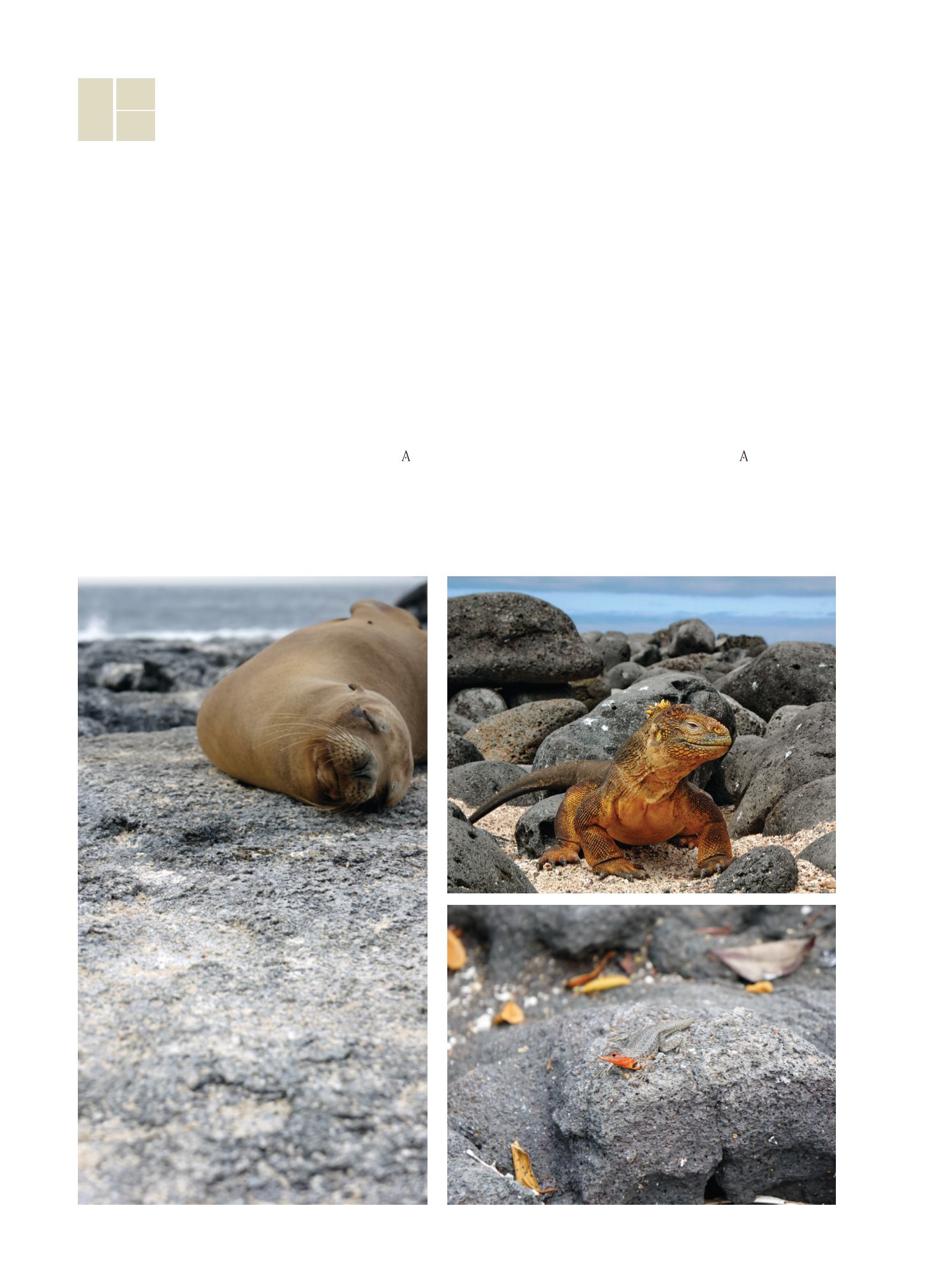
13. León marino /
Sealion.
14. Iguana en la Isla
Isabela /
Iguanaat
IsabelaIsland.
15. 97% de los
reptiles de las
Galápagos son en-
démicos de la región,
según Galapagos
Conservancy. /
97%oftheGalápagos
speciesareendemic
totheregion,accord-
ingwithGalapagos
Conservancy.
13
14
15
El regreso
El sábado llegamos a San Cristóbal, donde con tris-
teza dejamos la embarcación y tomamos el vuelo de re-
greso a Quito. La aventura, por ahora, había terminado y
nos llevábamos a casamuchos recuerdos y aprendizajes,
pero sobre todo una nueva conciencia sobre nuestro pa-
pel en el cuidado de este increíble pedazo del mundo.
Responsabilidad ecólogica
.
Las Galápagos han sufrido impactos ambientales
muy fuertes, la población ha aumentado en 300% en
las últimas décadas. Además, con la llegada de nue-
vos habitantes han llegado mascotas que han pues-
to en peligro a las especies nativas. También la pesca
se ha salido de proporción y el número de turistas ha
crecido de manera significativa. Todo esto nos obliga
a hacer un turismo responsable para dejar la mínima
huella posible. Esto implica no alimentar ni tocar a los
animales, no dejar basura, visitar el archipiélago con
un guía certificado y no tomar ninguna roca, planta,
arena o cosa por el sitio.
The return
On Saturday we arrived to San Cristobal, where
sadly. We left the boat and took the flight back to
Quito. The adventure, for now, was over, we brought
home many memories and knowledge, but espe-
cially a new awareness of our role in caring for this
incredible piece of the world.
Ecological responsibility
The Galapagos have suffered strong environ-
mental impacts. The population has increased by
300% in recent decades. Furthermore, with the ar-
rival of new residents and their pets, it has come
to endanger native species. Fishing has also been
blown out of proportion and the number of tourists
has grown significantly. All this made us respon-
sible tourisms, and to leave with the minimumpos-
sible footprint. This means not to feed or touch the
animals, not littering, to visit the archipelago with
a certified guide and not to take any rocks, plants,
sand or anything from that site.


