·amura·
62
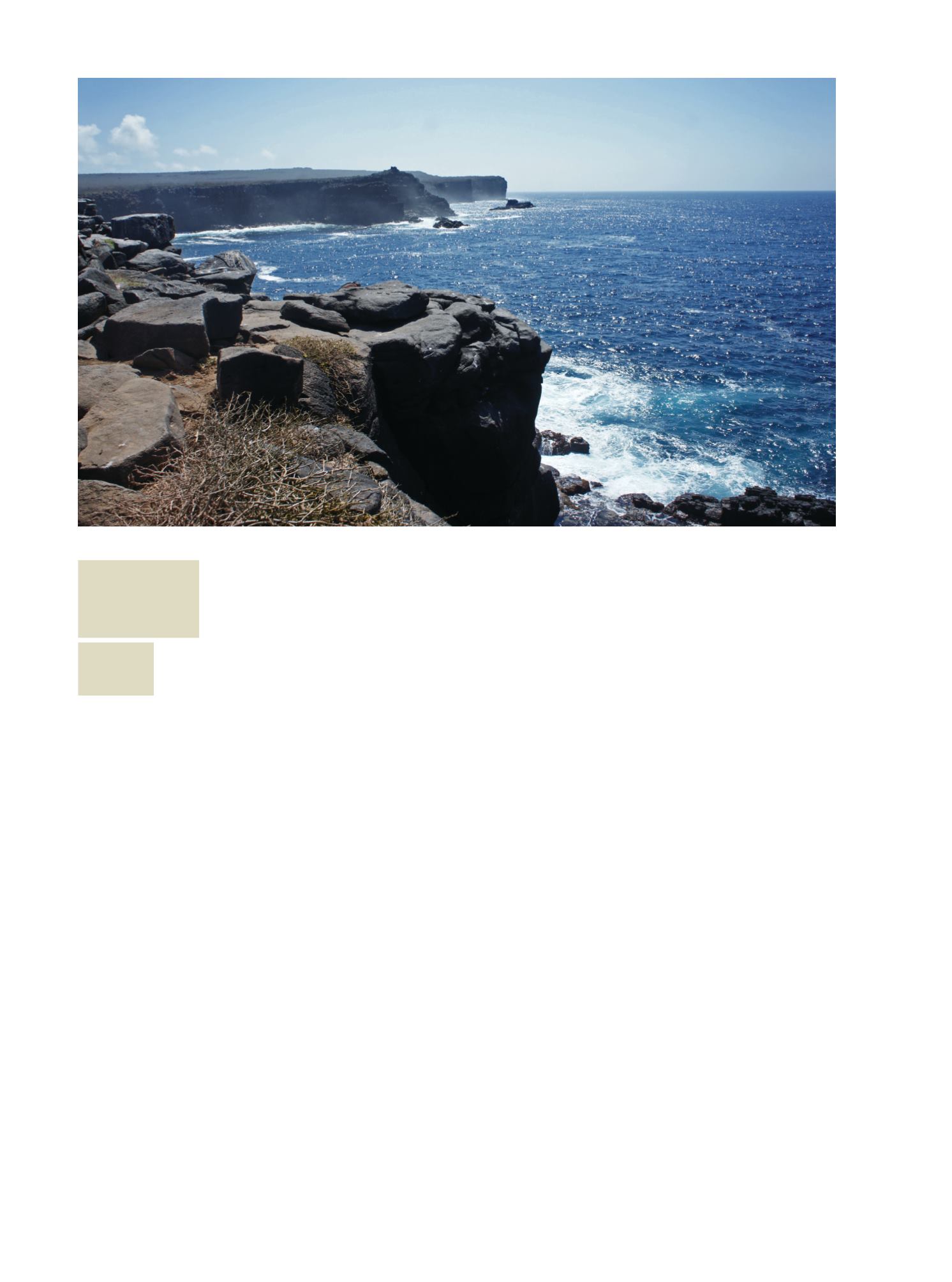
1. Las Islas Galá-
pagos en Ecuador,
es una región casi
intocada por la mano
del hombre. /
The
GalápagosIslandsin
Ecuadorisaregion
almostuntouchedby
humanhands.
2. Charles Darwin
investigó y trabajó
en su teoría
evolutionista más
de 24 años. /
Charles
Darwinresearched
andworkedonhis
evolutiontheoryover
24years.
2
1
5 noches •
5 nights
Darwin y las Galápagos.
Las islas ganaron su fama gracias a Charles Darwin,
quien en 1831 se embarcó en el Beagle desde Inglaterra.
Llegó al archipiélago en 1835, donde se quedó cinco sema-
nas y estudió las diferentes especies para después escribir
su Teoría de la Evolución. Darwin tenía 26 años y después
de estar en Sudamérica paró aquí con el objeto de estudiar
algunas especies de tortuga. Al llegar, se impresionó por
encontrar flora y fauna única en su tipo. Fue hasta 1859 en
que dio forma final a su Teoría del Orígen de las Especies,
con lo que desató una gran controversia. La Teoría habla
de cómo las especies evolucionan para sobrevivir y cómo
aquellas especies con mejores cualidades de adaptación
son lasquesobreviven. Enparticular, el científico ingléses-
tudió el caso de los pinzones deDarwin, 13 variedades que
provienen todos deunmismo ancestroyque fueronadap-
tándose a dietas tan variadas como cactus o parásitos.
Patrimonio de la humanidad
Desde 1978 las Galápagos han sido declaradas Patri-
monio de la Humanidad por la UNESCO y por lo tanto hay
distintas restricciones para quienes deseen visitarlas.
Solamente un número limitado de turistas es permitido y
hayunpuntode inspecciónenel aeropuertoenQuitopara
comprobar que no llevemos artículos prohibidos como ali-
mentos, faunaoflora, quepuedanafectar a loshabitantes
de las islas. A 600millas del continente se encuentra este
sitio prácticamente no tocado por la mano del hombre y
donde la vida transcurre de la misma manera que hace
miles de años. La alternativa de viajar en barco es muy
cómoda; se ancla a unos metros de la playa, los pasajeros
descienden a la costa en una lancha inflable, hacen algu-
na excursion en compañía de un guía naturista y regresan
a la comodidad de su cabina o a disfrutar el atardecer en
cubierta. La comida suele ser muy agradable y los guías
tienen mucha experiencia y amor por dar a conocer este
rincón tan especial del mundo.
Darwin and the Galapagos
The islands gained their fame thanks to Charles
Darwin, who in 1831 embarked on the Beagle from
England. He reached the archipelago in 1835, where
he stayed five weeks and studied the different spe-
cies and then wrote his Theory of Evolution. Darwin
was 26 and after visiting South America, he stopped
here inorder tostudysome turtlespecies. Uponarriv-
al, hewas impressed tofindflora and fauna unique of
its kind. It was until 1859 that gave final shape to his
Theory of the Origin of Species, which sparked much
controversy. The theory states that species evolve to
survive and that those species with best fitting qual-
ities are surviving. Inparticular, the Englishscientist
studied the case of Darwin’s finches, 13 varieties that
are all fromthe same ancestor whichwere adapted to
diets as varied as cactus or parasites.
World Heritage
Since 1978 the Galapagos have been declared a
World Heritage Site by UNESCO and therefore, there
are different restrictions for those wishing to visit.
Only a limited number of tourists are allowed and
there is a checkpoint at the airport in Quito to check
for prohibited items such as food, fauna or flora,
which may affect the inhabitants of the islands. At
600 miles from the mainland, this site is virtually
untouched by the hand of man, and life goes on the
same way for thousands of years. The alternative
of traveling by boat is very comfortable. The ship is
anchored a few meters from the beach, passengers
descend to the coast in an inflatable boat, make an
excursion in the company of a naturalist guide and
return to the comfort of their cabin or enjoy the
sunset on deck. The food is usually very nice and the
guides are very experienced and love to present this
very special corner of the world.


