119
los conquistadores •
the conquerors
·amura·
tegración del aparato lógico con el que nos represen-
tarnos el mundo.
“I think the living room of my
house is breaking down”
, dice Elisa, la protagonista,
y continua
“It can’t keep things out anymore, can’t
preserve its own space. My garden is coming into my
living room.”
Súbitamente surge una renegociación
de lo que entendemos por realidad. Emerge un
aspecto oscuro de las cosas para exponernos nuestra
propia extranjería. Emerge lo Real, aquello que Lacan,
sin más herramientas que el lenguaje, denominó: lo
imposible. Las imágenes de Ahtila nos revelan el lado
equívoco del mundo, su vestimenta falsaria. Pero tan
pronto advertimos el vértigo incontrolable que
implica renegociar nuestra capacidad de interpreta-
ción del mundo, la imagen viene a conjurar el daño. A
ponernos a salvo. Pensamos aliviados que se trata de
la realidad intransferible de alguien más. Que no
somos nosotros, que nunca hemos sido nosotros los
que hemos dudado del estatuto ontológico de la rea-
lidad. Pero el peligro ha sido indicado. Ahtila ha toca-
do delicadamente una de las llagas de la imagen y lo
real. Cito brevemente a Clément Rosset en su libro
Lo
real. Tratado de la idiotez
: “La imagen sirve aquí para
recusar lo real, para alejarlo. Esta función es eficaz
generalmente en las situaciones de urgencia, es
decir, cuando uno se halla enfrentado a una realidad
que, bajo pena de una grave crisis debe ser evacuada
de inmediato, desplazada de cualquier modo. La bru-
talidad del acontecimiento es entonces amortiguada
por el espectáculo de su interpretación.” Lo real
desaparece al momento de su representación. La
representación siempre viene tardíamente.
The House
, junto con otros cuatro videos, perte-
nece a un conjunto de obra que se llama
The Present
.
that represents the world to us.
“I think the living
room of my house is breaking down”
, says Elisa,
the lead character, and continues
“It can’t keep
things out anymore, can’t preserve its own space.
My garden is coming into my living room.”
Suddenly a renegotiation of what we understand
by reality emerges. A dark aspect of things
emerges to expose us to our own strangeness. The
real emerges, something that Lacan, with nomore
tools than language, denominated: the impossi-
ble. Ahtila’s images reveal the mistaken side of
the world; its fake dress. But as soon as we see the
uncontrollable vertigo that implies the renegotia-
tion of our capacity to interpret the world, the
image conjures up harm. On saving ourselves, we
think ourselves as relieved from someone else’s
untransferable reality. That we are not ourselves,
that we have never been ourselves who have
doubted the ontological statute of reality.
However, the danger has been indicated Ahtila
has delicately touched one of the sore spots of the
image and the real. I will briefly quote Clément
Rosset from his book
Le réél: traite de l’idiotie
:
“The image serves here to challenge the real, to
push it away. Generally, this function is effective
in situations of urgency; in other words, when one
finds oneself faced with a reality that, in situa-
tions of grave crisis, must be evacuated immedi-
ately and displaced by any means possible. The
brutality of the event is therefore buffered by the
spectacle of its interpretation.” The real disap-
pears at the time of its representation, which
always appears slowly.
The House
, together with another four videos,
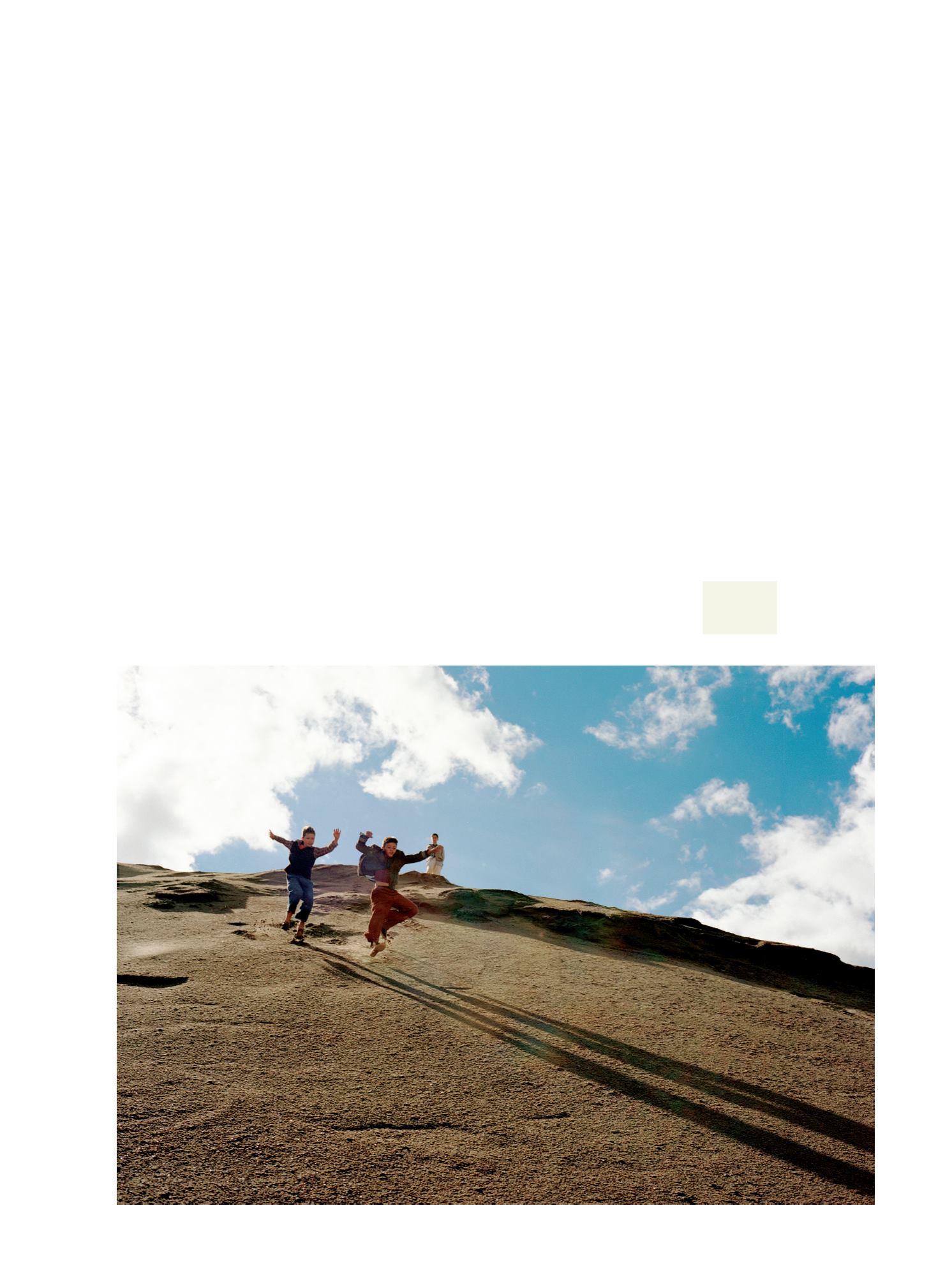
Where is Where?, 2008
6-screen HD Installation, 16:9, aspect ratio
1:1.77, DD 5.1, original language Finnish,
English subtitles
Courtesy of Marian Goodman Gallery,
New York and Paris
© Crystal Eye – Kristallisilmä Oy,
Helsinki 2008
©VG Bild-Kunst, Bonn 2008
Photo: Marja-Leena Hukkanen


