especies •
species
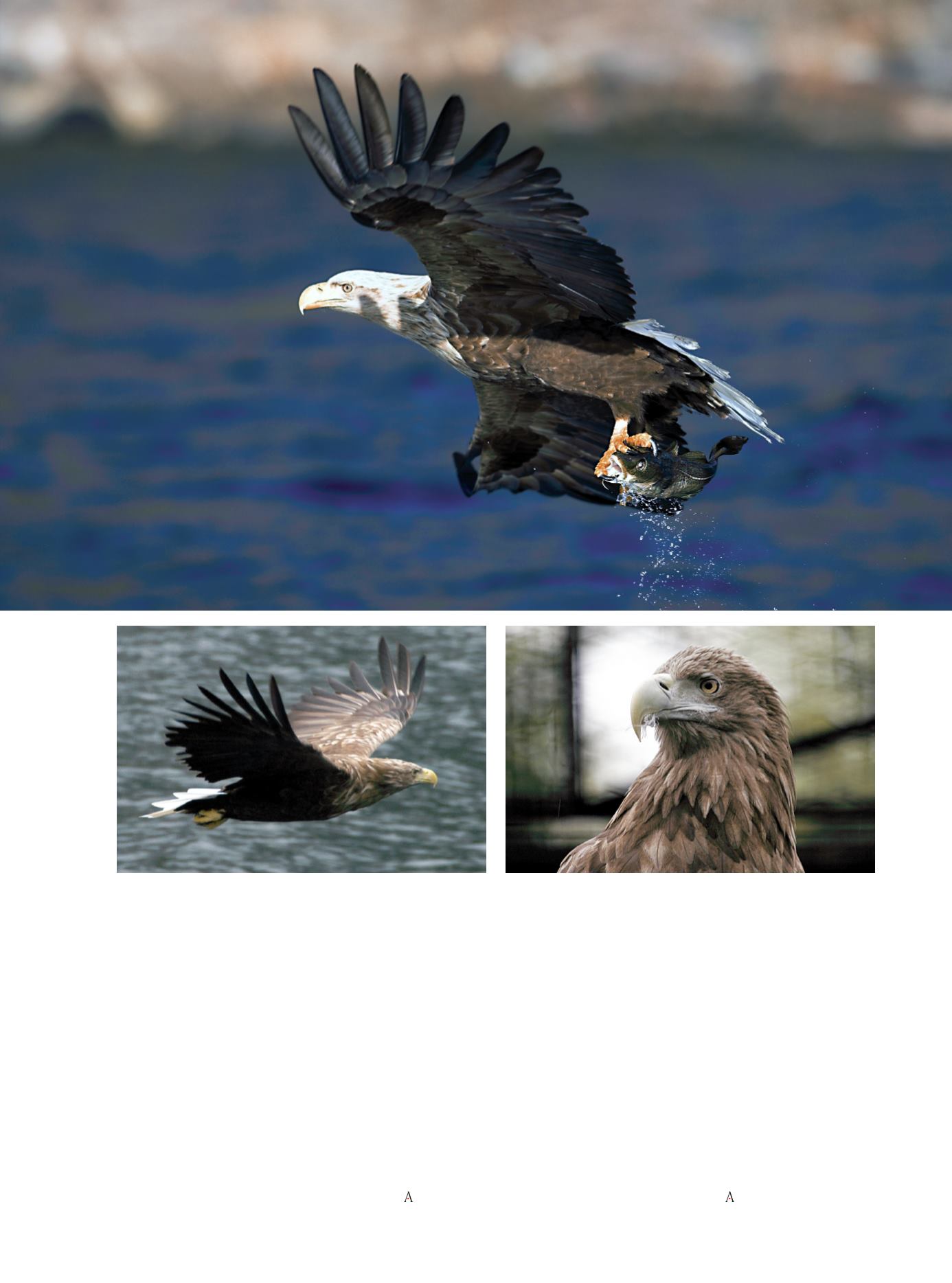
Estas imponentes águilas, que basan su alimenta-
ción en peces y aves marinas, suelen encontrarse en zo-
nas acuáticas como ríos, lagos y costas, en donde vive su
principal fuente de alimento. Los nidos se encuentran en
altos despeñaderos y acantilados marinos. La hembra
regularmente pone dos huevos, los cuales son prote-
gidos, indistintamente, por ella o por el macho durante un
aproximado de 35 días; una vez incubados, la madre es la
que tiene la mayor responsabilidad en la alimentación de
lascrías.Lospolluelosquelleganaserdesechadosdelnido,
suelen ser criados por instituciones ambientalistas que los
alimentan para después incorporarlos a programas de re-
población en lugares donde la especie ha sido extinguida.
De jóvenes normalmente se les puede ver compartir
un nido, mientras que en la edad adulta suelen ser anima-
les solitarios; no obstante se ha observado que llegan a
viajar en pareja. Lofoten Opplevelser es una zona que rea-
liza expediciones en las que sepuedeobservar a estebello
animal comiendo a escasosmetros del barco.
O
These impressiveeagles that feedonfishandsea
birds are found where water is, like in rivers, lakes
and coasts, where its main source of food is found.
The nests are found in tall marine cliffs and preci-
pices. The female regularly lays two eggs, which are
protected by both, the male and the female, for 35
days approximately. Once incubated, the mother is
the one with the biggest responsibility regarding
the feeding of the chicks. The baby birds are some-
times thrown off the nest, and are normally bred by
environmental institutions that feed them to later
on incorporate them to repopulating programs in
places where the species became extinct.
While young, they normally can be seen sharing
a nest, while in adulthood they tend to be solitary
animals. However, they have been seen travelling in
pairs. Lofoten Opplevelser is a zone where expedi-
tions to observe this magnificent animal eat a few
meters from the ship are arranged.
O
119
·amura·


