·amura·
121
especies •
species
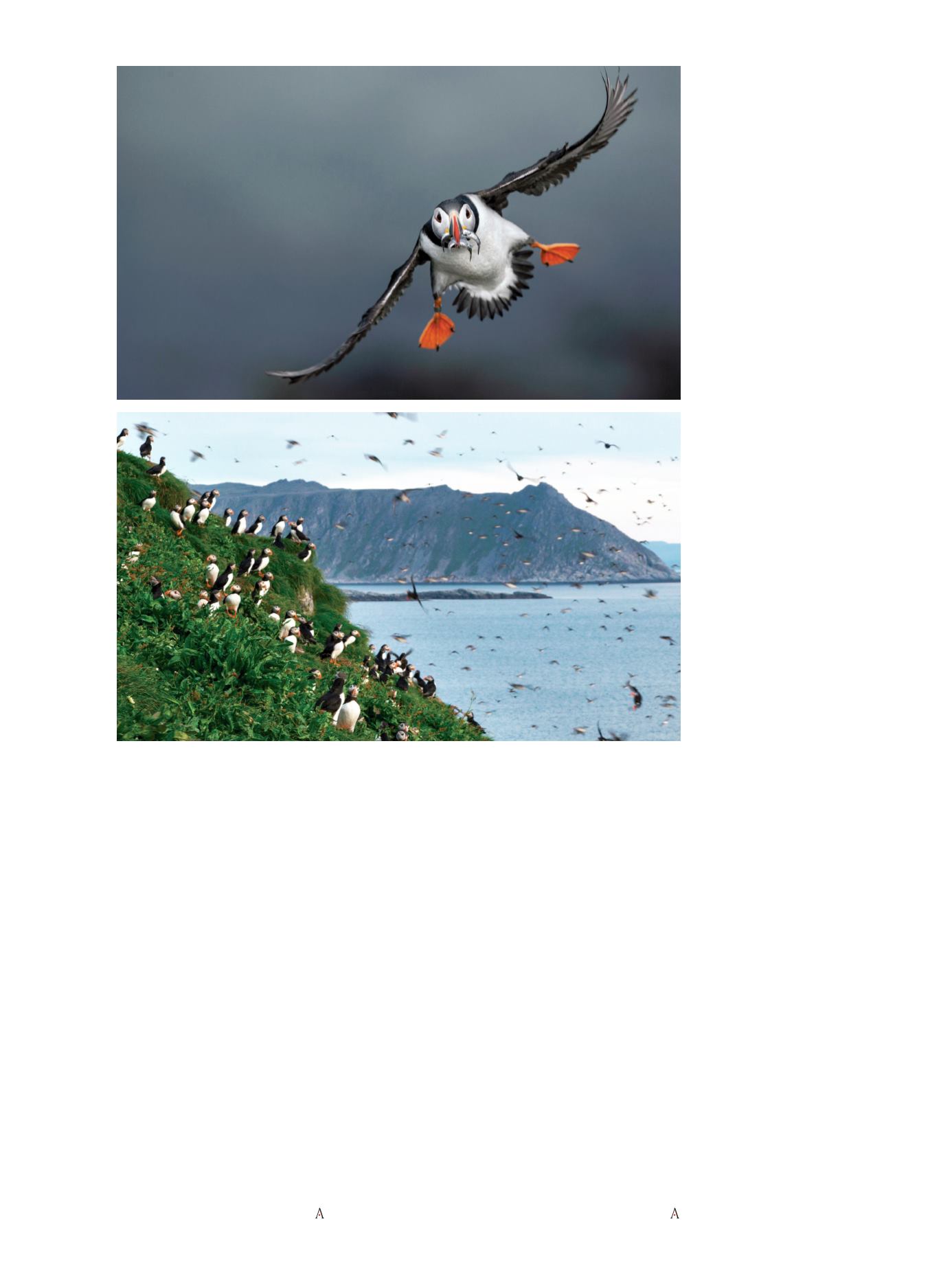
Su hábitat más común es la región norte del
océano Atlántico, en los litorales de Gran Bretaña,
Finlandia y Noruega; suelen anidar cavando con su
pico en acantilados y laderas cubiertas de vegeta-
ción, no obstante en épocas de cría optan por hacer
sus nidos a ras del suelo. Durante el invierno perma-
necen en altamar, a menos que existan tormentas
que los obliguen a regresar a tierra.
Su alimentación es, principalmente, a base de peces y
crustáceos los cuales cazan tras observar a su presa des-
de el aire, pueden realizar inmersiones de hasta 60mpara
atrapar su alimento. El frailecillo, cuya hembra pone un
solo huevo e incuba durante un aproximado de 40 días,
aprovecha la estación de calor para la reproducción. Al
salir del cascarón, el polluelo es alimentado por el mismo
tiempo que duro la incubación, posterior a eso la cría es
abandonada. Las aves suelen vivir en colonias grandes y
por tal motivo son considerados animales sociables y lle-
gan a desarrollar una “personalidad” muy curiosa.
Sus principales depredadores son gaviotas, zorros,
perros y gatos, por tal razón las colonias cercanas a la ci-
vilización están propensas a desaparecer. El frailecillo es
una especie amenazada, pues la sobrepesca y la conta-
minación de las aguas, afecta su ecosistema, lo que ha
generado una baja en su población. Existen organiza-
ciones que pueden ayudar a su reproducción y además
otorgan un espacio para que puedan sobrevivir, dando
así una buena calidad de vida a estas hermosas aves.
O
Its most common habitat is the Northern region
of the Atlantic Ocean, in the coasts of Great Britain,
Finland and Norway; they nest by making holes
with their beaks in the cliffs and the vegetation-
covered mountainsides. However, during breeding
period they prefer to make their nests closer to the
ground. During winter they remain at sea, unless
the storms force them to go back to the coast.
They feed mainly of fish and crustacean that
they hunt after observing their prey from the air
and they can submerge up to 60 m to catch their
food. The puffin, which female lays one egg only
and incubates it during 40 days approximately, re-
produces during the warm season. When hatching,
the chick will be fed for the same number of days
that it was incubated, after that period, the baby
bird is abandoned. These birds live in large colonies
and that is why they are social animals that develop
a curious “personality”.
Their main predators are seagulls, foxes, dogs
and cats, and for that reason the colonies closer to
civilization tend to disappear. The Puffin is a threat-
ened species, for the overfishing and the pollution
of water have affected their ecosystem generating
a reduction in their population. There are organiza-
tions that can help with their reproduction and also
offer spaces where they can survive, giving these
beautiful birds a good quality of life.
O


