103
velas •
sails
·amura·
yachts have to cross the Gulf Stream, which makes the
strategy required to cross it critical.
The Mexicans faced the great offshore yachtsman of the
world, crews formed of great professionals in the world of
high competition. The
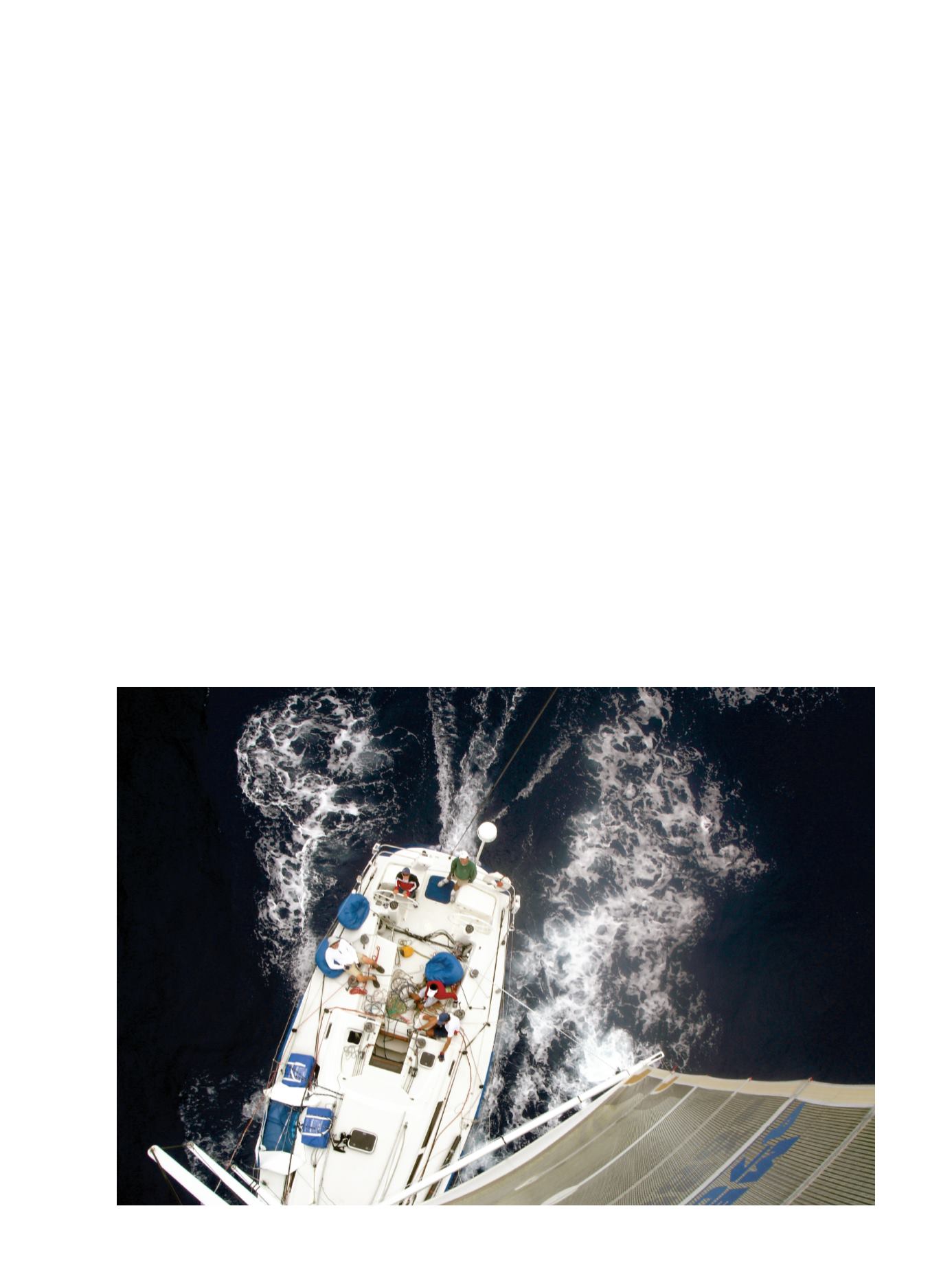
Ruahatú
is a racing cruiser,
so she is
fast and has certain amenities such as a bathroom, dining
room, a galley, bedrooms and a navigation station. She is
so versatile that she can be used for family outings as
well as participating in regattas as famous as this one.
Raúl told us about some of the technological
advantages that were not available several years ago:
“When there were no satellite telephones we used to
use, and continue to use lateral wave radios, which
help us to download meteorological charts. On the
other hand, we use Internet all the time during navi-
gation to make adjustments to headings during the
route. We log-on 4 times a day every six hours using
Iridium. We download
grib files
that contain forecast
models from which we select the ones which adapt
most to the conditions of the regatta. In general, we
use the Global Forecasting System (GFS), although it is
not very good for modeling the behavior of tropical
storms and cyclones. Like in this regatta, two cyclones
were forming, we used the U.S. Navy (NOGAPS) fore-
casting model in parallel in order to perform our
analysis using the specialized software that we took in
order to make the right decisions along the route.
Every day, we reported our position to the communica-
tions vessel, which was one of the most exciting
moments of the day. At 9 o’clock in the morning, the
communications vessel informed the position of each
yacht and how far they had to go to the finishing line.
Although we couldn’t see any other yachts for most of
the voyage, just knowing the position of the other
competitors made us feel accompanied”.
Los mexicanos se enfrentaron con grandes veleristas
off shore
del mundo, tripulaciones conformadas por gran-
des profesionales en el marco de un alto nivel competitivo.
El
Ruahatú
es un velero de los llamados
racer cruiser
. Es
rápido y tiene algunas comodidades: baño, comedor, coci-
na, camas y estación de navegación. Es tan versátil que se
puede utilizar para un paseo familiar y asimismo para par-
ticipar en una regata tan afamada como ésta.
Raúl nos habla sobre las ventajas tecnológicas con que
hace unos años no contaban: “Cuando no existía la tecnolo-
gía de los teléfonos satelitales usábamos, y seguimos utili-
zando, los radios de banda lateral, que nos ayudan a bajar
mapas meteorológicos. Por otra parte, el Internet se usa
todo el tiempo durante la navegación para ir ajustando la
ruta en el camino. Nos conectamos cuatro veces al día, cada
seis horas, a través de un Iridium. Del Internet bajamos
grib
files
que contienen modelos de pronóstico. De entre ellos
escogemos al que se adaptará mejor a las condiciones de la
regata. Por lo general se usa el Global Forecasting System
(GFS), pero no es muy bueno para modelar el comporta-
miento de las tormentas tropicales y ciclones. Como en esta
regata se estaban formando dos ciclones, usamos en parale-
lo el modelo de pronóstico del US Navy (NOGAPS) para hacer
nuestros análisis en los softwares especializados que lleva-
mos y tomar decisiones sobre la ruta. Todos los días repor-
tábamos nuestra posición a un barco de comunicaciones, en
uno de los momentos más emocionantes del día. A las 9 de
la mañana, ese barco informaba en qué lugar se encontraba
cada quién y cuánta distancia le faltaba para llegar a lameta.
Aunque no tenemos a ningún velero a la vista durante la
mayor parte del recorrido, el saber la posición de los demás
competidores nos hacía sentir acompañados”.
El principal reto de la tripulación fue mantener el barco
funcionando: “La regata es muy larga. Navegamos casi 5 mil
kilómetros con vientos constantes y variaciones bruscas


