velas •
sails
104
·amura·
generadas por las turbonadas que nos persiguen Estas con-
diciones generan mucho desgaste en partes del equipo.
Tuvimos problemas con las drizas, que son las escotas o
cuerdas que suben las velas. Se van desgastando constante-
mente. Las ajustábamos cada hora para cambiar los puntos
de fricción. Cada seis, había que estar bajándolas para repa-
rarlas y protegerlas; Luis se volvió un experto en el tema. Si
nos llegamos a quedar sin drizas, nos hubiéramos arriesga-
do a terminar la regata “cojeando”. En esta regata también
perdimos varias horas cuando nos dimos un ‘trompo’ al per-
der el control del timón. Gracias a las habilidades de Ricardo,
nuestro capitán, pudimos realizar todas las reparaciones”.
Velarde nos explicó las características de la regata:
“En realidad, la Transpac no es una regata muy peligrosa.
No es como la que da la vuelta al mundo navegando por el
Mar del Sur, donde hay que tener cuidado con los iceberg.
En ésta no hay cargueros ni demasiado tráfico comercial,
así que es difícil chocar con otro barco. También es una
delicia el clima cálido durante la mayor parte de la regata.
Lo que sí ocurre es que a veces tenemos que ‘cabalgar’ las
turbonadas o
squalls
. En las latitudes cercanas al ecuador
hay una zona donde el mar está literalmente hirviendo y
el agua está realmente caliente. Se generan las nubes lla-
madas ‘cumulus’, que crecen durante el día. Cuando des-
cargan en la tarde y en la noche el viento cae con mucha
mayor velocidad. Hay que posicionar el velero enfrente,
pero sin dejar que te pase por encima la nube. Es impor-
tante juzgarla bien, dejarla pasar por un lado ‘toreándola’,
pero con cuidado de no meterte en una cuyo desarrollo
vertical generen vientos que puedan romper las velas o
hasta el mástil. También es una regata de grandes retos
para los timoneles. Hay que recordar que acá no es como
el Pacífico mexicano donde el mar en la noche está plani-
to y ves las estrellitas y la luna, con vientos generalmen-
te suaves. En la Transpac perseguimos el mal tiempo. Las
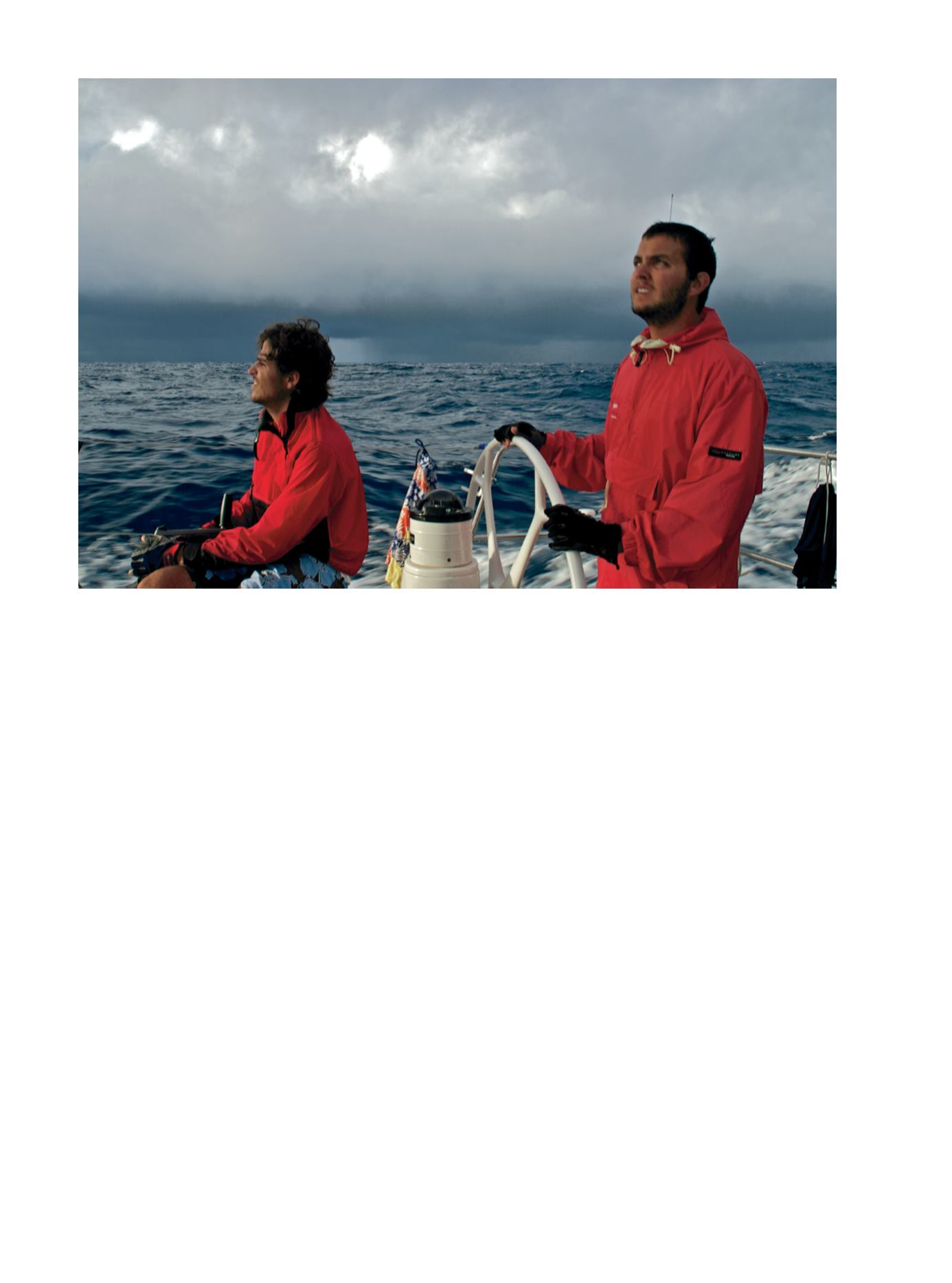
The main challenge for the crew was keeping the
yacht operational: “The regatta is very long. We sailed for
almost 5000 km with constant winds and sudden varia-
tions generated by the squalls that followed us. These
conditions cause a lot of wear and tear to parts of the
equipment. We had problems with the halyards, which
are ropes used to put up the sails. They constantly dete-
riorate. We adjusted them every hour to change the
points of friction. Every six hours, we had to take them
down to repair andprotect them. Luis became anexpert in
doing it. If we had been left without halyards, we would
have risked finishing the regatta “limping”. In this regat-
ta,wealso lost several hourswhenwenosedivedon losing
control of the rudder, but thanks to skipper Ricardo’s
skills; we were able to perform the necessary repairs”.
Velarde explained the characteristics of the regatta to
us: “In reality, the TRANSPAC is not very dangerous regat-
ta. It is not like those when yachts sail around the world
navigating theSouthernOcean, whereyachtsmenhave to
be careful to avoid icebergs. There are no cargo ships or
excessive commercial traffic so collisions with other
yachts are very unlikely. Also the warm climate during
most of the regatta is delicious. What does happen is that
at times we have to “ride” the squalls. At latitudes close to
the Equator, there is an area where the sea is almost boi-
ling and thewater is very hot. Cumulus clouds are created
that grow during the day. When it rains in the afternoon,
the wind comes with full force at night. We have to posi-
tion the yacht in front but without letting the cloud pass
above. It is important to judge it right, leaving it to pass
by one side but without going into a vertical whip that
creates winds that can break the sails or even the mast. It
is also a regatta with great challenges for helmsmen. You
must remember that hear it is not like theMexican Pacific
when at night of the sea is like amillpond and you can see


