105
velas •
sails
·amura·
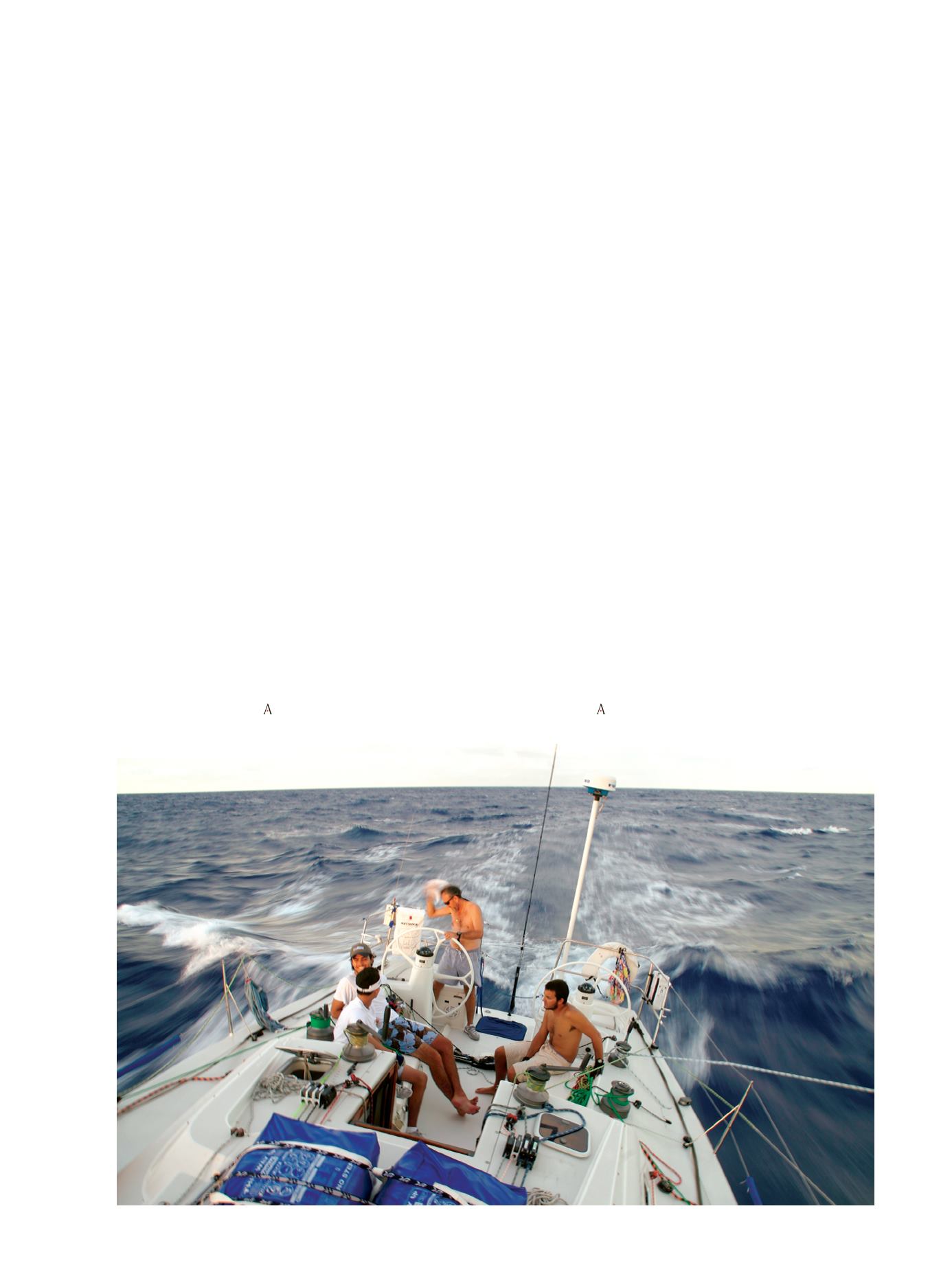
the stars and the moon with generally soft winds. In the
TRANSPAC, we follow the bad weather. The nights are
cloudy, we cannot see the stars, there is almost no visibi-
lity, we lose the reference on the horizon and as thewaves
come from all angles, keeping the yacht in position is a
real challenge. Luckily, we had excellent helmsmen such
as Ricky and Héctor”.
As in any experience of this type, the crew members
are well-trained after having taken safety courses on the
open sea and they bring all the equipment necessary,
such as life jackets and radios: “The only danger is some-
body falling overboard. Pulling them back on board
would be really difficult because we can barely distin-
guish between the horizon and the sky. To prevent acci-
dents, everybody has to be very disciplined on board.
Steve was very meticulous about this issue. During the
day, we didn’t wear our harnesses because falling is less
likely, but at night, we all wore them because they have a
special support rope that allows us to move around the
yacht while eliminating the risk of going overboard. The
regatta also gets complicated because of the accumulated
tiredness of the crew members. It’s like spending 11
hours a day riding a galloping elephant. Fortunately, the
enthusiasm and the skill of the younger crew members
such as Eric, Diego and Jerónimo kept our energy levels
very high”.
Arrivingat the finish line inWaikikiwasveryexciting:
“We wanted to arrive, the same time we didn’t want the
regatta to finish. Sailing is very satisfying and enjoyable
because with the experience that we have and the team
that we took, we really enjoyed spending many days on
the open sea”, recalls Raúl.
Although Raúl and his companions are very aware
of the difficulty of obtaining sponsorship and that the
level of promotion of regattas is low, they have pro-
posed to embark on a new adventure on November 2 at
the Long Beach to Los Cabos regatta, which covers 800
nautical miles, in which practically the same crew
members will participate.
noches son nubladas, no vemos estrellas, casi no hay
visibilidad, perdemos la referencia del horizonte y
como las olas entran de manera irregular, es un reto
mantener el velero ‘en posición’. Afortunadamente
llevábamos excelentes timoneles como Ricky y
Héctor”.
Como en cualquier experiencia de esta naturale-
za, los tripulantes llegan preparados después de
tomar cursos de seguridad en altamar y traen todo el
equipo, salvavidas y radios: “El único peligro es que
alguien se caiga al agua. Recogerlo sería realmente
difícil porque apenas se pueden distinguir el horizon-
te y el cielo. Para evitar un accidente, todos tienen
que tener mucha disciplina en el barco. Steve cuida-
ba constantemente ese tema. Durante el día nadie
está ‘amarrado’ porque es más difícil que se dé un
tropezón, pero de noche todos traemos puesto un
arnés que tiene una cuerda especial de sujeción que
nos permite movernos y que elimina el riesgo de una
caída. La regata se complica también por el cansancio
que se acumula en los tripulantes. Es como vivir 11
días a la monta de un elefante galopante.
Afortunadamente el ánimo y las habilidades de los
jóvenes como Eric, Diego y Jerónimo nos mantuvie-
ron con una energía muy positiva”.
La llegada a la meta en Waikiki fue de sentimien-
tos encontrados: “Queríamos llegar, pero al mismo
tiempo deseábamos que no se terminara. Estar
navegando es muy satisfactorio y placentero porque
con la experiencia que tenemos y el equipo que lle-
vamos, realmente disfrutamos pasar muchos días en
altamar”, recuerda Raúl.
Aunque Raúl y sus compañeros están conscientes
de la dificultad que conlleva conseguir patrocinios, y
que el nivel de difusión de las regatas es bajo, se han
propuesto una nueva aventura a partir del 2 de
noviembre, la regata de Long Beach a Los Cabos, que
comprende 800 millas náuticas. Participarán práctica-
mente los mismos tripulantes.


