·amura·
100
cinematografía •
cinematography
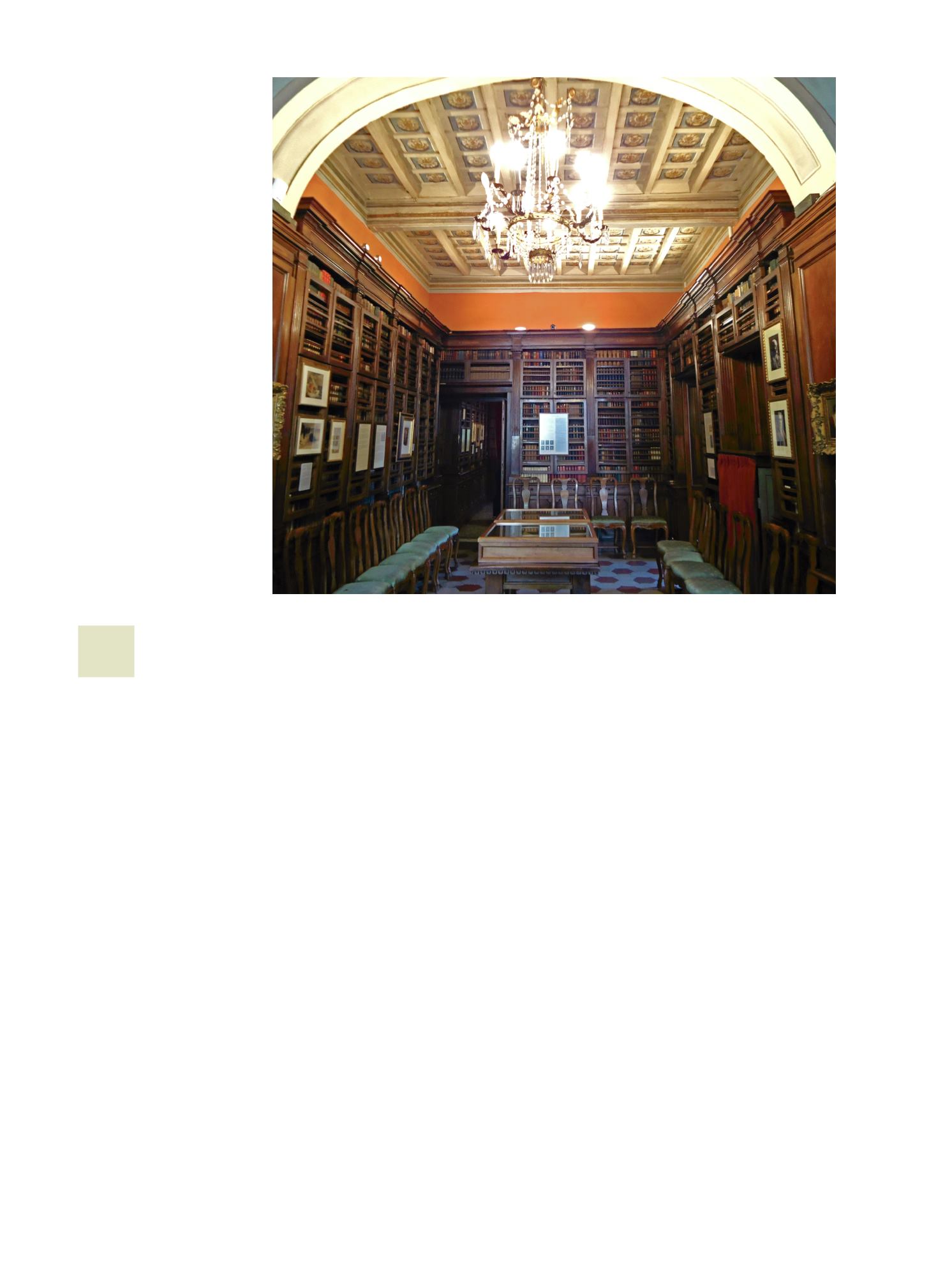
7.MuseoKeats-Shelly
situadoalpiede la
escalinatade laTrinità
deiMonti, lavidade
JohnKeatsenRoma
bienpodríaserotra
películasituadaen
esaciudad./
Keats-
ShelleyMuseum
nearofthestepsof
theTrinitàdeiMonti,
theJohnKeatslife
inRomecouldbe
anotherfilmsetin
thecity.
A unos cuantos pasos de ahí, un grupo de legiona-
rios bebe agua de la Fuente de Trevi con la esperanza
de garantizar su regreso, sanos y salvos a Roma.
Después de esto, una transición muy al estilo
Gladiator
de Ridley Scott, nos regresa en el tiempo
al momento en que un grupo de soldados en su bús-
queda de agua para alimentar la ultramoderna red
hidráulica de Roma, encuentra en su camino a una
virgen que los guía hasta un manantial situado en las
afueras de Roma (de ahí el nombre de Acqua Vergi-
ne). Es entonces que nos adentramos a la corte romana,
donde con una narrativa propia de Federico Fellini –que
por cierto realizó una de las secuenciasmásmemorables
de la historia del cine precisamente en la Fontana di Tre-
vi en su película
La dolce vita
– conoceremos los usos y
costumbres de la clase política y religiosa de aquélla
época. Y es justo aquí que se ordena la construcción
de un acueducto de más de 22 km que desemboca en
la unión de las Tres Vías o Tre Vie, enmarcada por la
fuente. A partir de este punto, el guion explora todo
lo que tuvo que pasar para que hoy sea una costum-
bre tirar monedas a la fuente.
Otra película interesante podría ser la propia
construcción de la fuente, ya que para elegir al ar-
quitecto que se encargaría de este proyecto, el papa
Clemente XII organizó un concurso donde el ven-
cedor original fue Alessandro Galilei, un florentino.
Esto generó varios acalorados debates, porque “no
podía ser posible que uno de los monumentos más
importantes de Roma fuera construido por un arqui-
tecto que no hubiera nacido en la ciudad”, por lo que
terminaron asignándole el proyecto al arquitecto
romano Nicola Salvi, que murió antes de acabar la
construcción, proceso que duró 30 años.
A few steps away from there, a group of legionaries
drinks thewater fromtheFountainof Treviwiththehope
ofguaranteeingtheirreturn,safeandsoundtoRome.
After this, a transition a lot in fashion of
Gladiator
of Ridley Scott, takes us back in time to the moment
that a group of soldiers on its search for water to feed
the ultramodern hydraulic network of Rome, finds on
its way a virgin that guides them down to a spring lo-
cated on the outskirts of Rome (from there the name
Acqua Vergine). It is then that we introduce ourselves
into the Roman court, where with a narrative proper
of Federico Fellini –that by the way executed one of
the most memorable sequences in the history of cin-
ema precisely in la Fontana di Trevi in his movie
La
dolce vita
– we will know the uses and customs of the
political and religious class of the period. And is right
here that is ordered the constructionof an aqueduct of
more than 22 km that leads into the joint of the Three
Pathways or Tre Vie, framed by the fountain. From
here on, the script explores everything that had to
happen in order for the act of throwing coins into the
fountain to become an actual custom.
Another interesting movie could be the same
construction of the fountain, since to elect an ar-
chitect that would handle this project, the Pope
Clemente XII organized a contest where the original
winner was Alessandro Galilei, a Florentine. This
created several heated debates, because “it was not
possible that one of the most important landmarks
of Rome would be built by an architect that wasn’t
born in the city”, thusly they ended up assigning
the project to the Roman architect Nicola Salvi, who
died before finishing the construction, a process
that lasted 30 years.
7


