·amura·
94
conservancy •
conservación
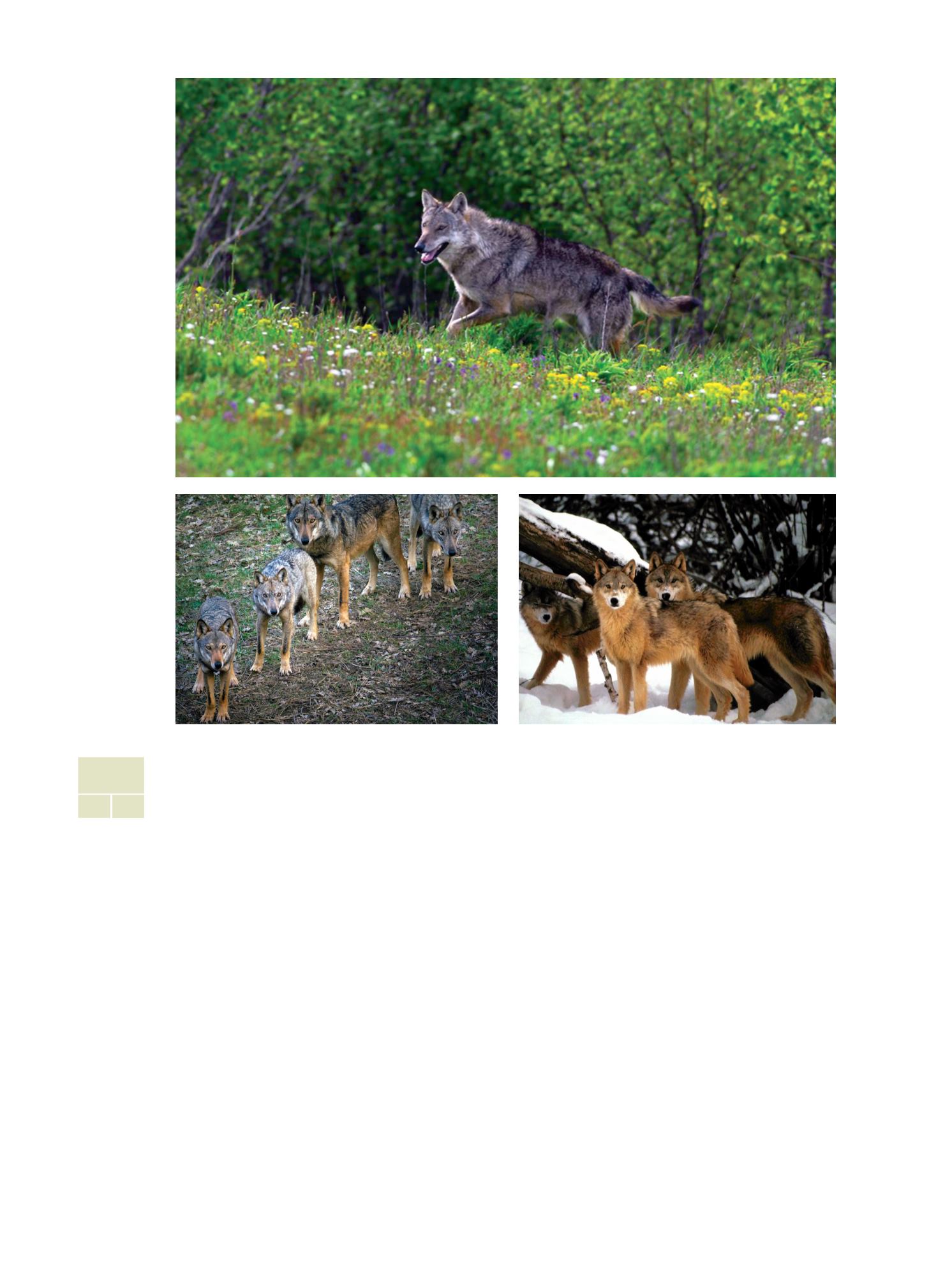
5. Los machos alfa
son quienes se
encargan de dirigir
las manadas. /
Alpha
malesarewho
leadingthepack.
6. Las manadas
pueden llegar a tener
hasta 30 miembros.
/
Packscanhave
almost30members.
7. Este tipo de
lobo se distingue
por proteger a
sus cachorros y
enfermos. /
Thistype
ofwolvesstands
becausetheyprotect
theircubsand
sickones.
La estructura social de la manda está formada por
una pareja dominante y un individuo o pareja beta
que funciona como jefe adjunto. Dentro del grupo, es
un animal que cuida a los lobos enfermos y protege
a los cachorros, el comportamiento de un grupo bien
organizado es parte de la estrategia de supervivencia.
Cimenta todo su poder en la inteligencia y en la fuerza
del clan. El tamaño de las manadas depende principal-
mente de las zonas donde viven y cazan, puede tener
entre seis y siete miembros o llegar a los 20 o 30. A
veces un lobo puede dejar la manada y vagar solo por
algún tiempo antes de ser aceptado por un nuevo gru-
po, aunque la mortalidad de los individuos solitarios
es muy alta y no suele ser tan común.
Al nacer una camada, la manada protege a los ca-
chorros. Se reproducen entre marzo y abril, el periodo
de gestación es de dos meses y tienen entre dos y ocho
cachorros. Los lobeznos pesan entre 250 y 350 gr al
nacer y son amamantados por la hembra durante los
primeros dos o tres meses. A partir del cuarto mes
los cachorros son capaces de digerir carne. Los lobos
más jóvenes se ponen a prueba constantemente y
sólo los más fuertes e inteligentes podrán dominar
sobre los demás.
The social structure of the pack is formed by a
dominant couple and one individual or beta mate
that functions as a joint leader. Inside the group, it
is an animal that cares for sick wolves and protects
the cubs, the behavior of a well organized group is
part of the survival strategy. It builds all its power
in the intelligence and strength of the clan. The size
of the packs depends mainly on the zones where
they live and hunt, it can have between six and
sevenmembers or reach up to 20 or 30. Sometimes a
wolf can leave the pack andwander off by itself only
for some time before being accepted by a newgroup,
although the mortality rate of lone individuals is
very high and usually it is not very common.
When a litter is born the pack protects the cubs.
They mate between March and April, the gestation
period is of 2 months and yield between two and
eight cubs. The wolf pups weigh between 250 and
350 gr at birth and are breastfed by the female dur-
ing the first two or three months. After the fourth
month the whelps are able to digest meat. The
younger wolves set themselves to trials all the time
and only the strongest and smartest ones will be
able to dominate over the others.
5
6
7


