·amura·
42
compás int • int compass
Los cambios realizados ayudaban al crecimiento de
la nación, y del mismo modo daba un giro completo a
las estructuras políticas manejadas hasta entonces en
el país, ejemplo de esto es haber dado a los campesinos
el derecho de poder tener negocios de tejido y costura.
Catalina fue una de las zarinas más cultas de Ru-
sia, dominaba varios idiomas y se mantenía informa-
da sobre los acontecimientos de Europa. Se rodeaba
de las mentes más brillantes, ejemplo de ello es Vol-
taire y Denis Diderot. Además de haber sido una gran
emperatriz, Catalina la Grande escribió varias obras
de teatro, cuentos para niños y algunas notas auto-
biográficas. Por ese hecho comprendió la importancia
del idioma ruso y funda la Gran Academia de la Len-
gua Rusa. No menos importante fueron para ella otras
artes, por tal motivo también es la fundadora de la
Academia de Artes Plásticas y comienza con la gran
colección que del museo Hermitage.
Su reinado llega a su fin pese a su muerte el 6 de
noviembre de 1769, y es enterrada en la catedral de
San Pedro y San Pablo en San Petersburgo.
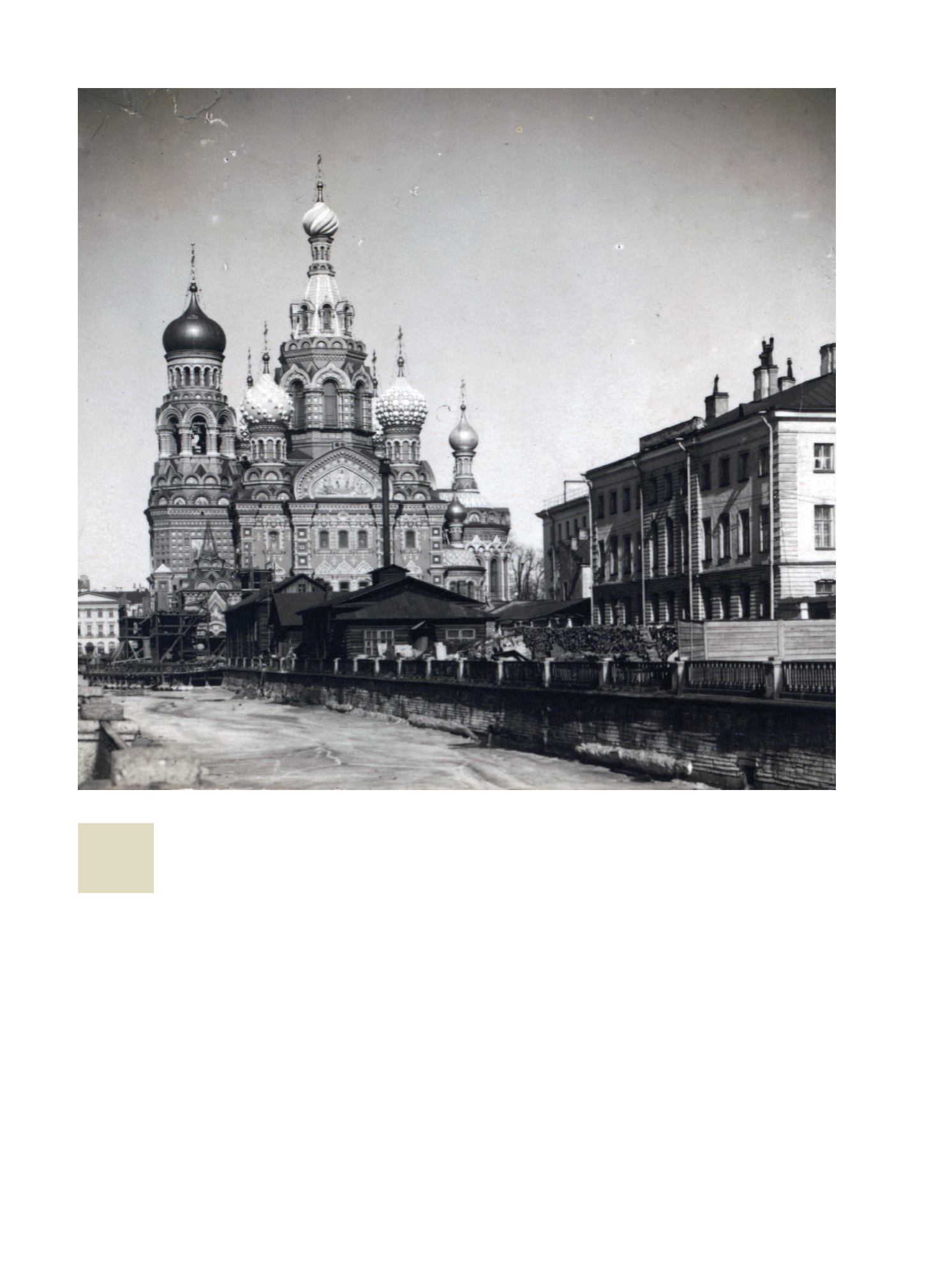
6
6. La Iglesia del
Salvador sobre la
Sangre Derramada
o Iglesia de la
Resurrección
de Cristo. Fue
establecida en el
lugar donde fue
víctima de un
atentado el zar
Alejandro II. /
Church
of the Savior on
Spilled Blood,
or Resurrection
Church of Christ
was established in
the place where Tsar
Alexander II was the
victim of attack.
These changes, oncewrought, helped the nation to
grow, and, similarly, completely changed the political
structures up to that point in time, an example of this
being the right of peasants to own textile and sewing
businesses.
Catherine was one of the most cultured tsari-
nas in Russia, fluent in numerous languages, and
constantly informed about events unfolding in Eu-
rope. She surrounded herself with brilliant minds,
such as Voltaire, and Denis Diderot. As well as be-
ing a super Empress, Catherine the Great wrote
several plays, children stories, and some biograph-
ical notes. Because of this, she understood the im-
portance of the Russian language and founded the
Imperial Russian Academy. No less important for
her were the arts, which led to the founding of the
Academy of Arts, and the beginning of a great col-
lection of pieces at the Hermitage Museum.
Her reign comes to an end in spite of her death on
the 6th of November, 1769, and she is buried in the Ca-
thedralofSaintPeterandSaintPaulinSaintPetersburg.


