



 47 / 156

·amura·
45
compás int • int compass
However, they have reached several conclu-
sions and theories: the
Arawak
(a number of in-
digenous groups from the east of Brazil that ex-
panded towards the Amazonia, coasts and isles
of the Caribbean, Colombia, the Guianas and
Venezuela), arrived 1800 years ago to the east
coast of Grand'Anse and to Anse Noire from the
South, where they built large settlements and a
great culture. Ceramic urns, masks, clay statu-
ettes, stamps to apply patterns with natural ink,
fabrics, cooking utensils, and tools to cultivate
earth and the gardens have been found along the
coasts or territories at a considerable distance
from the villages. They were without a doubt ex-
cellent navigators and ship builders. The petro-
glyphs and other discovered objects in the banks
of the Balembouche River confirm ceremonial
activities, and serve as testament of a dynamic
relationship between the islands and the conti-
nent through commerce and trade. Around 1400
BC, they apparently left the area.
Así han llegado a algunas conclusiones y teorías:
los
Arahuacos o Arawak
(varios pueblos originarios
del Este de Brasil que se expandieron hacia la Ama-
zonia, costas e Islas del Caribe, Colombia, Guayanas
y Venezuela) llegaron hace 1800 años a Grande Anse
en la costa este y a Anse Noire en el sur, donde esta-
blecieron grandes aldeas además de una vasta cul-
tura. Se han encontrado vasijas de cerámica, másca-
ras, estatuillas de arcilla, sellos para aplicar diseños
usando tintes naturales, textiles, herramientas para
cocinar, cultivar la tierra y jardines, establecidos a
lo largo de las costas o en territorios más alejados
de las aldeas. Sin lugar a dudas fueron grandes na-
vegantes, a la vez que constructores de embarca-
ciones. Los petroglifos y objetos hallados en varios
lugares a lo largo del río Balembouche confirman
actividades ceremoniales, y también atestiguan que
existía una relación dinámica entre las islas y el con-
tinente, a través del contacto entre personas y del
comercio de bienes. Alrededor de los años 1400 d. C.
aparentemente abandonaron la zona.
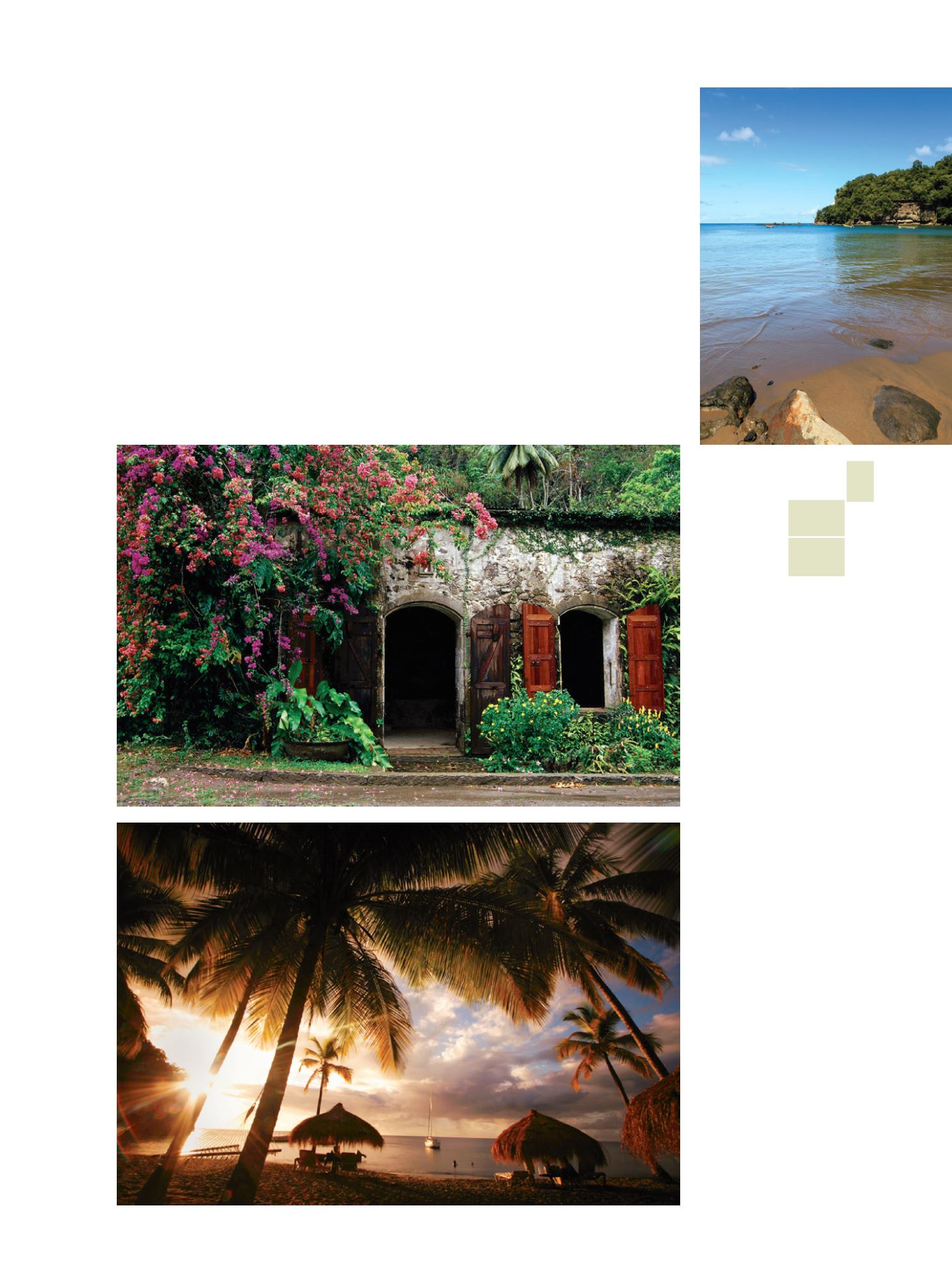
7. AnseLaRaye
esunpequeño
Pueblopesquero
en lacostaoestede
la Islacaribeñade
SantaLucía/
Anse
La Raye is a small
fishing village on
the west cost of the
Caribbean island of
St Lucia.
8.Molinodeazucar
de lafinca Invergoil
(1860),AnseLaRaye /
Sugar mill (1860) at
the Invergoil Estate,
Anse La Raye
9.SantaLucíatiene
158kmdecostas/
St. Lucia's coastline
spans 158km
7
8
9