·amura·
116
Meet the music >> Música
Con el surgimiento de los nazis en Alemania,
Strauss primero se identificó con el nuevo régimen,
siendo nombrado presidente de la Cámara Musical del
Tercer Reich. Sustituyó gustosamente a Bruno Walter,
cuando Walter, que era judío, fue removido como di-
rector de la Orquesta del Gewandhaus (una importan-
te sala de conciertos) de Leipzig y remplazó a Arturo
Toscanini en el Festival de Bayreuth, cuando el maes-
tro se negó a dirigir en la Alemania Nazi. Pero pronto
entró en conflicto con los representantes del gobierno
cuando colaboró con el escritor judío Stephan Zweig
en
Die Schweisame Frau
(La mujer silenciosa). Después
de 1939, cuando Strauss violentamente se opuso a la
invasión nazi de Polonia, fue puesto en arresto domi-
ciliario por un periodo corto en su casa de Garmisch-
Partenkirchen. El hecho de que su hijo se casara con
una judía lo convirtió en
persona non grata
para los
Nazis. Durante los años de guerra vivió en Suiza, pero
principalmente en Garmisch-Partenkirchen, donde
murió. El centenario de su natalicio fue conmemorado
en Múnich, en 1964, con producciones de once de sus
óperas dirigidas por Karl Böhm. Wolfgang Sawallisch
le rindió tributo años después con representaciones
de todas sus óperas, también en Múnich. Ambos even-
tos fueron grabados.
With the rise of the Nazis in Germany, Strauss
at first identified himself closely with the new re-
gime, becoming President of the Third Reich Music
Chamber. He willingly substituted for Bruno Walter
when Walter, a Jew was removed from the Leipzig
Gewandhaus and he replaced Arturo Toscanini at
the Bayreuth Festival when the Maestro refused to
come to Nazi Germany. But Strauss soon came into
conflict with government officials when he collabo-
rated with the Jewish writer Stefan Zweig on
Die
Schweigsame Frau
(The Silent Woman). After 1939,
when Strauss violently opposed the Nazi invasion
of Poland, he was for a short period placed under
house arrest at his home in Garmisch-Partenkirch-
en. The fact that his son married a Jewess further
made Strauss
persona non grata
with the Nazis. Dur-
ing the war years he lived partly in Switzerland but
mainly at Garmisch-Partenkirchen, where he died.
The centenary of his birth was commemorated in
Munich in 1964 with productions of eleven of his
operas, conducted by Karl Böhm, together with
the performance of other Strauss works. Wolfgang
Sawallisch conducted a tribute years later with per-
formances of all his operas, also in Munich. Both
events were recorded.
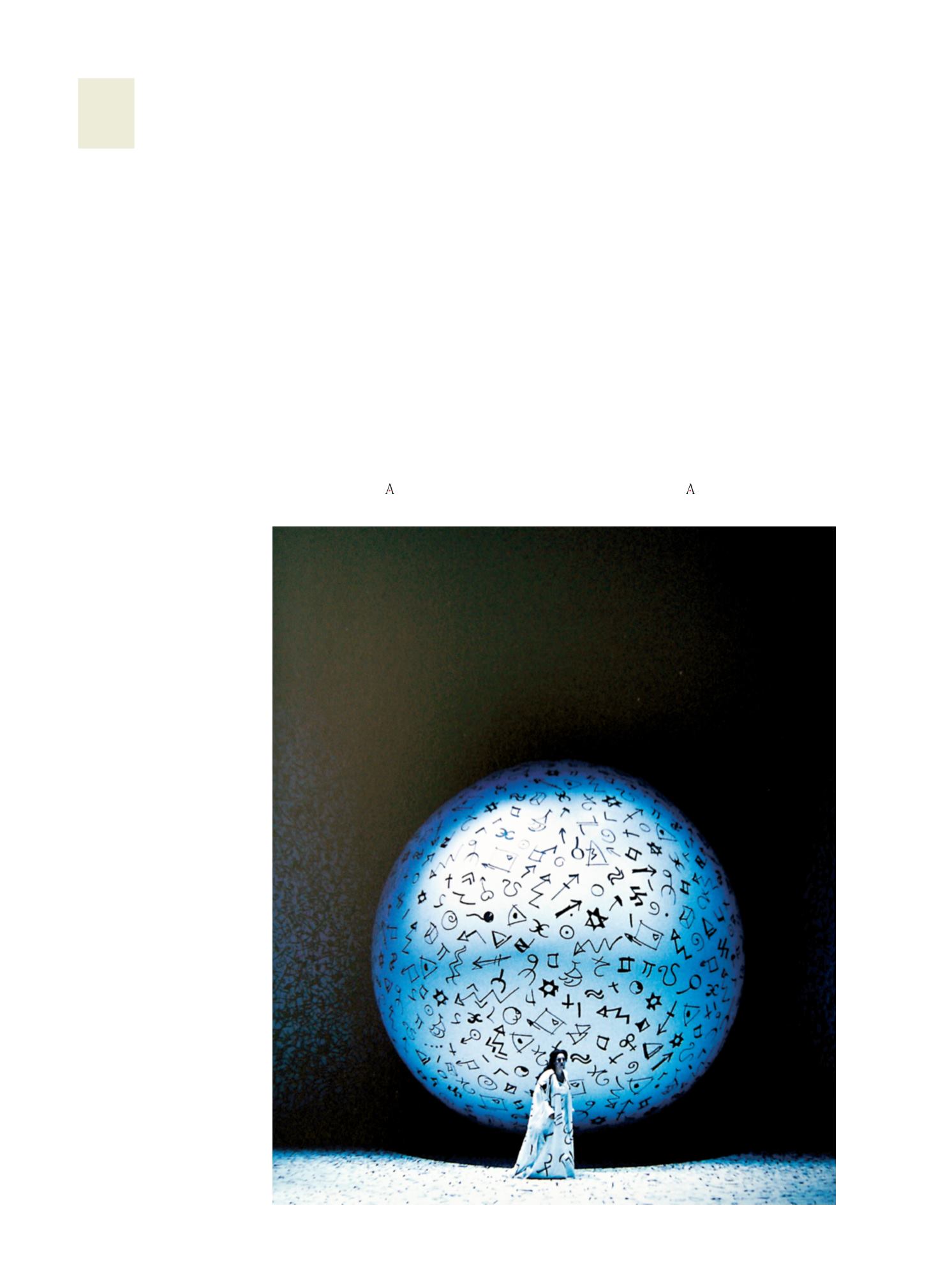
6
6.
DieFrauOhne
Schatten(Lamujer
sinsombra).
Karen
HuffstodtcomoLa
Emperatriz,Gran
TeatrodeGinebra
(1997)./
TheWoman
withoutaShadow.
KarenHuffstodtas
TheEmpress,Grand
TheatreofGeneva
(1887).


